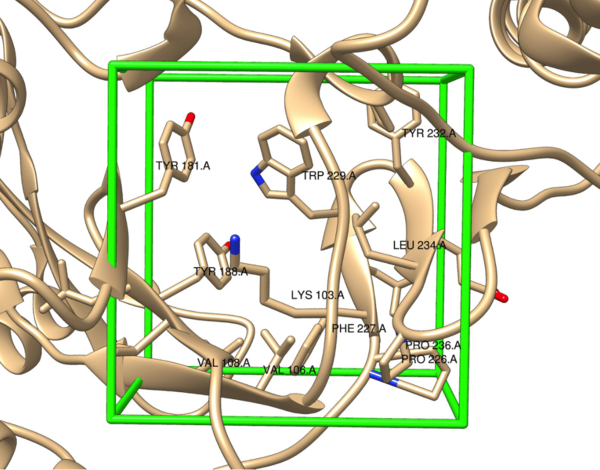
In this study, the authors use high-throughput virtual screening to design and evaluate a set of non-nucleoside reverse transcriptase inhibitors for binding affinity to the protein reverse transcriptase. These studies have important applications toward HIV therapies.
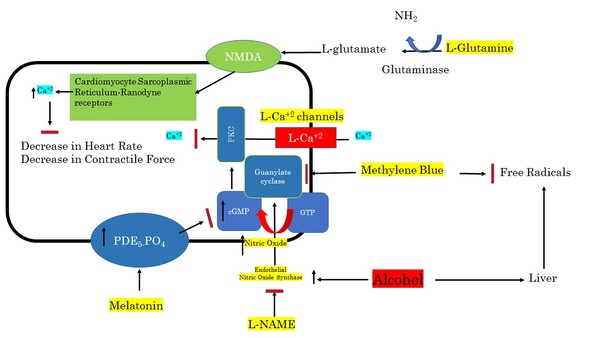
Chronic alcohol consumption can cause cardiac myopathy, which afflicts about 500,000 Americans annually. Gunturi et al. wanted to understand the effects of alcohol on heart rate and confirm the role of nitric oxide (NO) signaling in heart rate regulation. Using the model organism Daphnia magna, a water crustacean with a large, transparent heart, they found that the heart rate of Daphnia magna was reduced after treatment with alcohol. This depression could be reversed after treatment with inhibitors of NO synthesis and signaling. Their work has important implications for how we understand alcohol-induced effects on heart rate and potential treatments to reverse heart rate depression as a result of alcohol consumption.
Here the authors conducted a photometric analysis of Supernova (SN) 20234jvj. Through generating a light curve, they determined SN 2023jvj to be a Type Ia supernova located approximately 1.246e8 parasecs away from Earth.
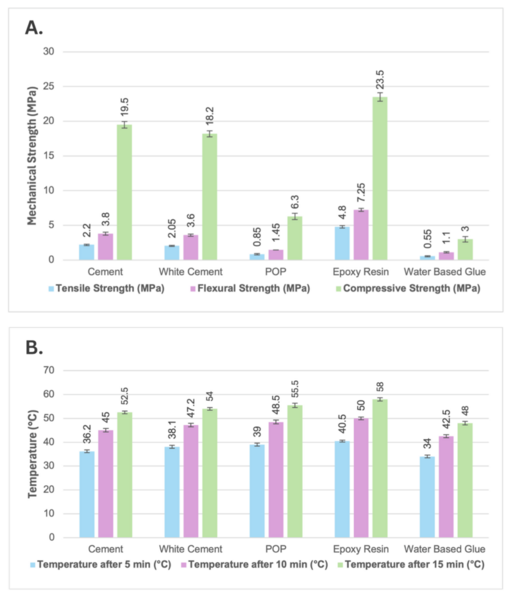
Textile waste from the fashion industry is a major environmental pollutant, but recycling waste into novel building material is a strategy to reduce the negative effects. This manuscript characterized five different binders that can be used to repurpose textile waste into bricks for construction purposes. Water-based glue, cement, white cement, plaster of Paris, and epoxy resin were mixed with shredded textile waste, and the mechanical characteristics and thermal insulation of each brick type were measured. Bricks with increased mechanical strength had the poorest thermal resistance, and the contrasting properties would suit different building purposes. This work provides a first step in generating recycled textile bricks for construction in a circular economy framework.
Zoos offer educational and scientific advantages but face high maintenance costs and challenges in animal care due to diverse species' habits. Challenges include tracking animals, detecting illnesses, and creating suitable habitats. We developed a deep learning framework called SmartZoo to address these issues and enable efficient animal monitoring, condition alerts, and data aggregation. We discovered that the data generated by our model is closer to real data than random data, and we were able to demonstrate that the model excels at generating data that resembles real-world data.
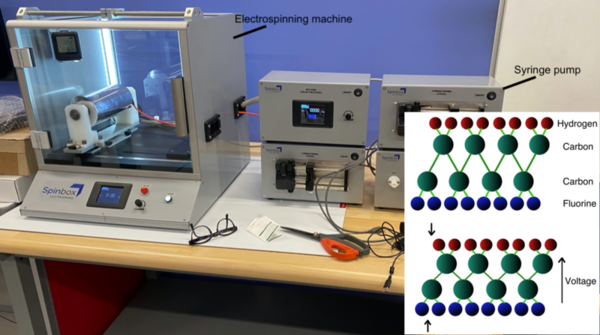
Here, seeking to develop an understanding of the properties that determine the viability of piezoelectric flexible materials for applications in electro-mechanical sensors, the authors investigated the effects of the inclusion BaTiO3 nanoparticles in electrospun Polyvinyledene Fluoride. They found the voltage generated had a piecewise linear dependence on the applied force at a few temperatures.
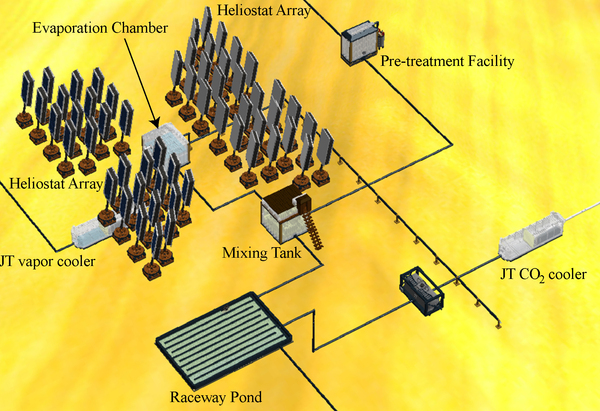
An integrated plant that would generate energy from solar power and provide clean water would help solve multiple sustainability issues. The feasibility of such a plant was investigated by looking at the efficacy of several different modules of such a plant on a small scale.