
The authors assess the relationship between supportive family environments and internalized stigma in adolescents.
Read More...Social and psychosocial factors associated with mood states among adolescents: A questionnaire-based study
The authors assess the relationship between supportive family environments and internalized stigma in adolescents.
Read More...Maternal mortality rates in the United States correlated with social determinants of health

This article helps in understanding the effect of various social determinants on maternal mortality in the United States. It explains the relationship between maternal mortality rates and factors like race, income, education, and health insurance access.
Read More...Reimagize – a digital card-based roleplaying game to improve adolescent girls’ body image
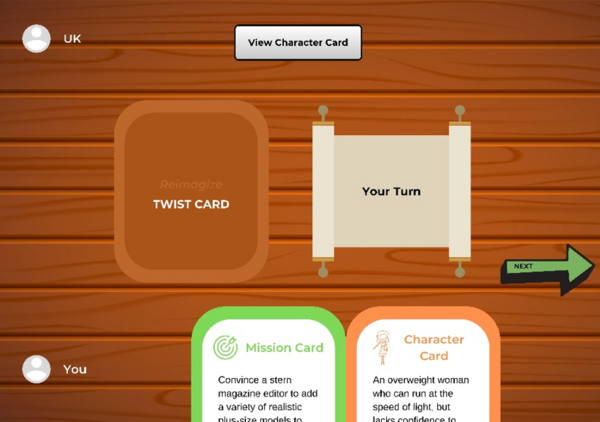
Reimagize, a role-playing with decision-making, was conjured, implementing social psychological concepts like counter-stereotyping and perspective-taking. As the game works implicitly to influence body image, it even counters image issues beyond personal body dissatisfaction. This study explored whether a digital role-playing card game, incorporating some of the most common prejudices of body image (like size prejudice, prejudices from the media, etc.) as identified by a digital survey/questionnaire completed by Indian girls aged 11-21, could counter these issues and reduce personal body dissatisfaction.
Read More...Investigating Teen Audism: The Development and Use of a Survey Scale to Measure Misconceptions of the Deaf Community in a Hearing High School
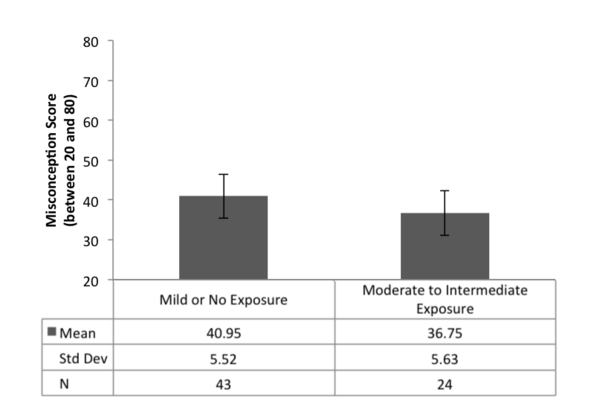
The authors explore hearing students' misconceptions about the Deaf and Hard of Hearing (HoH) community. Results indicate that some misconceptions are more common than others, and that personal experience with individuals in the Deaf and HoH community reduces the frequency of such misconceptions.
Read More...The impact of attending a more selective college on future income
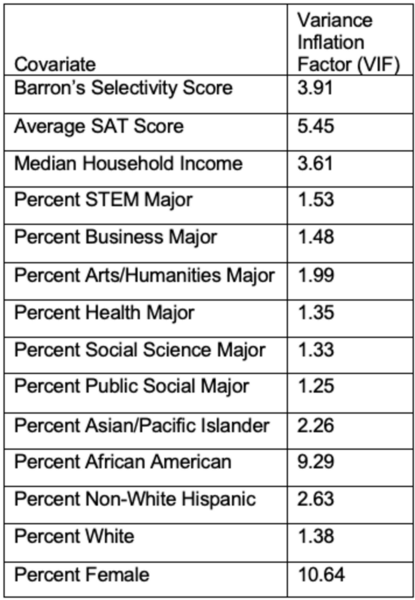
Debates around legacy preferences, recruited athletes, and affirmative action in U.S. college admissions often focus on the belief that graduating from a more selective institution leads to higher future earnings. The study hypothesized a positive correlation between college selectivity and future income due to enhanced resources and opportunities.
Read More...Do perceptions of beauty differ based on rates of racism, ethnicity, and ethnic generation?
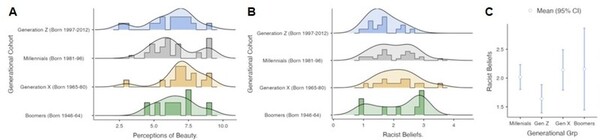
The authors examine the relationships between race, racist beliefs, and perceptions of beauty across cultures and generations.
Read More...Willingness to visit the pediatric dentist during the COVID-19 pandemic

Because of the COVID-19 pandemic, people are missing important appointments because they are viewed as nonessential, possibly including children's pediatric dentist appointments. This study aims to determine how the COVID-19 pandemic has effected parents' willingness to allow children to visit pediatric dental practices and what safety measures would make them feel more comfortable visiting the dentist. The authors found a weak positive correlation between parents' unwillingness to allow their child to visit the dentist, however overall anxiety towards visiting the dentist during the pandemic was low.
Read More...Shortage of Black physicians: Florida Black medical student enrollment from 2013 to 2021
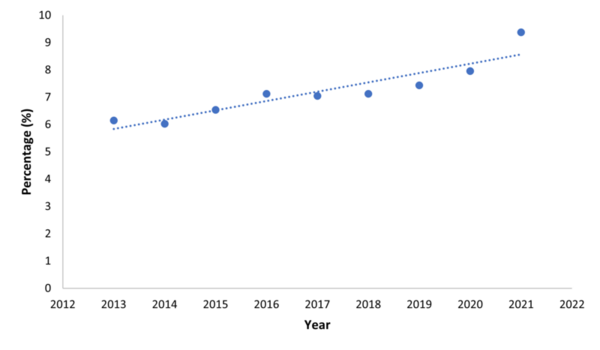
Black patients tend to have better health outcomes when cared for by Black physicians, yet Black doctors make up only 5% of U.S. physicians, despite Black people comprising 14% of the population. This analysis of data from Florida medical schools showed a higher enrollment of Black first-year students (13.5%) compared to the national average (9%), and a national increase from 6% in 2013 to 9% in 2021, aligning with the rise of social justice movements. Increasing Black medical student enrollment could reduce health disparities and improve outcomes for Black communities.
Read More...Country-level relationship of OTC medicine consumption and frequency of GP consultation
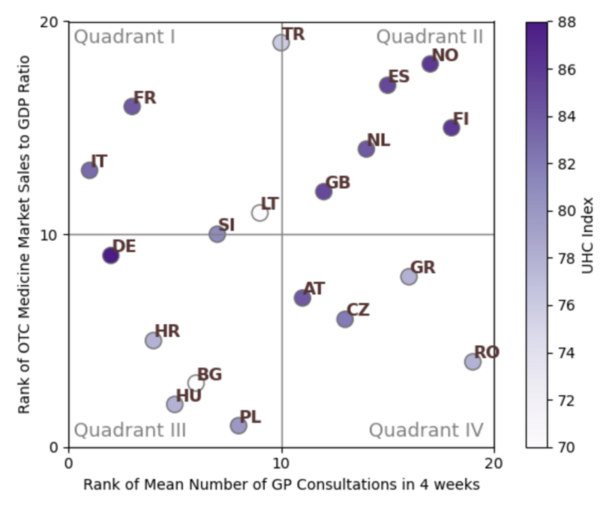
The discussion surrounding self-medication with non-prescription medicines has gained significance in healthcare and public health, particularly given the global increase in consumption of non-prescription drugs. This study aimed to examine the association between the frequency of general practitioner (GP) consultations and the proportion of economic resources spent on OTC medicine.
Read More...Predicting college retention rates from Google Street View images of campuses
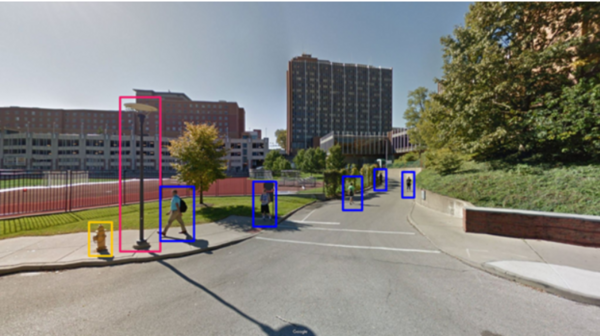
Every year, around 40% of undergraduate students in the United States discontinue their studies, resulting in a loss of valuable education for students and a loss of money for colleges. Even so, colleges across the nation struggle to discover the underlying causes of these high dropout rates. In this paper, the authors discuss the use of machine learning to find correlations between the built environment factors and the retention rates of colleges. They hypothesized that one way for colleges to improve their retention rates could be to improve the physical characteristics of their campus to be more pleasing. The authors used image classification techniques to look at images of colleges and correlate certain features like colors, cars, and people to higher or lower retention rates. With three possible options of high, medium, and low retention rates, the probability that their models reached the right conclusion if they simply chose randomly was 33%. After finding that this 33%, or 0.33 mark, always fell outside of the 99% confidence intervals built around their models’ accuracies, the authors concluded that their machine learning techniques can be used to find correlations between certain environmental factors and retention rates.
Read More...