Browse Articles

Capturing Harmful Air Pollutants Using an Electrospun Mesh Embedded with Zinc-based Nanocrystals

Doppalapudi et al. | May 12, 2020

Capturing Harmful Air Pollutants Using an Electrospun Mesh Embedded with Zinc-based Nanocrystals

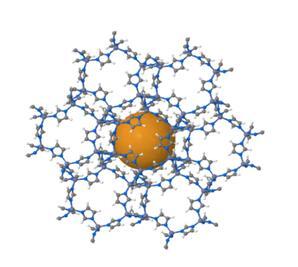
Zeolithic imidazolate framework-8 (ZIF-8) is a specific metal-organic framework that has favorable qualities for use in an air filter and is known to be capable of adsorbing particulate matter. Therefore, the objective of this experiment was to determine the effectiveness of ZIF-8 in adsorbing polar, gaseous air pollutants, specifically nitrogen dioxide and hydrogen sulfide. In order to determine effectiveness, the percent change in concentration for various gases after the application of ZIF-8 crystals was measured via Fourier-transform infrared spectroscopy (FTIR). The work highlights crystals as a potentially promising alternative or addition to current filter materials to reduce atmospheric pollution.

Read More...

What is the optimal fuel for space flight? Efficiency, cost, and environmental impact

Kapitonova et al. | Dec 28, 2023

What is the optimal fuel for space flight? Efficiency, cost, and environmental impact
Image credit: NASA

Here, the authors sought to investigate the efficiency, cost, and environmental impact of several possible propellants that are or could be used for space flight. By deriving three novel equations, they identified harm, energy, and cost scores for each fuel, suggesting that considering each factor will be essential to the ongoing growth of the space industry.

Read More...

Characterization of antibacterial properties of common spices

Gehad et al. | Oct 03, 2020

Characterization of antibacterial properties of common spices

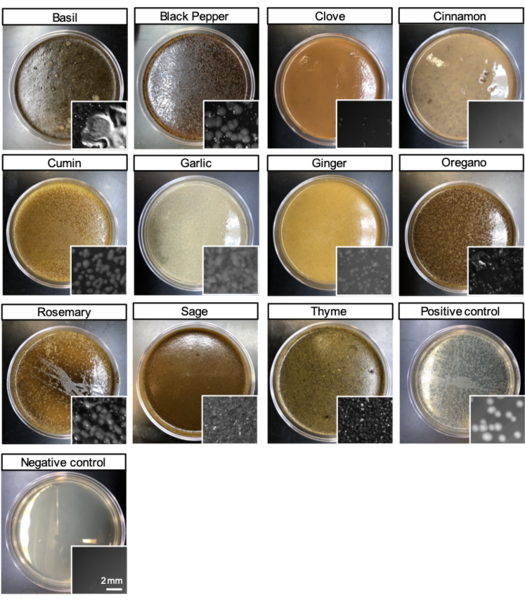
Bacterial infection is resurging as one of the most dangerous challenges facing the medical establishment. Americans spend about 55 to 70 billion dollars per year on antibiotics, yet these antibiotics are becoming increasingly ineffective as illness-causing bacteria gain resistance to the prescribed drugs. We tested if 11 commonly-used spices could inhibit growth of the gram-negative bacteria, E. coli, the main takeaway from these experiments is that certain spices and herbs have antibacterial effects that inhibit growth of E.coli , and these spices could show similarly promising activity towards other bacteria.

Read More...