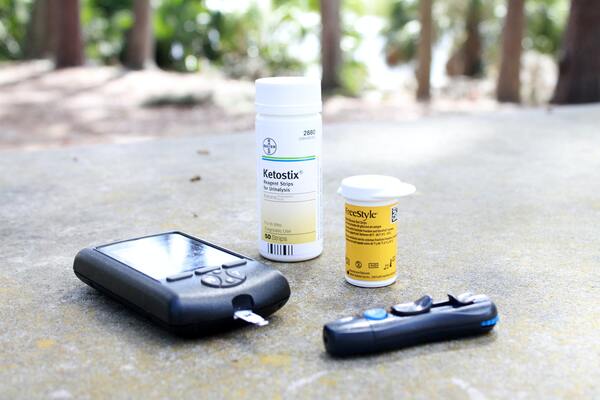
This study uses a fruit fly model of type 1 diabetes (T1D) to determine whether strengthening intestinal tight junctions to reduce intestinal permeability would improve T1D symptoms.
Read More...Observing effects of resolving leaky gut on sugar, fat, and insulin levels during type 1 diabetes in fruit flies
This study uses a fruit fly model of type 1 diabetes (T1D) to determine whether strengthening intestinal tight junctions to reduce intestinal permeability would improve T1D symptoms.
Read More...Use of drone with sodium hydroxide carriers to absorb carbon dioxide from ambient air
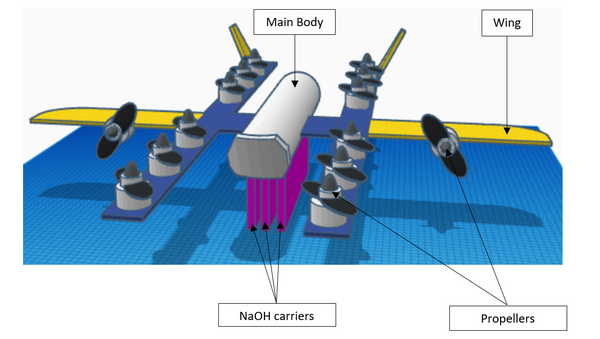
In this study, the authors address the current climate concern of high CO2 levels by testing solid forms of hydroxide for CO2 reduction and designing a drone to fly it in ambient air!
Read More...Monitoring the formation of polyurethane foams with an infrared camera: Classroom activity
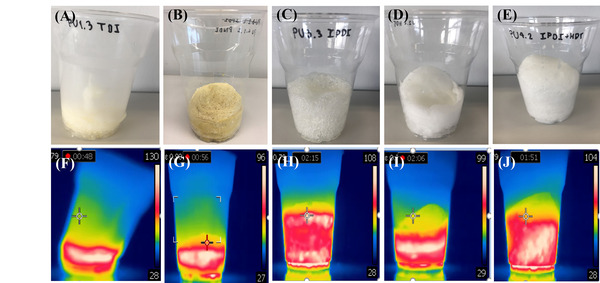
In this study, the authors utilize an infrared camera to visualize and investigate the exothermic reaction of polyurethane foam, which has many everyday uses including automotive seats, bedding, and insulation.
Read More...Utilizing a Wastewater-Based Medium for Engineered Saccharomyces cerevisiae for the Biological Production of Fatty Alcohols and Carboxylic Acids to Replace Petrochemicals
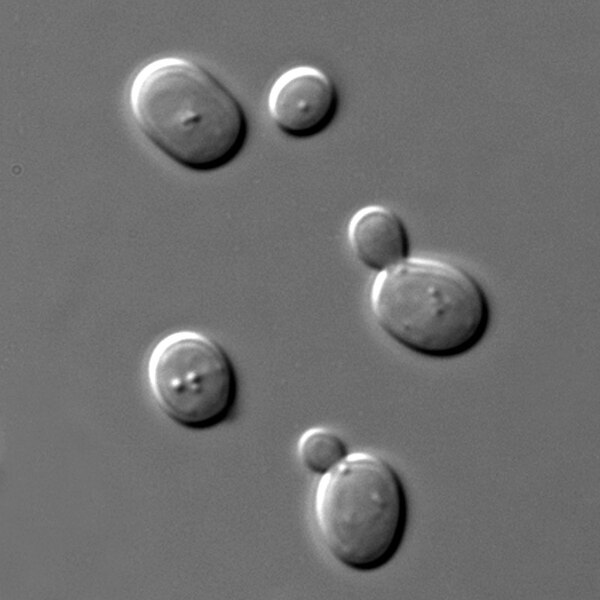
Saccharomyces cerevisiae yeast is used to produce bioethanol, an alternative to fossil fuels. In this study, authors take advantage of this well studied yeast by genetically engineering them to increase fatty acid biosynthesis and culturing in a cost-effective wastewater based medium; potentially providing a sustainable alternative to petrochemicals.
Read More...The Effects of Different Aquatic Environments on the Rate of Polyethylene Biodegradation by Bacillus subtilis
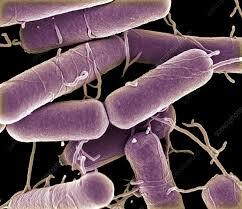
Here the authors test the ability of the bacterium Bacillus subtilis to degrade the polyethylene from plastic waste in various aquatic environments. They determined that degradation can occur among all samples while it was the highest in fresh water and lowest in ocean water.
Read More...Examination of the underlying chemical physics of the Mpemba effect in water and other liquids
Counterintuitive in nature, the Mpemba effect asserts that hot liquid freezes faster than cold liquid. While noted throughout history by scientific minds like Aristotle, the phenomenon remains in contention with varying hypotheses for the effect proposed alongside the effect’s rise in popularity. Contributing to the research efforts surrounding the Mpemba effect, the authors in this article explore the effect in different liquids ranging in physical properties and intermolecular forces to determine potential parameters attributable to producing the Mpemba effect.
Read More...Defying chemical tagging: inhomogeneities in the wide binary system HIP 34407/HIP 34426
This assessed the hypothesis that stars in wide binary systems are chemically homogeneous because of their shared origin. Abundances of the HIP 34407/HIP 34426 binary were obtained by analyzing high-resolution spectra of the system. Discrepancies found in the system’s elemental abundances might be an indicator of the presence of rocky planets around this star. Thus, the differences found in chemical composition might demonstrate limitations in the assumptions of chemical tagging.
Read More...A chemical and overwintering honey bee apiary field study comparing new and expired amitraz miticide
In this study, the authors test the longevity of a anti-mite compound, amitraz, in commercially-sold strips and the age-dependent efficacy of these strips in preventing honey bee colony collapse by ectoparasitic mite Varroa destructor.
Read More...Yeast catalysis of hydrogen peroxide as an enhanced chemical treatment method for harvested rainwater
The authors looked at different treatments to clean up rainwater collected at home. They found that chlorine treatment and treatment with hydrogen peroxide catalyzed by yeast showed similar potential for cleaning up contaminated rainwater, but that further studies are needed to better assess impact on specific contaminant levels still present.
Read More...Quantitative definition of chemical synthetic pathway complexity of organic compounds
Irrespective of the final application of a molecule, synthetic accessibility is the rate-determining step in discovering and developing novel entities. However, synthetic complexity is challenging to quantify as a single metric, since it is a composite of several measurable metrics, some of which include cost, safety, and availability. Moreover, defining a single synthetic accessibility metric for both natural products and non-natural products poses yet another challenge given the structural distinctions between these two classes of compounds. Here, we propose a model for synthetic accessibility of all chemical compounds, inspired by the Central Limit Theorem, and devise a novel synthetic accessibility metric assessing the overall feasibility of making chemical compounds that has been fitted to a Gaussian distribution.
Read More...