In this study, the authors determine which house model is most resistant to high winds by building smaller prototypes that could be tested with a handheld source of wind.
Read More...An accessible experiment to assess the impact of shapes of buildings and roofs on wind resistance
In this study, the authors determine which house model is most resistant to high winds by building smaller prototypes that could be tested with a handheld source of wind.
Read More...Thermoelectric cooling in greenhouses: Implications for small-holder production
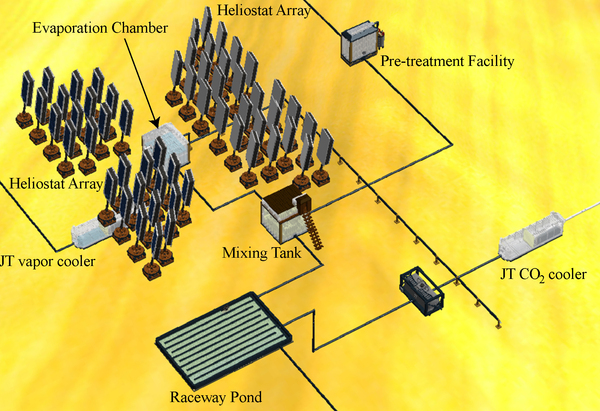
The authors set to test a system that would help with the dehumidification and overall management of greehouses.
Read More...Sex differences in linear polyubiquitination in the entorhinal cortex during fear memory formation
The authors explore sex-specific differences in the formation of fear memories across several rat brain regions.
Read More...Solving a new NP-Complete problem that resembles image pattern recognition using deep learning
In this study, the authors tested the ability and accuracy of a neural net to identify patterns in complex number matrices.
Read More...Linear and non-linear summation of responses to visual and olfactory cues in male Drosophila melanogaster
In this study, the authors investigate whether phototaxis and odortaxis in Drosophila melanogaster occurs through linear summation of cues including light and attractive odorants.
Read More...Spectrophotometric comparison of 4-Nitrophenyl carbonates & carbamates as base-labile protecting groups
In organic synthesis, protecting groups are derivatives of reactive functionalities that play a key role in ensuring chemoselectivity of chemical transformations. To protect alcohols and amines, acid-labile tert-butyloxycarbonyl protecting groups are often employed but are avoided when the substrate is acid-sensitive. Thus, orthogonal base-labile protecting groups have been in demand to enable selective deprotection and to preserve the reactivity of acid-sensitive substrates. To meet this demand, we present 4-nitrophenyl carbonates and carbamates as orthogonal base-labile protecting group strategies.
Read More...An optimal pacing approach for track distance events
In this study, the authors use existing mathematical models to how high school athletes pace 800 m, 1600 m, and 3200 m distance track events compared to elite athletes.
Read More...Analysis of ultraviolet light as a bactericide of gram-negative bacteria in Cladophora macroalgae extracts
Here, the authors sought to use Cladophora macroalgae as a possible antibiotic to address the growing threat of antibiotic resistance in pathogenic bacteria. However, when they observed algae extracts to be greatly contaminated with gram-negative bacteria, they adapted to explore the ability to use ultraviolet light as a bactericide. They found that treatment with ultraviolet light had a significant effect.
Read More...Risk assessment modeling for childhood stunting using automated machine learning and demographic analysis
Over the last few decades, childhood stunting has persisted as a major global challenge. This study hypothesized that TPTO (Tree-based Pipeline Optimization Tool), an AutoML (automated machine learning) tool, would outperform all pre-existing machine learning models and reveal the positive impact of economic prosperity, strong familial traits, and resource attainability on reducing stunting risk. Feature correlation plots revealed that maternal height, wealth indicators, and parental education were universally important features for determining stunting outcomes approximately two years after birth. These results help inform future research by highlighting how demographic, familial, and socio-economic conditions influence stunting and providing medical professionals with a deployable risk assessment tool for predicting childhood stunting.
Read More...Preliminary investigation of Allosauroidea facial integument and the evolution of theropod facial armor
The facial integument, or external skin tissues, were assessed on set of dinosaurs from the Allosauroidea clade to test whether dermal patterns served specific functions.
Read More...