Browse Articles

Allelopathic Effects of Kudzu (Pueraria montana) on Seed Germination and Their Potential Use As a Natural Herbicide

Mathur et al. | Dec 19, 2013

Allelopathic Effects of Kudzu (<em>Pueraria montana</em>) on Seed Germination and Their Potential Use As a Natural Herbicide

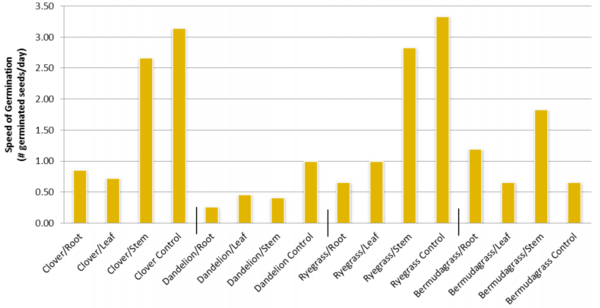
Plants in the wild compete with each other for nutrients and sunlight. Kudzu is a weed that is thought to secrete compounds that inhibit the growth of other plants. Here the authors find that certain parts of kudzu plants can block the germination of clover and dandelion seeds. These experiments may lead to a weed killer that is safe and naturally derived.

Read More...

Exploring Political Discourse Among High School Journalists with Web Scraping and AI Technology

Gong et al. | Jun 10, 2025

Exploring Political Discourse Among High School Journalists with Web Scraping and AI Technology

Here the authors provided greater coverage of adolescent stances by investigating the political perspectives and trends of high school journalists, utilizing web scraping methods and artificial intelligence (ChatGPT-4o) to analyze over 153,000 articles. They found that high school publications exhibit lower levels of political polarization compared to mainstream media and that journalists' views, while tending to lean moderately liberal, showed no significant correlation with local voting patterns.

Read More...

Genetic Bioaugmentation of Oryza sativa to Facilitate Self-Detoxification of Arsenic In-Situ

Bhat et al. | Dec 03, 2024

Genetic Bioaugmentation of Oryza sativa to Facilitate Self-Detoxification of Arsenic In-Situ

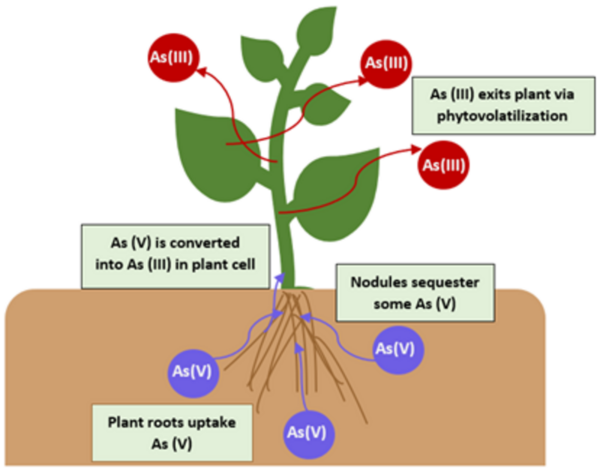
Arsenic contamination in rice, caused by the use of arsenic-laden groundwater for irrigation, is a growing global concern, affecting over 150 million people. To address this, researchers hypothesized that genetically modifying rice plants with arsenic-resistant genes could reduce arsenic uptake and allow the plants to detoxify arsenic, making them safer to consume.

Read More...

Osmotic characteristics of water retention structures of Bursera microphylla in relation to soil salinity

Groom et al. | Jul 12, 2023

Osmotic characteristics of water retention structures of <i>Bursera microphylla</i> in relation to soil salinity
Image credit: Lisa Fotios

This study hypothesized that sodium chloride was taken up through plant root structures to facilitate water transportation, and that sodium chloride accumulation was directly proportional to the soil salinity. Results showed that most cells within the “bulb” structures were isotonic at a concentration approximately twice as high as that of root tissue and ambient soil salinity, therefore supporting the presented hypothesis.

Read More...