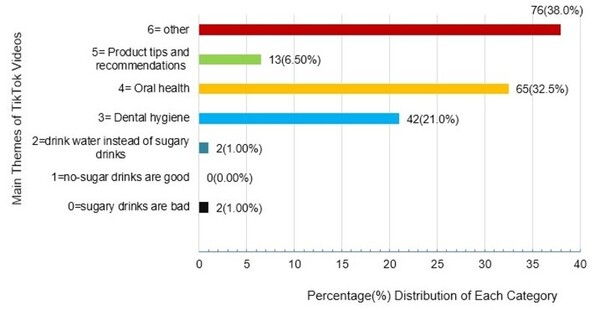
The authors looked at common themes of videos created by 10 different dental influencers.
Read More...Analysis of content created by dental influencers on TikTok and its impact on society
The authors looked at common themes of videos created by 10 different dental influencers.
Read More...Unraveling individuality in dance through weight distribution analysis of Nihon Buyo dancers

The author looked at how dance styles can vary by individuals, even between a student and their teacher.
Read More...High school students’ perceptions of third-party tracking and personalization
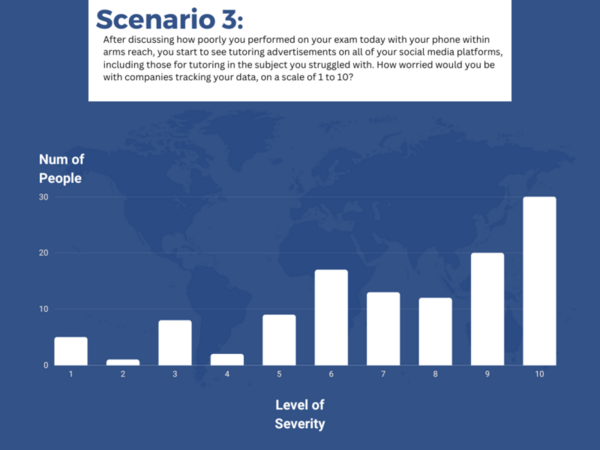
The authors looked at student perception on various situations involving third-party tracking to personalize recommendations.
Read More...The effect of sports on teenagers’ depression symptoms during the COVID-19 pandemic

Here, seeking to identify the possible role of sports in helping teenagers navigate the troubles associated with societal changes during a pandemic, the authors surveyed 50 adolescents to collect Beck Depression Inventory scores. They found that 9 out of students with severe depressions did not do sports, while no significant relationship between depressive symptoms and either gender or place of exercise was observed.
Read More...Obscurity of eyebrows influences recognition of human emotion and impacts older adolescents

Here, seeking to better understand how facial features provide important visual cues to help convey emotions, the authors evaluated the accuracy and reaction time of participants in regards to experimental photographs where a person's eyebrows were obscured and ones where they were not. Their findings revealed that removing eyebrows resulted in a significant decrease in a participant's ability to recognize anger, with adolescents most likely to misidentify emotions.
Read More...Psychosocial impact of home-based learning among students during the COVID-19 Pandemic in Singapore

In this study, the authors surveyed a number of students in Singapore to determine how their experiences changed after the implementation of home-based learning during the COVID-19 pandemic.
Read More...Examining the relationship between screen time and achievement motivation in an adolescent population

In this study, the authors conduct a survey of high school students to evaluate the effects of screen time and habits on motivation.
Read More...The Effect of Interactive Electronics Use on Psychological Well Being and Interpersonal Relationship Quality in Adults

In recent years, usage of interactive electronic devices such as computers, smartphones, and tablets has increased dramatically. Many studies have examined the potential adverse effects of excessive usage of such devices on children and adolescents, but the effects on adults are not well understood. In this study, the authors examined the relationship between adult usage of interactive electronic devices and a variety of clinical measures of psychological well-being. They found that according to some metrics, higher usage of interactive electronic devices is associated with several adverse psychological outcomes, suggesting a need for more careful consideration of such usage patterns in clinical settings.
Read More...Environmental, Social, and Governance (ESG) Standards and Financial Performance in Vietnam’s Media Sector

In this study, the authors examine the relationship between ESG (Environmental, Social, and Governance) factors on financial performance of Vietnamese media companies, as measured by ROA and ROE. They find that ESG is positively correlated with financial performance, as is sales growth. They also find that financial leverage is negatively correlated with ROA. Overall, this is a quality study, although the methods section requires more detail.
Read More...Racial and gender disparities in the portrayal of lawyers and physicians on television
Powered by the sociological framework that exposure to television bleeds into social biases, limiting media representation of women and minority groups may lead to real-world implications and manifestations of racial and gender disparities. To address this phenomenon, the researchers in this article take a look at primetime fictional representation of minorities and women as lawyers and physicians and compare television representation to census data of the same groups within real-world legal and medical occupations. The authors maintain the hypothesis that representation of female and minority groups as television lawyers and doctors is lower than that of their white male counterparts relative to population demographics - a trend that they expect to also be reflected in actual practice. With fictional racial and gender inequalities and corresponding real-world trends highlighted within this article, the researchers call for address towards representation biases that reinforce each other in both fictional and non-fictional spheres.
Read More...