%20final%202-5-23.jpg)
The authors looked at 5-FU resistant HeLa cells and the ability of an herbal extract to show anti-inflammatory properties.
Read More...The anticancer and anti-inflammatory effects of polyherbal drug AS20 on HeLa cells resistant to 5-Fluorouracil
The authors looked at 5-FU resistant HeLa cells and the ability of an herbal extract to show anti-inflammatory properties.
Read More...Combating drug resistance in cancer cells: Cooperative effect of green tea and turmeric with chemotherapeutic drug
.jpg)
The major drawback of chemotherapy regimens for treating cancer is that the cancerous cells acquire drug resistance and become impervious to further dose escalation. Keeping in mind the studied success of herbal formulations with regard to alternative treatments for cancer, we hypothesized that the use of a chemotherapeutic drug and proprietary herbal formulation, HF1, would combat this phenomenon when administered with common chemotherapeutic drug 5FU. Results demonstrated a cooperative effect between HF1 and 5FU on the drug resistant cell line, implying that administration of HF1 with 5FU results in cell death as measured by MTT assay.
Read More...Reactivity-informed design, synthesis, and Michael addition kinetics of C-ring andrographolide analogs
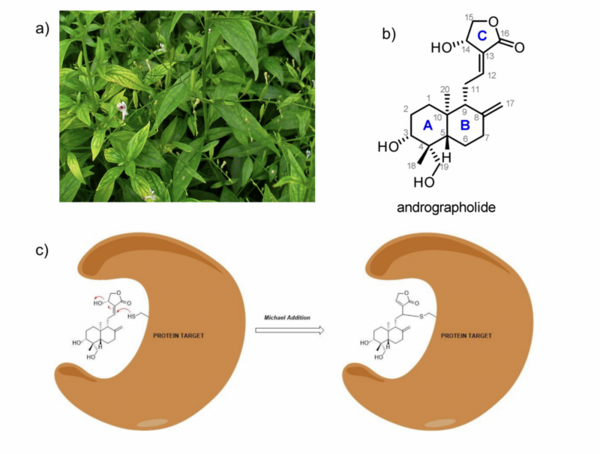
Here, based on the identification of androgapholide as a potential therapeutic treatment against cancer, Alzheimer's disease, diabetes, and multiple sclerosis, due to its ability to inhibit a signaling pathway in immune system function, the authors sought ways to optimize the natural product human systems by manipulating its chemical structure. Through the semisynthesis of a natural product along with computational studies, the authors developed an understanding of the kinetic mechanisms of andrographolide and semisynthetic analogs in the context of Michael additions.
Read More...Reducing PMA-induced COX-2 expression using a herbal formulation in MCF-7 breast cancer cells
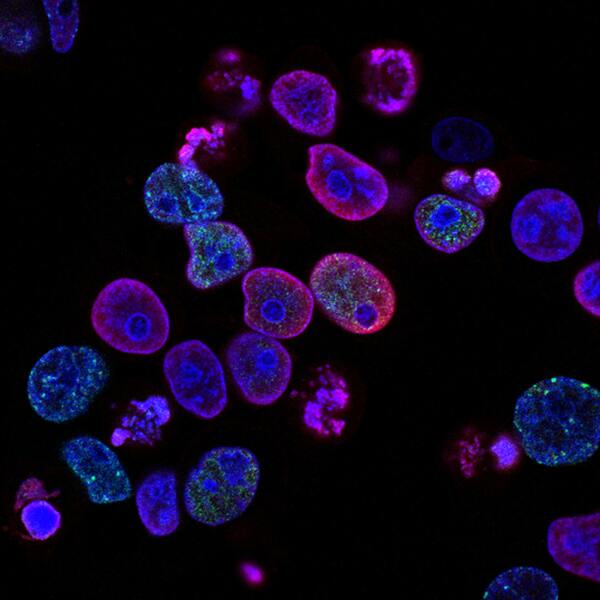
In this study, the authors investigate the effect of a herbal formulation on Cyclooxygenase-2 (COX-2) expression in cancer cells. High levels of COX-2 correlates with worsened cancer outcomes and the authors hypothesize that the formulation will inhibit COX-2 levels.
Read More...A Novel Approach to Prevent and Restrict Early Stages of Cancer Cell Growth Using a Combination of Moringa and Sesame in a Drosophila Model
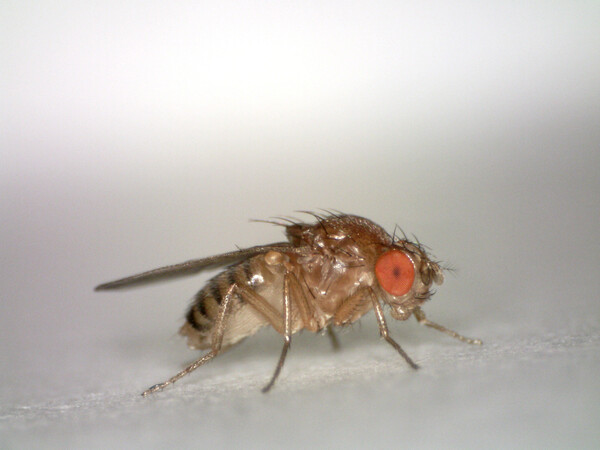
Sesame (Sesamum indicum) and moringa (Moringa oleifera) have natural antioxidants that could prevent cancer growth. Previously, this group found that sesame and moringa individually suppress eye tumor grown in the Drosophila melanogaster model. In the present study, combinations of sesame and moringa at different concentrations were included in the D. melanogaster diet. The impact on eye tumor development was assessed at different stages of growth.
Read More...Effect of pH on the antibacterial properties of turmeric
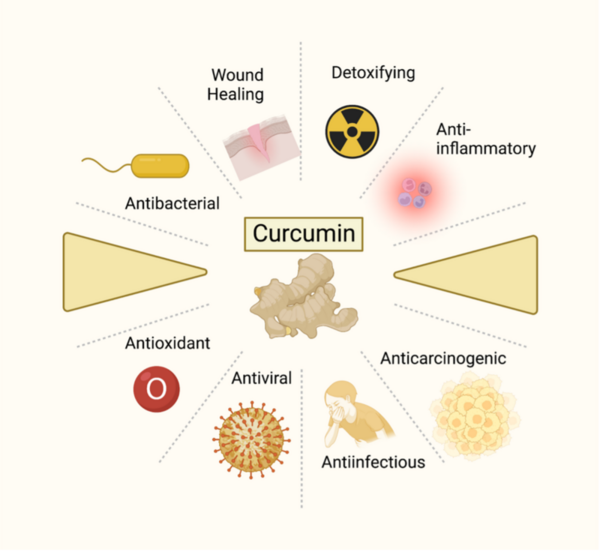
Some spices have antimicrobial or antibacterial properties that people have already tested. Turmeric has a wide variety of uses and has even been implemented in alternative medicine as a treatment for cancer, inflammation, osteoarthritis, and other diseases. We tested the antimicrobial effects of turmeric under two different pHs to characterize this effect in vitro. Decreasing the pH of a solution of turmeric may increase antibacterial properties.
Read More...Analyzing the effects of genetic mutations in BRCA1, BRCA2, BARD1, and MLH1 in causing different cancers
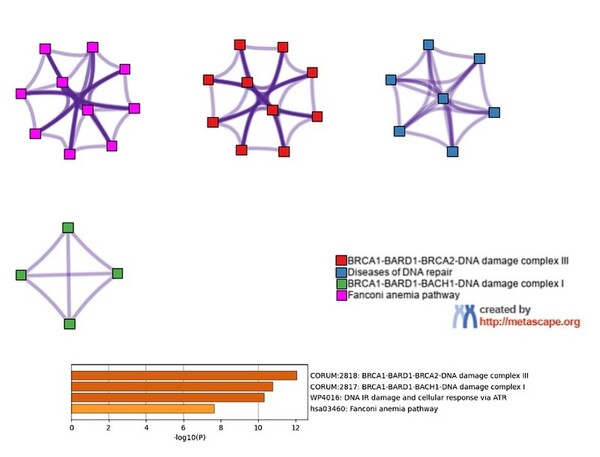
This paper utilizes multiple publicly available cancer datasets to explore the abundance of different genetic dependencies across various cancer types. They explore this by looking at four genes highly associated with cancer and their genetic and pathogenic relationships.
Read More...Combinatorial treatment by siNOTCH and retinoic acid decreases A172 brain cancer cell growth

Treatments inhibiting Notch signaling pathways have been explored by researchers as a new approach for the treatment of glioblastoma tumors, which is a fast-growing and aggressive brain tumor. Recently, retinoic acid (RA) therapy, which inhibits Notch signaling, has shown a promising effect on inhibiting glioblastoma progression. RA, which is a metabolite of vitamin A, is very important in embryonic cellular development, which includes the regulation of multiple developmental processes, such as brain neurogenesis. However, high doses of RA treatment caused many side effects such as headaches, nausea, redness around the injection site, or allergic reactions. Therefore, we hypothesized that a combination treatment of RA and siRNA targeting NOTCH1 (siNOTCH1), the essential gene that activates Notch signaling, would effectively inhibit brain cancer cell proliferation. The aim of the study was to determine whether inhibiting NOTCH1 would inhibit the growth of brain cancer cells by cell viability assay. We found that the combination treatment of siNOTCH1 and RA in low concentration effectively decreased the NOTCH1 expression level compared to the individual treatments. However, the combination treatment condition significantly decreased the number of live brain cancer cells only at a low concentration of RA. We anticipate that this novel combination treatment can provide a solution to the side effects of chemotherapy.
Read More...Zinc-related Treatments Combined with Chloroquine and Gemcitabine for Treating Pancreatic Cancer

Pancreatic cancer is one of the deadliest cancers, with a 10% 5-year survival rate. The authors studied various dosages of TPEN and zinc in combination with Chloroquine and Gemcitabine as treatments to reduce cell proliferation. Results showed that when combined with Chloroquine and Gemcitabine, zinc and TPEN both significantly lowered cell proliferation compared to Gemcitabine, suggesting a synergistic effect that resulted in a more cytotoxic treatment. Further research and clinical trials on this topic are needed to determine whether this could be a viable treatment for pancreatic cancer.
Read More...Transfer learning and data augmentation in osteosarcoma cancer detection
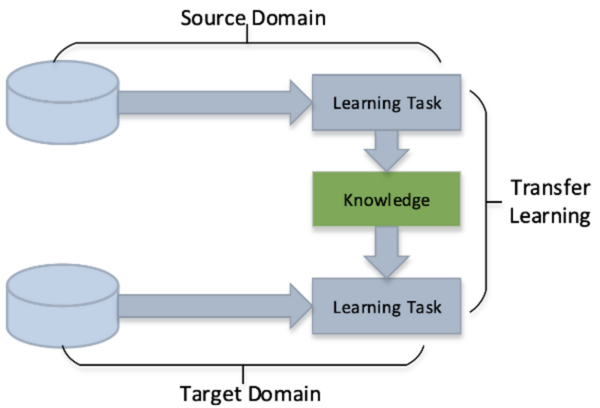
Osteosarcoma is a type of bone cancer that affects young adults and children. Early diagnosis of osteosarcoma is crucial to successful treatment. The current methods of diagnosis, which include imaging tests and biopsy, are time consuming and prone to human error. Hence, we used deep learning to extract patterns and detect osteosarcoma from histological images. We hypothesized that the combination of two different technologies (transfer learning and data augmentation) would improve the efficacy of osteosarcoma detection in histological images. The dataset used for the study consisted of histological images for osteosarcoma and was quite imbalanced as it contained very few images with tumors. Since transfer learning uses existing knowledge for the purpose of classification and detection, we hypothesized it would be proficient on such an imbalanced dataset. To further improve our learning, we used data augmentation to include variations in the dataset. We further evaluated the efficacy of different convolutional neural network models on this task. We obtained an accuracy of 91.18% using the transfer learning model MobileNetV2 as the base model with various geometric transformations, outperforming the state-of-the-art convolutional neural network based approach.
Read More...