In this study, the authors examined the effects of commonly used pesticides (metolachlor, glyphosate, chlorpyrifos, and atrazine) on population size, motor function, and learning in Drosophila melanogaster.
Read More...Effects of Common Pesticides on Population Size, Motor Function, and Learning Capabilities in Drosophilia melanogaster
In this study, the authors examined the effects of commonly used pesticides (metolachlor, glyphosate, chlorpyrifos, and atrazine) on population size, motor function, and learning in Drosophila melanogaster.
Read More...Effects of Ocean Acidification on the Photosynthetic Ability of Chaetoceros gracilis in the Monterey Bay
In this article, Harvell and Nicholson hypothesized that increased ocean acidity would decrease the photosynthetic ability of Chaetoceros gracilis, a diatom prolific in Monterey Bay, because of the usually corrosive effects of carbonic acid on both seashells and cells’ internal structures. They altered pH of algae environments and measured the photosynthetic ability of diatoms over four days by spectrophotometer. Overall, their findings indicate that C. gracilis may become more abundant in Monterey Bay as the pH of the ocean continues to drop, potentially contributing to harmful algal blooms.
Read More...Repulsion of Ants Using Non-Toxic Household Products
Ant invasion causes damage exceeding $5 billion annually in North America. In this study, Ambati and Duvvuri aim to identify natural products with ant-repelling properties using a custom ring apparatus designed to quantify ant-repellence. They report that cinnamon and lemon were the most effective ant repellents of the tested products. These data suggest that compounds found in non-toxic household products, such as cinnamon oil and lemon juice, could be used in low-dose combinations as potent, effective, eco-friendly, and safe ant repellents.
Read More...Performance of Panicum virgatum Cultivars in Competition With Bromus inermis and Differing Amounts of N Fertilizer
With growing demands for ethanol, many researchers are turning to Panicum virgatum (switchgrass) as a feedstock of cellulosic ethanol. In this study, Ferris and Gillan examine the germination, biomass, nitrogen, survival, and chlorophyll absorbance of two switchgrass cultivars of grown in competition with Bromus inermis (smooth brome) with two varying levels of nitrogen fertilizer. Results presented indicate that during establishment, competition from other species has a greater effect than nitrogen fertilizer.
Read More...A Quantitative Analysis of the Proliferation of Microplastics in Williamston’s Waterways
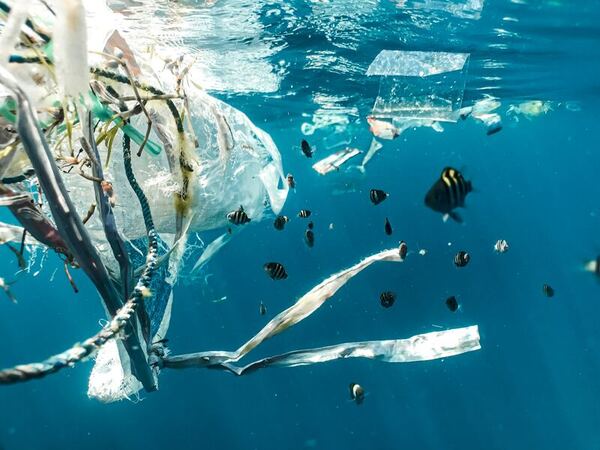
Plastic debris can disrupt marine ecosystems, spread contaminants, and take years to naturally degrade. In this study, Wu et al aim to establish an understanding of the scope of Williamston, Michigan’s microplastics problem, as well as to attempt to find the source of these plastics. Initially, the authors hypothesize that the Williamston Wastewater Treatment Plant was the primary contributor to Williamston’s microplastics pollution. Although they find a general trend of increasing concentrations of microplastics from upstream to downstream, they do not pinpoint the source of Williamston’s microplastics pollution in the present research.
Read More...The Effects of Post-Consumer Waste Polystyrene on the Rate of Mealworm Consumption
In a world where plastic waste accumulation is threatening both land and sea life, Green et al. investigate the ability of mealworms to breakdown polystyrene, a non-recyclable form of petrochemical-based polymer we use in our daily lives. They confirm that these organisms, can degrade various forms of polystyrene, even after it has been put to use in our daily lives. Although the efficiency of the degradation process still requires improvement, the good news is, the worms are tiny and themselves are biodegradable, so we can use plenty of them without worrying about space and how to get rid of them. This is very promising and certainly good news for the planet.
Read More...Monitoring Local Soil Toxicity by Daphnia magna Viability
In this study a student uses Daphnia magna, or water fleas, to assay the purity of local soil samples. Daphnia magna are a helpful organism to detect potentially harmful levels of toxins in water.
Read More...Modeling Energy Produced by Solar Panels
In this study, the authors test the effect that the tilt angle of a solar panel has on the amount of energy it generates. This investigation highlights a simple way that people can harvest renewable energy more efficiently and effectively.
Read More...Estimating Paleoenvironments Utilizing Foraminiferal Fossils from the Toyohama Formation, Aichi Prefecture, Central Japan
Foraminifera are a diverse phylum of marine protists that produce elaborate shells. Because of their abundance and morphological diversity, foraminiferal fossil assemblages are used for biostratigraphy, to accurately date sedimentary rocks and to characterize past ocean environments. In this paper, authors collected fossils within the Morozaki Group in central Honshu, Japan, to assess past marine environments and species diversity.
Read More...Bacterial Richness of Soil Samples from Southern New Hampshire
Advancement in DNA sequencing technology has greatly increased our understanding about the role of bacteria in soil. The authors of this study examine the microbial content of soil samples taken from three locations in southern New Hampshire with varying pH and plant composition.
Read More...