Browse Articles

Optimizing data augmentation to improve machine learning accuracy on endemic frog calls

Anand et al. | Mar 09, 2025

Optimizing data augmentation to improve machine learning accuracy on endemic frog calls
Image credit: Anand and Sampath 2025

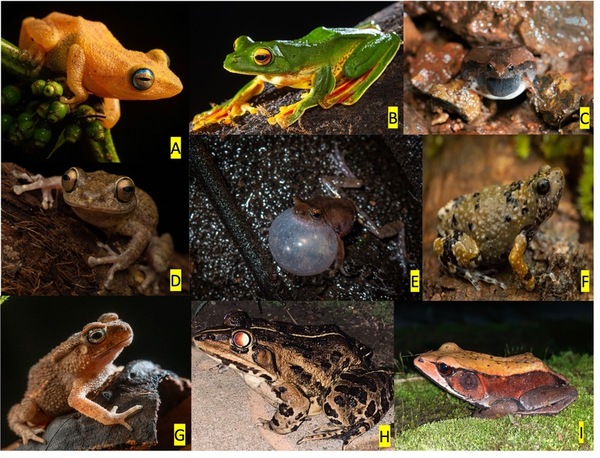
The mountain chain of the Western Ghats on the Indian peninsula, a UNESCO World Heritage site, is home to about 200 frog species, 89 of which are endemic. Distinctive to each frog species, their vocalizations can be used for species recognition. Manually surveying frogs at night during the rain in elephant and big cat forests is difficult, so being able to autonomously record ambient soundscapes and identify species is essential. An effective machine learning (ML) species classifier requires substantial training data from this area. The goal of this study was to assess data augmentation techniques on a dataset of frog vocalizations from this region, which has a minimal number of audio recordings per species. Consequently, enhancing an ML model’s performance with limited data is necessary. We analyzed the effects of four data augmentation techniques (Time Shifting, Noise Injection, Spectral Augmentation, and Test-Time Augmentation) individually and their combined effect on the frog vocalization data and the public environmental sounds dataset (ESC-50). The effect of combined data augmentation techniques improved the model's relative accuracy as the size of the dataset decreased. The combination of all four techniques improved the ML model’s classification accuracy on the frog calls dataset by 94%. This study established a data augmentation approach to maximize the classification accuracy with sparse data of frog call recordings, thereby creating a possibility to build a real-world automated field frog species identifier system. Such a system can significantly help in the conservation of frog species in this vital biodiversity hotspot.

Read More...
Differential privacy in machine learning for traffic forecasting

Vinay et al. | Dec 21, 2022

Differential privacy in machine learning for traffic forecasting

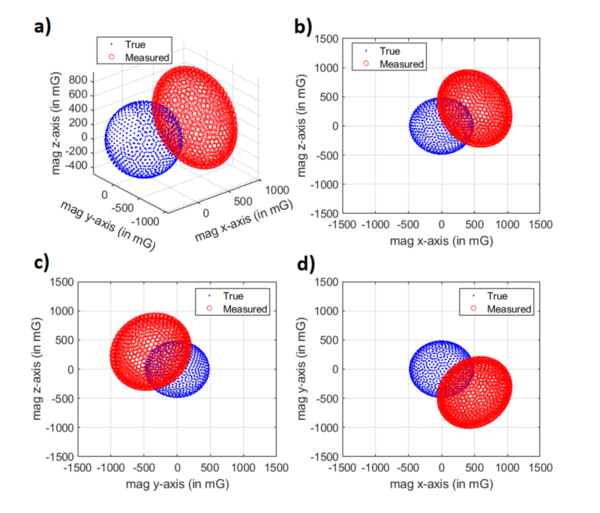
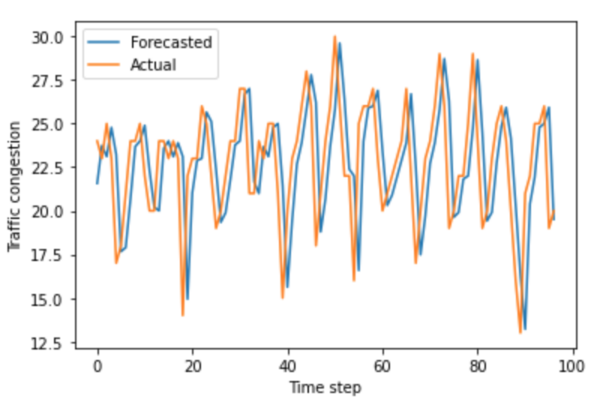
In this paper, we measured the privacy budgets and utilities of different differentially private mechanisms combined with different machine learning models that forecast traffic congestion at future timestamps. We expected the ANNs combined with the Staircase mechanism to perform the best with every value in the privacy budget range, especially with the medium high values of the privacy budget. In this study, we used the Autoregressive Integrated Moving Average (ARIMA) and neural network models to forecast and then added differentially private Laplacian, Gaussian, and Staircase noise to our datasets. We tested two real traffic congestion datasets, experimented with the different models, and examined their utility for different privacy budgets. We found that a favorable combination for this application was neural networks with the Staircase mechanism. Our findings identify the optimal models when dealing with tricky time series forecasting and can be used in non-traffic applications like disease tracking and population growth.

Read More...

Error mitigation of quantum teleportation on IBM quantum computers

Chen et al. | May 15, 2023

Error mitigation of quantum teleportation on IBM quantum computers

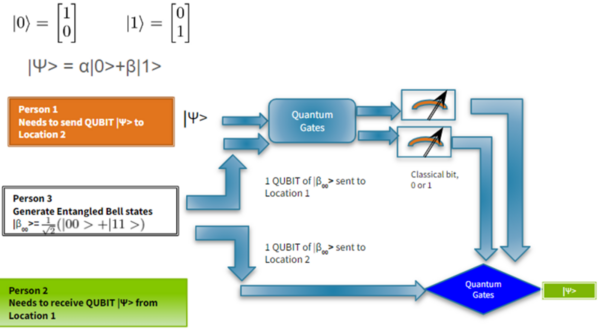
Quantum computers can perform computational tasks beyond the capability of classical computers, such as simulating quantum systems in materials science and chemistry. Quantum teleportation is the transfer of quantum information across distances, relying on entangled states generated by quantum computing. We sought to mitigate the error of quantum teleportation which was simulated on IBM cloud quantum computers.

Read More...

Ground-based Follow-up Observations of TESS Exoplanet Candidates

Tang et al. | May 29, 2020

Ground-based Follow-up Observations of  TESS Exoplanet Candidates

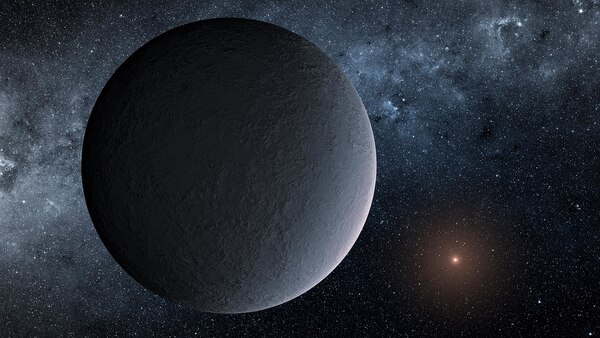
The goal of this study was to further confirm, characterize, and classify LHS 3844 b, an exoplanet detected by the Transiting Exoplanet Survey Satellite (TESS). Additionally, we strove to determine the likeliness of LHS 3844 b and similar planets as qualified candidates for observation with the James Webb Space Telescope (JWST).

Read More...