Invasive species pose a significant threat to many ecosystems, whether by outcompeting native species and disturbing food webs, or through increasing risks of natural disasters like flooding and wildfires. The ornamental grass species Pennisetum villosum R. Br. was previously identified by the California Invasive Plant Council as being potentially invasive; this experiment was conducted to determine if P. villosum displays characteristics of an invasive species when grown in a California chaparral environment. Reults found that in both conditions, the two species had similar germination rates, and that P. villosum grew significantly larger than N. pulchra for around 95 days.
Read More...Browse Articles
Access to public parks, drinking fountains, and clean public drinking water in the Bay Area is not driven by income
Access to green space—an area of grass, trees, or other vegetation set apart for recreational or aesthetic purposes in an urban environment—and clean drinking water can be unequally distributed in urban spaces, which are often associated with income inequality. Little is known about public drinking water and green space inequities in the Bay Area. For our study, we sought to understand how public park access, drinking fountain access, and the quality of public drinking water differ across income brackets in the Bay Area. Though we observed smaller-scale instances of inequalities, in the park distribution in the Bay Area as a whole, and in the Southern Bay’s water quality and park distribution, our results indicate that other factors could be influencing water quality, and park and fountain access in the Bay Area.
Read More...Reduce the harm of acid rain to plants by producing nitrogen fertilizer through neutralization
The phenomenon of dying trees and plants in areas affected by acid rain has become increasingly problematic in recent times. Is there any method to efficiently utilize the rainwater and reduce the harmfulness of acid rain or make it beneficial to plants? This study aimed to investigate the potential of neutralizing acid rainwater infiltrating the soil to increase soil pH, produce beneficial salts for plants, and support better plant growth. To test this hypothesis, precipitation samples were collected from six states in the U.S. in 2022, and the pH of the acid rain was measured to obtain a representative pH value for the country. Experiments were then conducted to simulate the neutralization of acid rain and the subsequent change in soil pH levels. To evaluate the effectiveness and feasibility of this method, cat grass was planted in pots of soil soaked with solutions mimicking acid rain, with control and experimental groups receiving neutralizing agents (ammonium hydroxide) or not. Plant growth was measured by analyzing the height of the plants. Results demonstrated that neutralizing agents were effective in improving soil pH levels and that the resulting salts produced were beneficial to the growth of the grass. The findings suggest that this method could be applied on a larger agricultural scale to reduce the harmful effects of acid rain and increase agricultural efficiency.
Read More...Determining the Effect of Chemical and Physical Pretreatments on the Yield and Energy Output of Cellulosic Ethanol from Panicum Virgatum
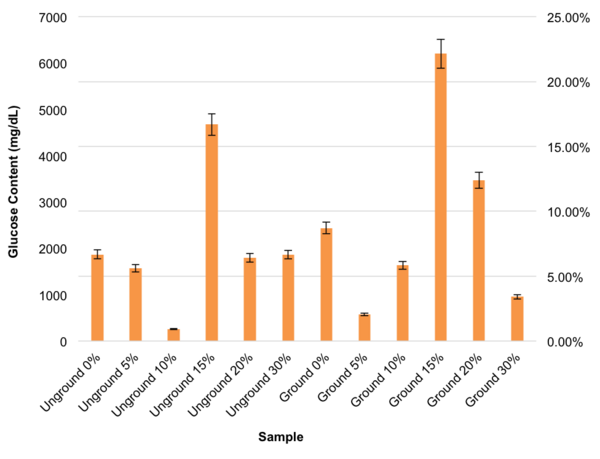
Fossil fuels are a limited resource; thus, it is important to explore new sources of energy. The authors examine the ability of switchgrass to produce ethanol and test the effects of pretreatment and grinding on ethanol yield.
Read More...