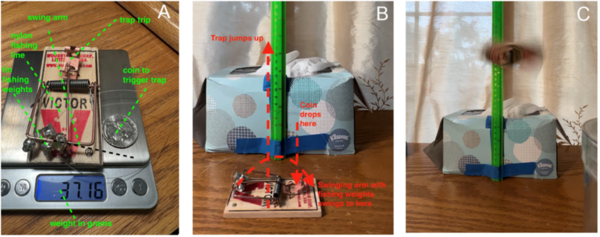
The authors use the unique movements of the jumping gall wasp to study momentum transfer with potential applications in robotics and extraterrestrial research.
Read More...Investigating momentum transfer with gall-forming wasps
The authors use the unique movements of the jumping gall wasp to study momentum transfer with potential applications in robotics and extraterrestrial research.
Read More...Star anise and oregano essential oil: A comparative evaluation of antibacterial effect
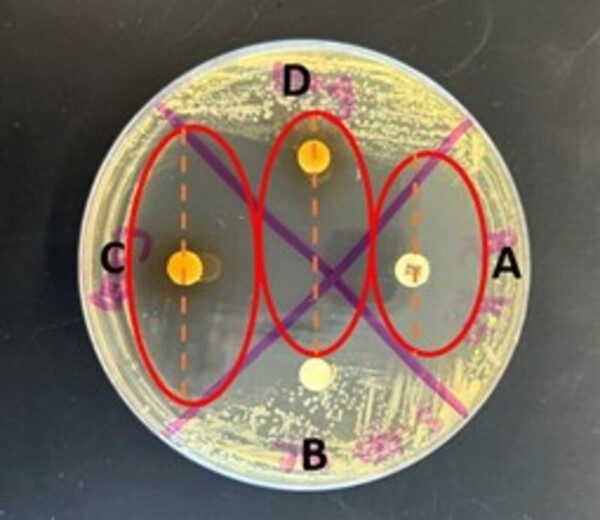
The authors looked at the antibacterial effects of oregano and star anise essential oils against E. coli or S. epidermis. They found that oregano oil showed antibacterial activity against both E. coli or S. epidermis, and that star anise oil had a larger zone of inhibition in E. coli than tetracycline, a conventional antibiotic.
Read More...Analyzing breath sounds by using deep learning in diagnosing bronchial blockages with artificial lung
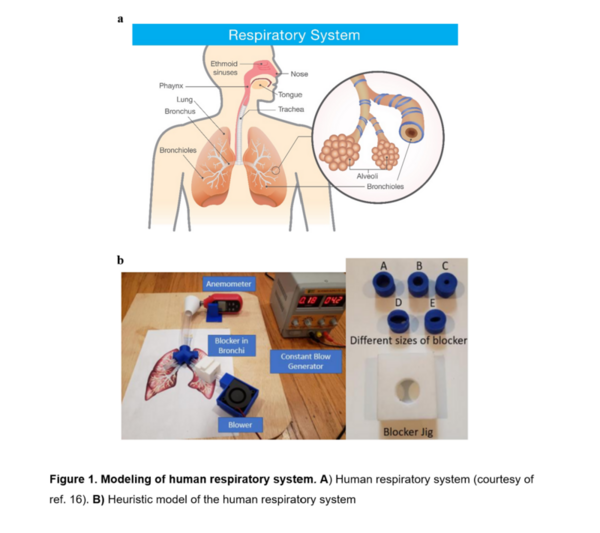
Many common respiratory illnesses like bronchitis, asthma, and chronic obstructive pulmonary disease (COPD) lead to bronchial inflammation and, subsequently, a blockage. However, there are many difficulties in measuring the severity of the blockage. A numeric metric to determine the degree of the blockage severity is necessary. To tackle this demand, we aimed to develop a novel human respiratory model and design a deep-learning program that can constantly monitor and report bronchial blockage by recording breath sounds in a non-intrusive way.
Read More...The effect of viscous drag on damped simple harmonic motion
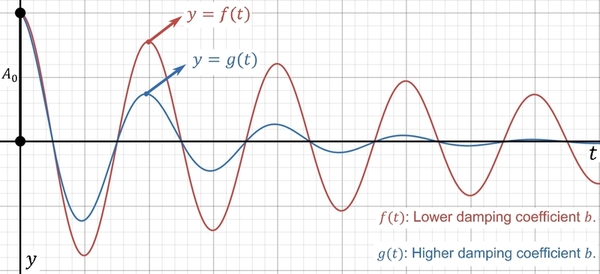
Dynamic viscosity is a quantity that describes the magnitude of a fluid’s internal friction or thickness. Traditionally, scientists measure this quantity by either calculating the terminal velocity of a falling sphere or the time a liquid takes to flow through a capillary tube. However, they have yet to conduct much research on finding this quantity through viscous damped simple harmonic motion. The present study hypothesized that the relationship between the dynamic viscosity and the damping coefficient is positively correlated.
Read More...A novel CNN-based machine learning approach to identify skin cancers
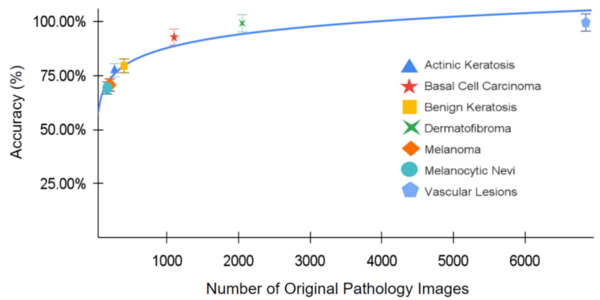
In this study, the authors developed and assessed the accuracy of a machine learning algorithm to identify skin cancers using images of biopsies.
Read More...Reducing levels of C-Reactive Protein: An eight-week, open-label clinical trial of three oral supplements

In this study, the effects of vitamin C, ginger, or curcumin supplements on C-reactive protein levels in healthy participants are determined in an eight-week open-label trial.
Read More...Zinc-related Treatments Combined with Chloroquine and Gemcitabine for Treating Pancreatic Cancer

Pancreatic cancer is one of the deadliest cancers, with a 10% 5-year survival rate. The authors studied various dosages of TPEN and zinc in combination with Chloroquine and Gemcitabine as treatments to reduce cell proliferation. Results showed that when combined with Chloroquine and Gemcitabine, zinc and TPEN both significantly lowered cell proliferation compared to Gemcitabine, suggesting a synergistic effect that resulted in a more cytotoxic treatment. Further research and clinical trials on this topic are needed to determine whether this could be a viable treatment for pancreatic cancer.
Read More...Thermoelectric Power Generation: Harnessing Solar Thermal Energy to Power an Air Conditioner
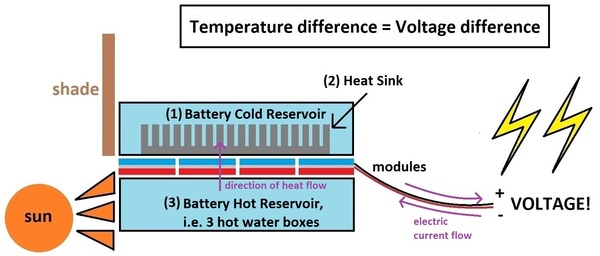
The authors test the feasibility of using thermoelectric modules as a power source and as an air conditioner to decrease reliance on fossil fuels. The results showed that, at its peak, their battery generated 27% more power – in watts per square inch – than a solar panel, and the thermoelectric air conditioner operated despite an unsteady input voltage. The battery has incredible potential, especially if its peak power output can be maintained.
Read More...The effect of floating plant on water purification: Comparison of the water purification capability of Water Hyacinth, Duckweed, and Azolla

Clean water is a necessity for every household, yet water pollution is a serious problem in many parts of the world and plays a major role in compromising water security in the 21st century. In this paper, the authors address the utility of several plants as natural water purifiers. They estimate the effectiveness of duckweed, hyacinth, and azolla in improving the quality of water from the Mithi river in India by measuring several metrics. They conclude that all three plants are effective in improving water quality, suggesting that these plants as eco-friendly options for water treatment.
Read More...The effects of early probiotic supplementation on the germination of Arabidopsis thaliana
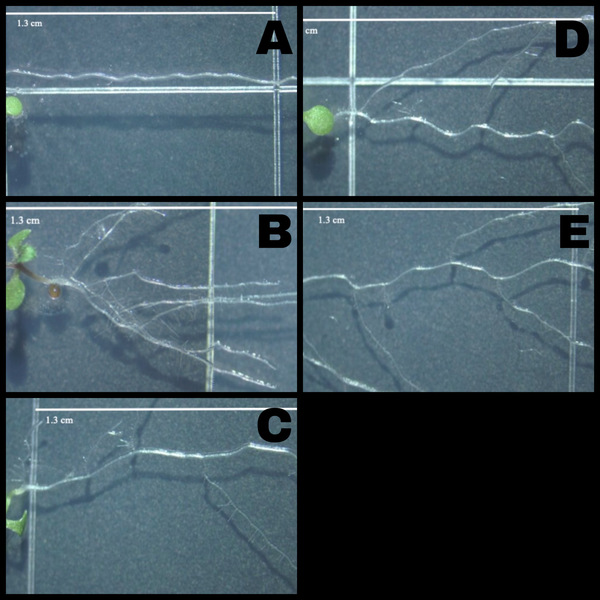
The use of fertilizers is associated with an increase in soil degradation, which is predicted to lead to a decrease in crop production within the next decade. Thus, it is critical to find solutions to support crop production to sustain the robust global population. In this study, the authors investigate how probiotic bacteria, like Rhizobium leguminosarum, Bacillus subtilis and Pseudomonas fluorescens, can impact the growth of Arabidopsis thaliana when applied to the seeds.They hypothesized that solutions with multiple bacterial species compared to those with only a single bacterial species would promote seed germination more effectively.
Read More...