Androgens are natural or synthetic steroid hormones that control secondary male sex characteristics. Androgens are excreted in cattle urine and feces, and can run off or seep into nearby waters, negatively impacting aquatic life and potentially polluting human water sources. Here, the authors investigated the effectiveness of soil as a natural barrier against androgen flow into vulnerable waterways. Their results, obtained by testing diffusion patterns of luminol, an androgen chemical analog, indicated that soil is a poor barrier to androgen diffusion.
The authors investigated an important parasite-host relationship between the raccoon roundworm and the raccoon to understand how parasite prevalence is affected by location. They found that the parasite infection was more prevalent in raccoons found closer to human dwellings, though the number of roundworm eggs was not significantly different. These results are important human health, since roundworm infection is lethal to humans and can be transmitted from raccoons to humans - the authors suggest that more research into this parasite and awareness of its prevalence is needed to prevent disease.
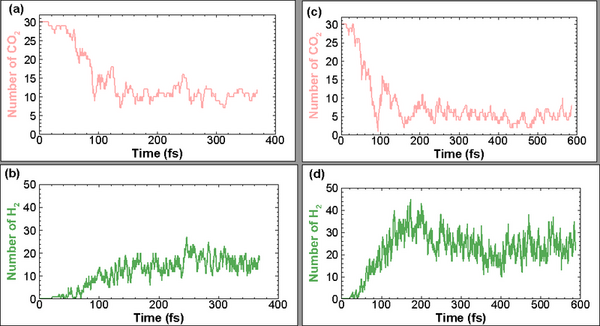
Recent research confirms that climate change, driven by CO2 emissions from burning fossil fuels, poses a significant threat to humanity. In response, authors explore methods to remove CO2 from the atmosphere, including breaking its molecular bonds through high-speed collisions.
Fertilizers are commonly used to improve agricultural yield. Unfortunately, chemical fertilizers can seep into drinking water, potentially harming humans and other forms of life. Here, the authors investigate the effect of fertilizer on the water quality of Saratoga Creek over time. They find that fertilizers can alter the acidity of the creek's water, which can be harmful to aquatic species, as well as increase the levels of nitrates temporarily.
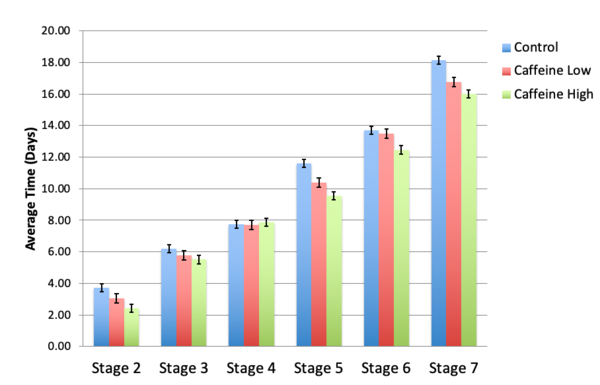
The degeneration of nerve cells in the brain can lead to pathologies such as Parkinson’s disease. It has been suggested that neurons in humans may regenerate. In this study, the effect of different doses of caffeine on regeneration was explored in the planeria model. Caffeine has been shown to enhance dopamine production, and dopamine is found in high concentrations in regenerating planeria tissues. Higher doses of caffeine accelerated planeria regeneration following decapitation, indicating a potential role for caffeine as a treatment to stimulate regeneration.
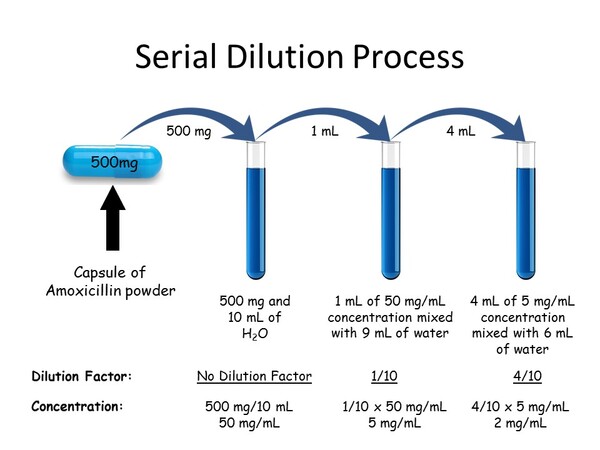
Antibiotics are used to treat dangerous diseases. Over time, however, bacteria are becoming resistant to antibiotics - which poses a threat to humans and animals alike. In this paper, the authors examine how E. coli gains resistance to the antibiotic amoxicillin.
Numerous organisms, including the marine bacterium Aliivibrio fischeri, produce light. This bioluminescence is involved in many important symbioses and may one day be an important source of light for humans. In this study, the authors investigated ways to increase bioluminescence production from the model organism E. coli.
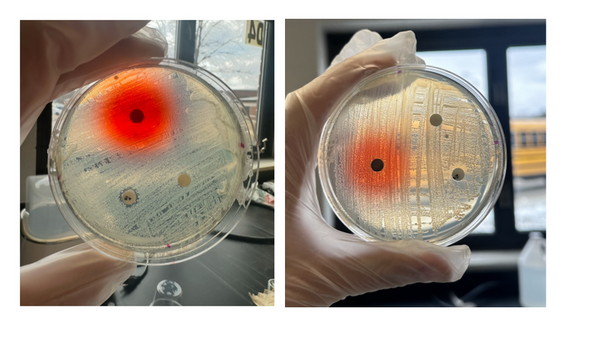
Here the authors aimed to compare the effects of artificial Allura Red AC dye and natural cochineal dye on the growth of Escherichia coli and Bacillus coagulans bacteria. Their research found that only Allura Red AC dye significantly affected bacterial growth, specifically amplifying E. coli growth. Based on their results, they suggest that Allura Red AC dye may increase the growth of E. coli bacteria within the human gut.
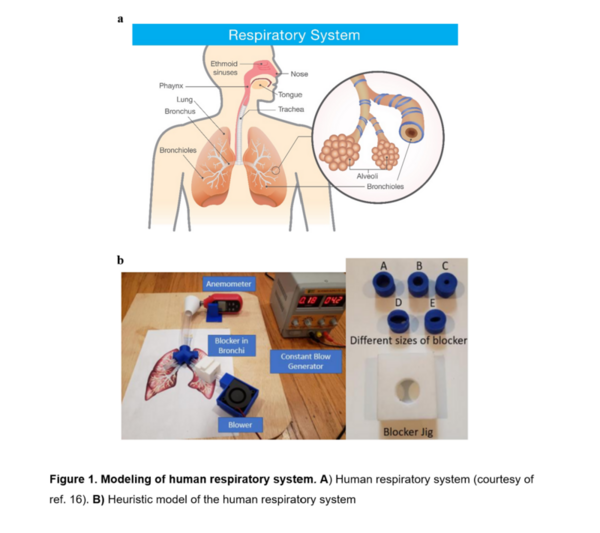
Many common respiratory illnesses like bronchitis, asthma, and chronic obstructive pulmonary disease (COPD) lead to bronchial inflammation and, subsequently, a blockage. However, there are many difficulties in measuring the severity of the blockage. A numeric metric to determine the degree of the blockage severity is necessary. To tackle this demand, we aimed to develop a novel human respiratory model and design a deep-learning program that can constantly monitor and report bronchial blockage by recording breath sounds in a non-intrusive way.
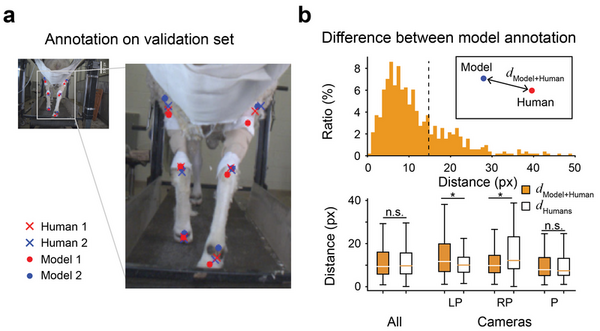
The application of machine learning techniques has facilitated the automatic annotation of behavior in video sequences, offering a promising approach for ethological studies by reducing the manual effort required for annotating each video frame. Nevertheless, before solely relying on machine-generated annotations, it is essential to evaluate the accuracy of these annotations to ensure their reliability and applicability. While it is conventionally accepted that there cannot be a perfect annotation, the degree of error associated with machine-generated annotations should be commensurate with the error between different human annotators. We hypothesized that machine learning supervised with adequate human annotations would be able to accurately predict body parts from video sequences. Here, we conducted a comparative analysis of the quality of annotations generated by humans and machines for the body parts of sheep during treadmill walking. For human annotation, two annotators manually labeled six body parts of sheep in 300 frames. To generate machine annotations, we employed the state-of-the-art pose-estimating library, DeepLabCut, which was trained using the frames annotated by human annotators. As expected, the human annotations demonstrated high consistency between annotators. Notably, the machine learning algorithm also generated accurate predictions, with errors comparable to those between humans. We also observed that abnormal annotations with a high error could be revised by introducing Kalman Filtering, which interpolates the trajectory of body parts over the time series, enhancing robustness. Our results suggest that conventional transfer learning methods can generate behavior annotations as accurate as those made by humans, presenting great potential for further research.
_(1).jpg)