Browse Articles

Understanding the impossibility of machine learning fairness with data examples

Pillutla et al. | Sep 04, 2026

Understanding the impossibility of machine learning fairness with data examples

Machine learning systems are often expected to make fair decisions, yet the most widely used fairness criteria—independence, separation, and sufficiency—cannot generally be satisfied at the same time. In this study, students tested these criteria using a logistic regression model on a real-world student performance dataset and found that each criterion was met only at different prediction thresholds, with no threshold satisfying all three simultaneously. These results illustrate the inherent trade-offs in algorithmic fairness and highlight why achieving perfectly fair machine learning models is often impossible in practice.

Read More...
Effects of an Informational Waste Management App on a User’s Waste Disposal Habits

Rao et al. | Apr 28, 2021

Effects of an Informational Waste Management App on a User’s Waste Disposal Habits

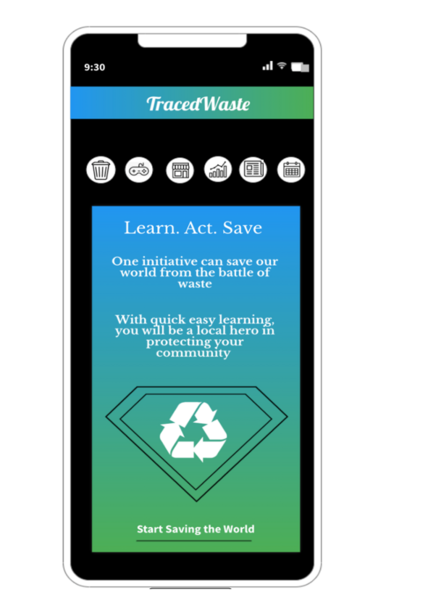
While 75% of waste in the United States is stated to be recyclable, only about 34% truly is. This project takes a stance to combat the pillars of mismanaged waste through a modern means of convenience: the TracedWaste app. The purpose of this study was to identify how individuals' waste disposal habits improved and knowledge increased (i.e. correctly disposing of waste, understanding negative incorrect waste disposal) due to their use of an informational waste management app as measured by a survey using a 1-5 Likert Scale. The results showed that the TracedWaste app helped conserve abundant resources such as energy and wood, decrease carbon emissions, and minimize financial toll all through reducing individual impact.

Read More...

The effects of the cancer metastasis promoting gene CD151 in E. coli

Burgess et al. | Jun 11, 2023

The effects of the cancer metastasis promoting gene <i>CD151</i> in <i>E. coli</i>
Image credit: qimono

The independent effects of metastasis-promoting gene CD151 in the process of metastasis are not known. This study aimed to isolate CD151 to discover what its role in metastasis would be uninfluenced by potential interactions with other components and pathways in human cells. Results showed that CD151 significantly increased the adhesion of the cells and decreased their motility. Thus, it may be that CD151 is upregulated in cancer cells for the last step of metastasis, and it increases the chances of success of metastasis by aiding in implantation of the cancer cells. Targeting CD151 in chemotherapeutic modalities could therefore potentially slow or prevent metastasis.

Read More...

Blockchain databases: Encrypted for efficient and secure NoSQL key-store

Mehrota et al. | Mar 18, 2023

Blockchain databases: Encrypted for efficient and secure NoSQL key-store
Image credit: Ayushi Mehrota & David Kim

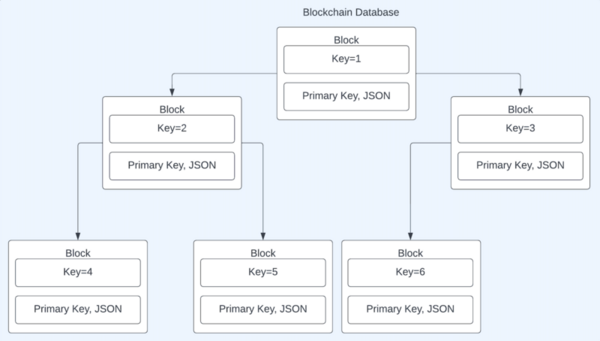
Although commonly associated with cryptocurrency, blockchains offer security that other databases could benefit from. These student authors tested a blockchain database framework, and by tracking runtime of four independent variables, they prove this framework is feasible for application.

Read More...

Young People Drinking: The Effect of Group Size on Drinking Habits

Palermo et al. | May 10, 2018

Young People Drinking: The Effect of Group Size on Drinking Habits

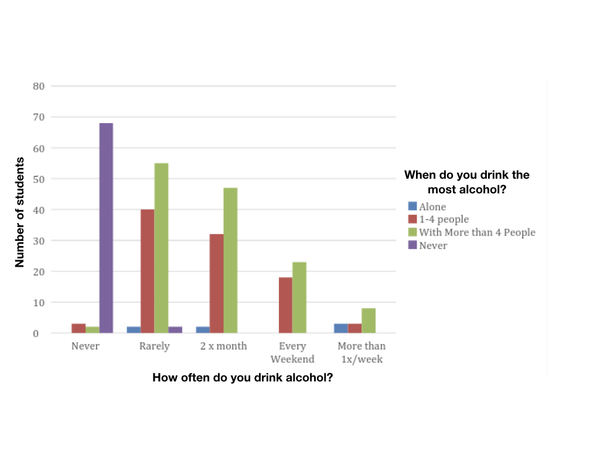
Palermo et al. examined the effect of group size on drinking habits of college and high school students. The authors found that both high school and college students tended to consume the most alcohol in group sizes of 4 or more, independent of how frequently they drink. They also found that the proportion of college students that drink is nearly twice the proportion of high school students that drink. This study supports previous findings that underage drinking happens in large groups and suggests that effective intervention in underage drinking would be at the group level.

Read More...

Predicting baseball pitcher efficacy using physical pitch characteristics

Oberoi et al. | Jan 11, 2024

Predicting baseball pitcher efficacy using physical pitch characteristics
Image credit: Antoine Schibler

Here, the authors sought to develop a new metric to evaluate the efficacy of baseball pitchers using machine learning models. They found that the frequency of balls, was the most predictive feature for their walks/hits allowed per inning (WHIP) metric. While their machine learning models did not identify a defining trait, such as high velocity, spin rate, or types of pitches, they found that consistently pitching within the strike zone resulted in significantly lower WHIPs.

Read More...

The growth of bacteria on everyday objects and the antimicrobial effects of household spices

Daehan Yi et al. | Apr 29, 2026

The growth of bacteria on everyday objects and the antimicrobial effects of household spices
Image credit: Daehan Yi, Boughaleb Hassani and Ribeiro

The study investigates the antibacterial properties of household spices on bacteria isolated from everyday objects, aiming to address the limited understanding of bacterial resilience on surfaces and the potential of spices as antibacterial agents. Researchers hypothesized that bacteria would grow faster on some surfaces than others and that spices like honey, chili powder, turmeric, and sumac would inhibit bacterial growth at varying rates. The findings suggest that household spices possess significant antibacterial properties and could be used as emergency disinfectants, particularly in under-resourced settings. However, they cannot replace medical treatments but offer insights into alternative health solutions using common ingredients.

Read More...