Reducing tremors in LRRK2-G2019S genetically-mutated Parkinson’s flies with a lovastatin–levodopa combination
(1) Greenwich High School, (2) Duke University
https://doi.org/10.59720/25-105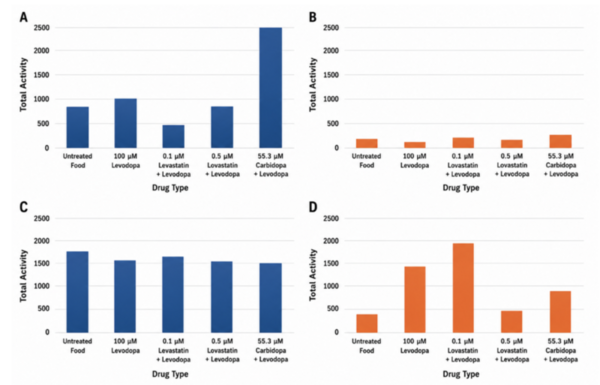
Parkinson’s disease (PD) is a major neurodegenerative disease, impacting millions of people worldwide. One of the most common and problematic symptoms of PD is tremors, or uncontrollable movement. Tremors are a result of a reduced concentration of dopamine in the brain and can generally be treated with the drug combination carbidopa–levodopa. Levodopa replaces the missing dopamine while carbidopa prevents levodopa from being broken down before it reaches the brain. However, research suggests that this chemical combination is not always successful and sometimes worsens symptoms for patients, suggesting that more effective drug combinations could be tested. Lovastatin, an inhibitor typically used to lower cholesterol, has demonstrated neuroprotective properties that may offer a novel mechanism for Parkinson’s symptom relief that traditional decarboxylase inhibitors like carbidopa cannot provide. We investigated the effectiveness of a lovastatin–levodopa combination compared to carbidopa–levodopa in reducing tremors in a Drosophila melanogaster model of PD (LRRK2-G2019S, PD-L). We hypothesized that the lovastatin–levodopa combination would work to eliminate tremors better than a carbidopa–levodopa combination. Wild-type (WT) and PD-L Drosophila activity was recorded over time in the Drosophila activity monitor, with lights on or off to represent their circadian rhythms. Our results showed that lovastatin–levodopa was the more optimal drug combination, suggesting that the classic combination of carbidopa–levodopa may not be the most effective at reducing tremors in this model system and may be more beneficial when carbidopa is replaced with lovastatin. Further studies should be aimed at supporting these results in mammals and optimizing the concentration of these drugs in animal systems.
This article has been tagged with: