Glucose concentration and the longevity of cut roses: sugar-induced senescence
(1) St. Margaret School, (2) St. Mary’s Higher Secondary School, (3) Department of Botany, Mizoram University
* These authors made equal contributions
https://doi.org/10.59720/24-338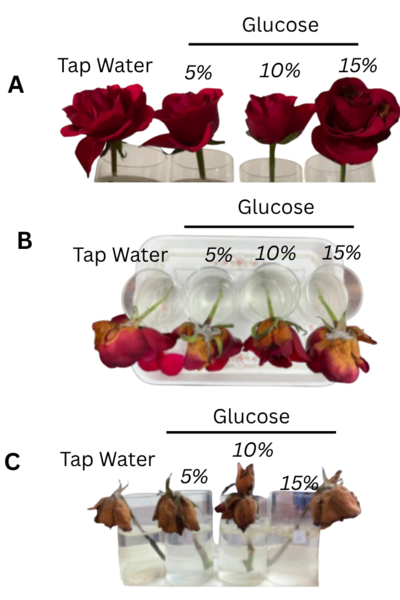
Ensuring optimal cut flower longevity is a central objective in the floriculture industry, as it profoundly influences visual quality, commercial value, and end-user satisfaction. Keeping the costliest ornamental flower to purchase, the cut rose, fresh is especially valuable to florists, retailers, and consumers who would like to extend the vase life of roses. This study examines the influence of varying glucose concentrations on the post-harvest longevity of cut roses. We hypothesized that exposure to higher glucose levels would enhance the flowers' freshness and overall vase life by providing additional metabolic energy. To test this hypothesis, we placed cut roses in solutions containing 5%, 10%, and 15% glucose, alongside a control group in tap water. Contrary to expectations, roses in higher glucose concentrations showed accelerated wilting, with the most pronounced signs of senescence observed in the 15% glucose solution. Conversely, roses in tap water retained freshness for a longer period. The observed rapid decline in floral longevity at higher glucose concentrations may be linked to increased microbial activity and cell death. These results suggest that elevated glucose levels may have unintended adverse effects on flower preservation. This study has practical implications for florists and consumers interested in optimizing post-harvest care. Further research should explore the efficacy of alternative sugars, plant hormones, and natural preservatives to enhance the longevity of cut flowers.
This article has been tagged with: