The influence of menstrual cost on women’s work hours and the pursuit of wage gap equity
(1) McNeil High School
https://doi.org/10.59720/24-174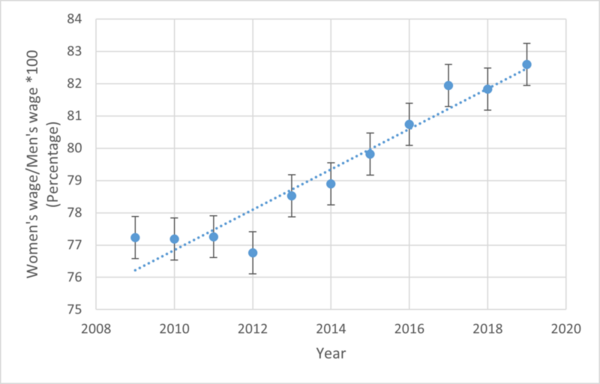
The gender wage gap is a significant issue in the United States, with women earning less than men on average in the workforce for similar work. In addition to differences in income, a less discussed inequity is the cost of menstrual products, which are essential for women’s health and expensive, thus adding a financial burden on women. We utilized available datasets to calculate and analyze the impact of the cost of menstruation on working hours for women by race and state. We hypothesized that the cost of menstrual products disproportionately affects women’s working hours compared to men and this impact varies among women from different racial backgrounds. We explored underlying factors linking the cost of menstruation in the United States, women’s working hours, and the ongoing pursuit of gender wage gap equity. We found that, due to the difference in incomes, women must work an average of 6.9 hours annually to afford menstrual products whereas men can afford these products by working an average of only 5 hours annually. Our results suggest that the menstrual cost pushes the year of gender wage gap closure by two years from 2046 to 2048. Our findings highlight the issue that the ideal wage gap closure date is based on equality rather than equity. By recognizing this disparity, we can work with educators and policymakers to address it, such as by working towards wage equity and reducing the cost of menstrual products.
This article has been tagged with: