Legacy mercury, reservoir dynamics, and dredging effects on methylmercury in San Francisco Bay
(1) Hillbrook Upper School
https://doi.org/10.59720/25-296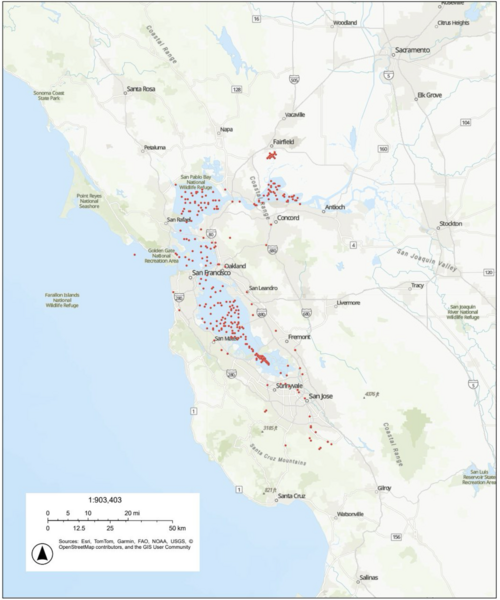
Legacy methylmercury (MeHg) contamination is a critical environmental concern within the San Francisco (SF) Bay water system. While historical mining sources have been identified as legacy MeHg inputs, the specific pathways through which this pollutant cycles via upstream reservoirs and human activities remain unclear. This study investigates the influence of legacy mining, reservoir dynamics, and sediment dredging on regional MeHg concentrations to better understand these ongoing environmental risks. To evaluate these dynamics, we analyzed extensive historical datasets from the SF Bay Regional Monitoring Program spanning 1999 to 2022, comparing MeHg concentrations against Stevens Creek Reservoir releases, river flow patterns, and annual dredging volumes. Our analysis reveals that MeHg levels in Stevens Creek Reservoir are notably elevated—likely due to runoff from the nearby New Almaden Mining District—and exhibit strong seasonal peaks during late summer and fall. Furthermore, we identified a statistically significant correlation between monthly river flows and SF Bay MeHg levels when lagged by nine months, indicating a delayed environmental response. Contrary to some existing literature, we also found that total annual dredging volumes and sediment disposal practices are significantly associated with higher MeHg concentrations across the Bay Area. These findings elucidate the complex cycling dynamics of MeHg in impacted watersheds, demonstrating how legacy mining continuously impacts upstream waterbodies. Ultimately, this research showcases the significant effect of human activities on pollutant distribution, giving insight to inform future reservoir management and dredging policies in the SF Bay Area and beyond.
This article has been tagged with: