Drosophila proteins as human surrogates for early drug discovery: Findings from detailed structural analysis
(1) Wardlaw+Hartridge School
https://doi.org/10.59720/25-282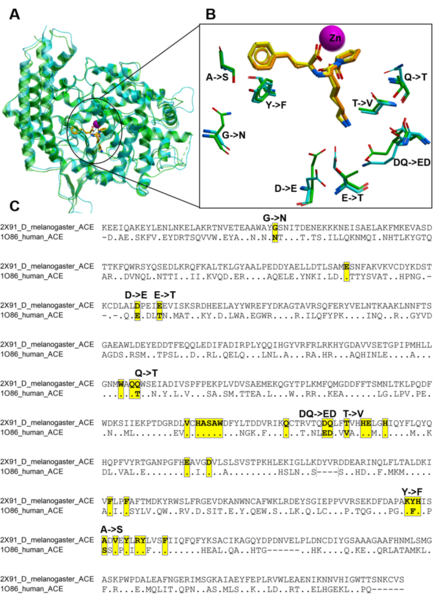
Drug discovery is a complex process involving various methods used to identify biological or chemical entities that can modify the function of specific proteins believed to play a role in disease. Drosophila melanogaster, or fruit fly, has been used by researchers for over a century to study human biology, genetics of human disease, and to find new medicines. Proteins from non-human species are utilized in the early stages of drug discovery when they share high sequence similarity with human homologs and are more accessible than human proteins. This study examined the sequence and structural similarity between Drosophila and human proteins to address the question of whether Drosophila proteins can be used as human surrogates for early drug discovery. We hypothesized that the sequence identity within the drug binding pocket of D. melanogaster proteins would exceed 50% when compared to their human homologs. To assess this hypothesis, we compared five protein sequences and crystal structures from D. melanogaster complexed with approved drugs or potential drug candidates to their human homologs. The overall sequence identity between the 2 species ranged from 38 to 71%, with good structural overlap. In the drug binding pocket, the sequence identity was 55 to 100%, supporting the hypothesis. However, we also identified cases where amino acids were not conserved in functionally critical regions, limiting the use of certain Drosophila proteins for identifying human therapeutic agents. The approach described here sheds light on the diverse aspects that must be considered when selecting proteins to address drug discovery questions.
This article has been tagged with: