Exogenous foliar thiamine application as an alternative strategy to mitigate lead stress in Lepidium sativum
(1) Brooklyn Technical High School
https://doi.org/10.59720/25-259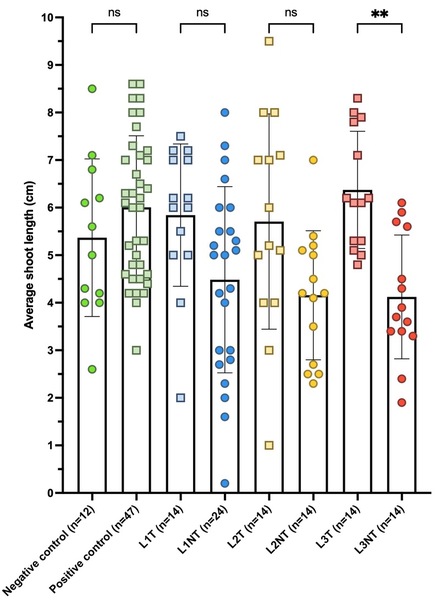
As global populations continue to rise, there is an increasing international need to improve agricultural output to ensure food security. Lower production costs and more efficient utilization of available resources are essential to increase agricultural productivity. However, pollution (i.e., particularly heavy metal contamination from lead) reduces soil productivity and crop yield. Plant development is adversely impacted by the presence of abiotic stressors like heavy metals. Vitamins, such as thiamine, partake in various important plant physiological and developmental pathways. We investigated whether foliar application of thiamine (10 mM) on Lepidium sativum (garden cress) could mitigate lead-induced stress. We hypothesized that thiamine application could rescue phenotypic measurements like biomass and plant height in lead-exposed L. sativum. To test this, we exposed L. sativum to various concentrations of lead (II) nitrate, with and without thiamine treatment. Our results showed that exposure to lead reduced shoot length, root length, and overall biomass. However, thiamine-treated plants showed increased shoot length and overall plant length when compared to untreated controls under the same lead concentrations. These findings suggest that foliar application of thiamine may help rescue growth deficits caused by exposure to lead stress informing both key agricultural practices and knowledge of plant stress responses.
This article has been tagged with: