Bacterial contamination on New York City transit and the effectiveness of hand hygiene
(1) The Brearley School, (2) Hunter College High School, (3) Department of Science, The Brearley School
https://doi.org/10.59720/25-093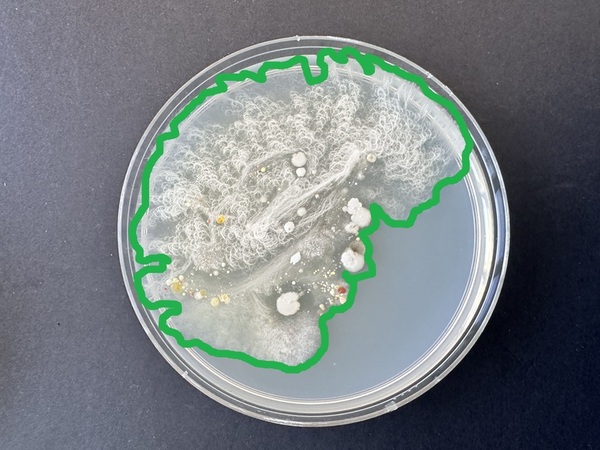
The New York City transit system is the largest in North America, with 1.4 million daily riders. In the Metropolitan Transit Authority (MTA), the M15 bus line and the 6 train had the highest ridership in 2023. As shown by the SARS-CoV-2 pandemic and influenza outbreaks, public transportation poses a risk for infection transmission, with most transmission occurring through handrails and other frequently touched surfaces. The purpose of this study was to evaluate bacterial contamination on the M15 bus and 6 train and assess the efficacy of soap/water versus hand sanitizer at preventing bacterial contamination. We predicted that the 6-train would have more overall bacterial growth than the M15. Within each transit line, we predicted that untreated swabs would show the most bacterial growth and that both soap/water and the hand-sanitizer treatments would equally decrease bacterial growth. We swabbed the entryways of the M15 and 6-train for five consecutive days using untreated swabs or swabs prepared with soap/water or hand sanitizer. Samples were plated and incubated for 72 hours. For plates with growth, we evaluated the growth area using ImageJ and used chromogenic agar to look for the presence of coliforms. We found bacterial contamination on both the M15 and 6 train. The M15 bus showed greater growth, with increase in contamination over the week. Soap/water swabs showed less contamination than untreated swabs, but hand sanitizer was the most effective at preventing contamination. This research supports the use of hand sanitizers in preventing bacterial contamination when using public transportation.
This article has been tagged with: