Gender differences in social media, sleep, and cognition in U.S. teens
(1) Schaumburg High School, (2) Science Department, Schaumburg High School
https://doi.org/10.59720/24-313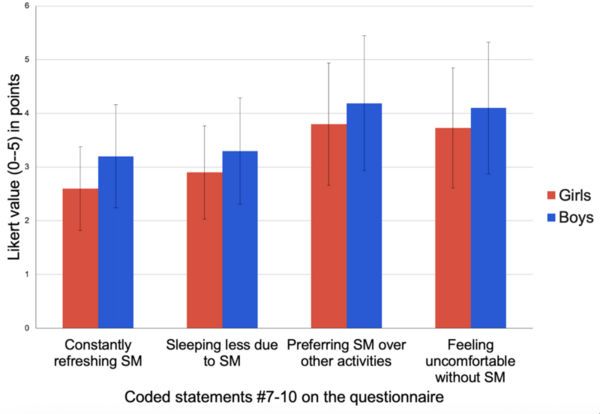
Social media usage has become so pervasive among adolescents that it directly affects their cognitive functioning. A popular belief is that women multitask using social media more than men, which sparked our interest in investigating whether there exists a significant gender difference in the relationships between social media usage, sleep, and attention during writing-shift tasks among American adolescents. Previous research has shown that if multitasking is sufficiently practiced, it will become so automatic that it will not require a significant use of cognitive resources. Other studies have emphasized that excessive social media usage leads to anxiety, depression, and diminished cognitive performance. Therefore, we explored the relationships among these three variables — social media usage, sleep, and attention — in American adolescent boys and girls. Our hypothesis was that increased social media usage and poor sleep quality would lead to diminished cognitive functioning and that both genders would exhibit a greater decrease in attention. For our approach, we delivered a voluntary four-part quantitative survey through an online Google form. We discovered that sleep quality was not significantly associated with intensity of social media usage and that there was no clear association between sleep quality and cognitive performance across gender. We also found that social media usage was not significantly associated with cognitive functioning, independent of gender. These findings may help teachers, parents, and policymakers focus less on screen time alone and more on broader behavioral patterns when addressing adolescent wellbeing and academic performance.
This article has been tagged with: