The impact of genetic, drug, and procedural factors on cardiac xenograft survival days in non-human primates
(1) Winston Churchill High School
https://doi.org/10.59720/24-299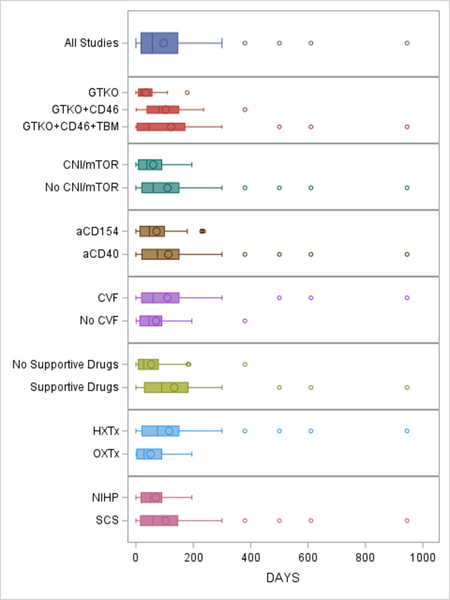
Each year, millions with heart failure go untreated due to a rapidly growing organ shortage, prompting researchers to explore cardiac xenotransplantation, animal-to-human heart transplants, as a potential solution. Different gene modifications, drug therapies, and procedures have been tested on primates in preclinical xenotransplant survival studies to mitigate immune activity and organ rejection. However, such studies examine only a few factors in isolated settings. A synthetic study combining individual trials is needed to simultaneously evaluate multiple key factors associated with xenograft survival in a broader context. We hypothesized that more genetic modifications to the donor organ, immunosuppressive regimens with calcineurin regulators, mTOR regulators, αCD154 antibodies, cobra venom factor (CVF), and prophylactic supportive drugs, and transplant procedures involving nonischemic heart preservation and heterotopic surgery all extend xenograft survival time. Preclinical data were compiled from published studies and analyzed using negative binomial mixed models. Overall, triple transgenic hearts significantly outperformed single and double transgenic genotype hearts. Calcineurin/rapamycin regulators increased survival, while αCD154 antibodies, CVF, and supportive drugs had insignificant effects. Heterotopic transplants and non-ischemic heart preservation extend survival compared to orthotopic transplants and static cold storage. By consolidating nearly two decades of research, these findings can serve as a reference for developing an optimal immunosuppression regimen for future human testing. Further research should investigate additional gene combinations, refine drug regimens and dosages, and optimize non-ischemic heart preservation and other transplant procedures. Accelerating the development of a working human xenotransplant model can limit unnecessary animal testing and end the organ shortage.
This article has been tagged with: