Governing Glioblastoma: A novel therapy to restore motor control and mitigate glioblastoma proliferation
(1) Acton-Boxborough Regional High School
* These authors made equal contributions
https://doi.org/10.59720/24-160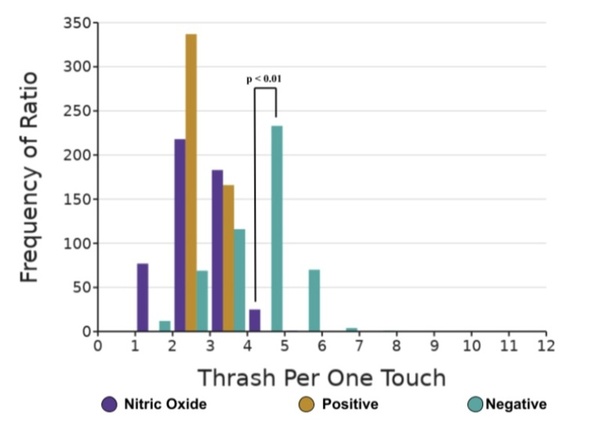
Glioblastoma multiforme (GBM) is a form of brain cancer with one of the poorest prognoses, including a 95% mortality rate over five years. We explored how dietary supplements can lower interleukin-6 (IL-6) levels and their associated seizure-like activity, a trademark of GBM progression. Specifically, we investigated how dietary supplements could regulate motor control in wild-type Caenorhabditis elegans. We hypothesized that if wild-type C. elegans are exposed to experimental heat-shock and treated with nitric oxide, Andrographis paniculata (green chiretta), or apigenin, that apigenin will most successfully restore motor control to mimic the wild-type strain. Apigenin directly interferes with the JAK-STAT and c-MET signaling transduction pathways most relevant to the pathogenesis of inflammation. We cultivated wild-type C. elegans in Escherichia coli before subjecting them to one dose of a nitric oxide booster and experimental heat shock. Subsequently, we treated the C. elegans with two dietary supplements that both reduce IL-6 levels: A. paniculata and apigenin supplements. After applying both the A. paniculata and apigenin supplements to their respective plates and monitoring the results in 24-hour intervals, we conducted the hard-touch test on all three plates to measure the thrash-to-touch ratio to classify the movement of the heat-shocked worms. Apigenin best mimicked the motor control of the healthy phenotype group with a high thrash-to-touch ratio of 3.511, whereas A. paniculata exhibited 2.8762 thrashes per touch and nitric oxide exhibited 2.3148 thrashes per touch. Apigenin’s promising results reflect its potential as a more accessible therapeutic for GBM treatment.
This article has been tagged with: