Ethanol levels in foods ensuing culinary preparation
(1) Math and Science Academy, Williamston High School
https://doi.org/10.59720/24-153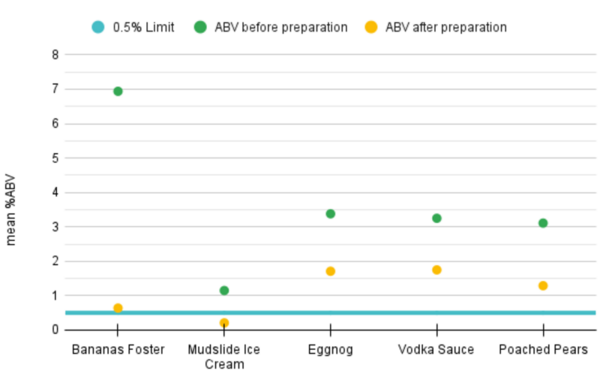
People across America incorporate baking and cooking into their daily lives. Sometimes, the recipes prepared include alcohol. This may be concerning for individuals who are under 21, pregnant, designated drivers, or recovering from alcoholism. We sought to determine how much alcohol remains at the time of consumption when alcohol is used in recipes. The recipes tested included: bananas foster, mudslide ice cream, eggnog, vodka sauce, and poached pears. We hypothesized that out of the five recipes tested, only the ice cream would be classified as alcoholic. To find the leftover ethanol after cooking, we heated the prepared food for a predetermined time to evaporate all the ethanol. Then, the recipes were weighed, and the mass difference was converted to alcohol by volume (ABV). Calculated ABV levels were compared to the federal limit of 0.5% ABV as drinks with 0.5% ABV or higher must be labeled as alcoholic in the United States We found that the recipes whose preparation included flambéing (bananas foster and poached pears), the eggnog, and vodka sauce were over the federal limit, suggesting that they are unsuitable to be served to persons under 21. However, the mudslide ice cream recipe was under the limit. This is important to take note of before consuming foods prepared with alcohol as in many cases the alcohol is still retained in the food even after preparation.