Growth of Staphylococcus epidermidis and Escherichia coli when exposed to anti-acne vitamin A
(1) Brooklyn Technical High School
https://doi.org/10.59720/24-081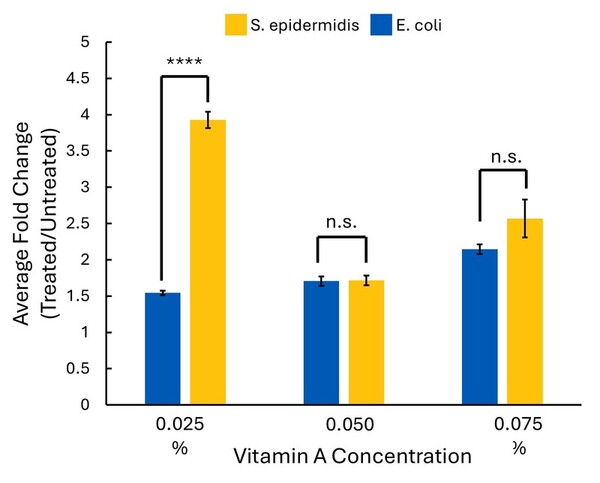
About 85% of people between the ages of 12 and 24 are affected by acne, most often beginning in early puberty, although acne can still be present into adulthood. A common anti-acne medication is retinol, aka vitamin A, which reduces inflammation and promotes skin cell division. Since acne is influenced by imbalances in the skin microbiome, we aimed to investigate how vitamin A affects this microbiome. To test the impact of vitamin A on the skin microbiome, we used the most common bacteria found on skin, Staphylococcus epidermidis, and measured its growth in liquid culture with different concentrations of vitamin A. We also tested Escherichia coli, a bacterium that is found in the gut, but not the skin, microbiome, against vitamin A exposure in identical conditions to S. epidermidis. We hypothesized that in the presence of vitamin A, S. epidermidis growth would decrease due to vitamin A’s antimicrobial properties, while E. coli growth would not be affected due to its distinct gut environment. Contrary to our hypothesis, we found that S. epidermidis grew 2.6x better than E. coli at 0.025% vitamin A. Yet, E. coli grew better than S. epidermidis at higher concentrations of vitamin A. Our results suggest that vitamin A’s stimulation of S. epidermidis growth can potentially relieve dysbiosis and lower inflammation in the skin by restoring microbiome balance, despite our expectation of reduced growth. We concluded that vitamin A’s enhancement of S. epidermidis growth in the skin microbiome may improve acne treatment outcomes by promoting a balanced microbial environment, advancing our understanding of microbiome-based therapies.
This article has been tagged with: