In an extensive study of gene mutations, and their resulting effect on protein-protein interactions, Desai and Stork found that HTT-PRPF40B-MECP2 interactions are weakened with progression of Lopes-Maciel-Rodan syndrome.
Read More...Disruptions in protein-protein interactions between HTT, PRPF40B, and MECP2 are involved in Lopes-Maciel-Rodan syndrome
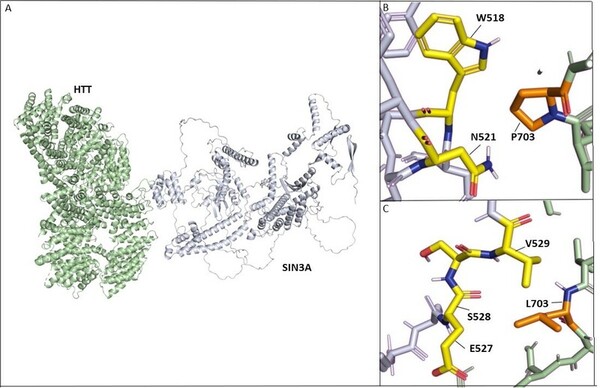
In an extensive study of gene mutations, and their resulting effect on protein-protein interactions, Desai and Stork found that HTT-PRPF40B-MECP2 interactions are weakened with progression of Lopes-Maciel-Rodan syndrome.
Read More...Novel biaryl imines and amines as potential competitive inhibitors of dihydropteroate synthase
In this study, the authors design a series of new biaryl small molecules to target and block the binding pocket of the enzyme dihydropteroate synthase, which is important for prokaryotic biosynthesis of folic acid and could serve as better antimicrobial compounds.
Read More...Design and in silico screening of analogs of rilpivirine as novel non-nucleoside reverse transcriptase inhibitors (NNRTIs) for antiretroviral therapy
In this study, the authors use high-throughput virtual screening to design and evaluate a set of non-nucleoside reverse transcriptase inhibitors for binding affinity to the protein reverse transcriptase. These studies have important applications toward HIV therapies.
Read More...Specific Transcription Factors Distinguish Umbilical Cord Mesenchymal Stem Cells From Fibroblasts
Stem cells are at the forefront of research in regenerative medicine and cell therapy. Two essential properties of stem cells are self-renewal and potency, having the ability to specialize into different types of cells. Here, Park and Jeong took advantage of previously identified stem cell transcription factors associated with potency to differentiate umbilical cord mesenchymal stem cells (US-MSCs) from morphologically similar fibroblasts. Western blot analysis of the transcription factors Klf4, Nanog, and Sox2 revealed their expression was unique to US-MSCs providing insight for future methods of differentiating between these cell lines.
Read More...Peptidomimetics Targeting the Polo-box Domain of Polo-like Kinase 1
Polo-like kinase 1 (Plk1) is a master regulator of mitosis, initiating key steps of cell cycle regulation, and its overexpression is associated with certain types of cancer. In this study, the authors carefully designed peptides that were able to bind to Plk1 at a location that is important for its proper localization and function. Future studies could further develop these peptides to selectively target Plk1 in cancer cells and induce mitotic arrest.
Read More...One-step photochemical crosslinking of native proteins is feasible in tyrosine-rich bovine serum albumin
In this study, the authors develop a new hydrogel using photochemical crosslinking with bovine serum albumin and methylene blue. They find that this new hydrogel has some useful applications!
Read More...Estimating the Young’s Modulus of spaghetti with a buckling experiment
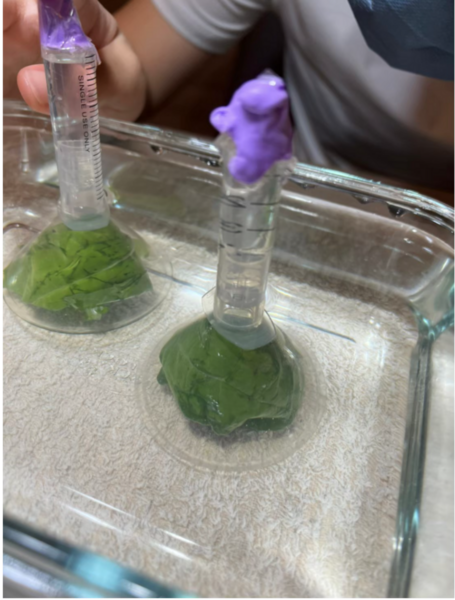
The Young's Modulus of a structural material is a measure of its elasticity and is defined as the ratio of the tensile stress to tensile strain. This study aims to investigate the Young's Modulus of pasta with different diameters.
Read More...An alternative to textile dyes: Synthesizing and applying PMMA nanoparticles to create structural coloration
The authors looked at developing a PMMA nanoparticle fabric dye that would be more sustainable compared to traditional fabric dyes. They were able to create PMMA based dyes in different colors that were also durable (i.e., did not fade quickly on fabric).
Read More...The analysis of the viral transmission and structural interactions between the HIV-1 envelope glycoprotein and the lymphocyte receptor integrin α4β7
The Human Immunodeficiency Virus (HIV) infects approximately 40 million people globally, and one million people die every year from Acquired Immune Deficiency Syndrome (AIDS)-related illnesses. This study examined the interactions between the HIV-1 envelope glycoprotein gp120 and the human lymphocyte receptor integrin α4β7, the putative first long-range receptor for the envelope glycoprotein of the virus in mucosal tissues. Presented data support the claim that the V1 loop is involved in the binding between α4β7 and the HIV-1 envelope glycoprotein through molecular dockings.
Read More...Virtual Screening of Cutibacterium acnes Antibacterial Agent Using Natural Compounds Database
A common form of Acne is caused by a species of bacterium called Cutibacterium acnes. By using a predictive algorithm and structural analysis, the authors identified 5 small molecules with high affinity to growth factors in Catibacterium acnes. This has potential implications for supplemental skincare products.
Read More...