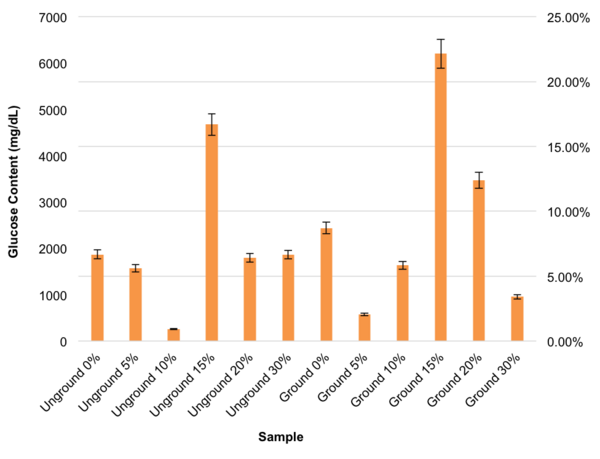
Fossil fuels are a limited resource; thus, it is important to explore new sources of energy. The authors examine the ability of switchgrass to produce ethanol and test the effects of pretreatment and grinding on ethanol yield.
Read More...Determining the Effect of Chemical and Physical Pretreatments on the Yield and Energy Output of Cellulosic Ethanol from Panicum Virgatum
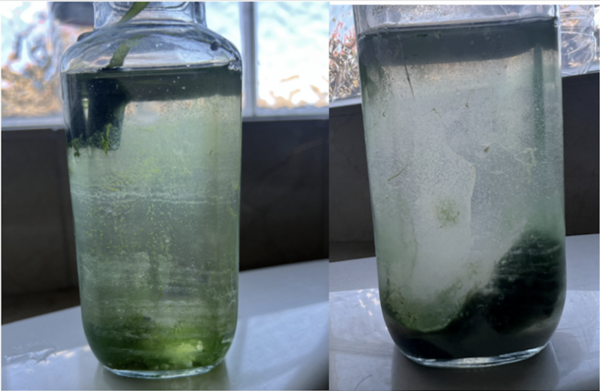
Fossil fuels are a limited resource; thus, it is important to explore new sources of energy. The authors examine the ability of switchgrass to produce ethanol and test the effects of pretreatment and grinding on ethanol yield.
Read More...In vitro dissolution and in vivo response of pseudoephedrine dosage forms
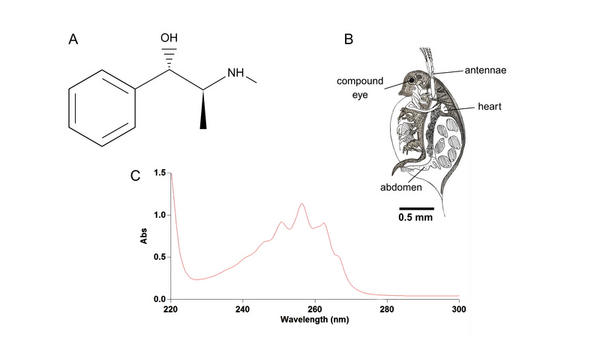
The authors looked at how pharmacokinetics changed depending on the use of an in vitro or an in vivo model.
Read More...Mechanistic deconvolution of autoreduction in tetrazolium-based cell viability assays
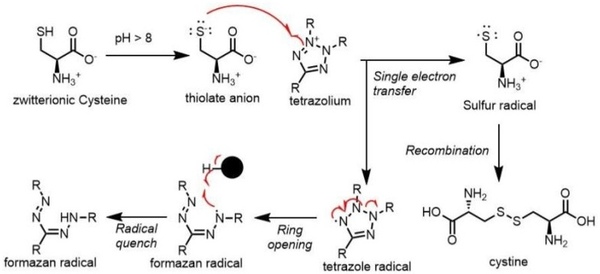
Optical reporters like tetrazolium dyes, exemplified by 5-diphenyl tetrazolium bromide (MTT), are effective tools for quantifying cellular responses under experimental conditions. These dyes assess cell viability by producing brightly-colored formazan dyes when reduced inside active cells. However, certain small molecules, including reducing agents like ascorbic acid, cysteine, and glutathione (GSH), can interfere with MTT assays, potentially compromising accuracy.
Read More...The effects of algaecides on Spirulina major and non-target organism Daphnia magna
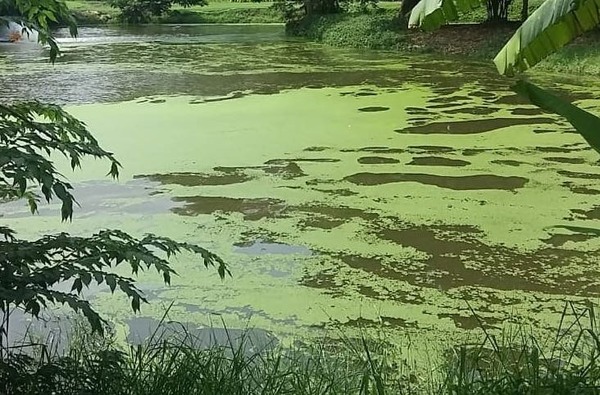
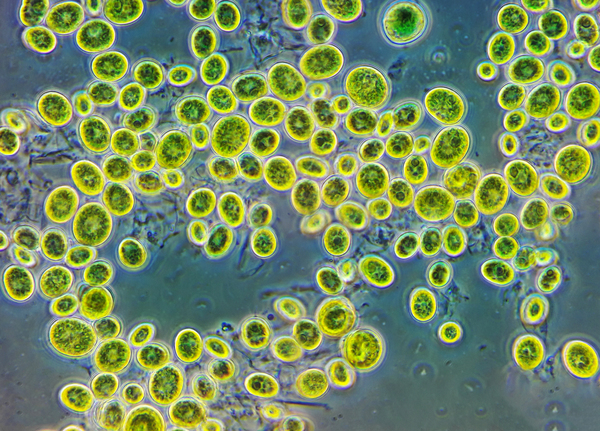
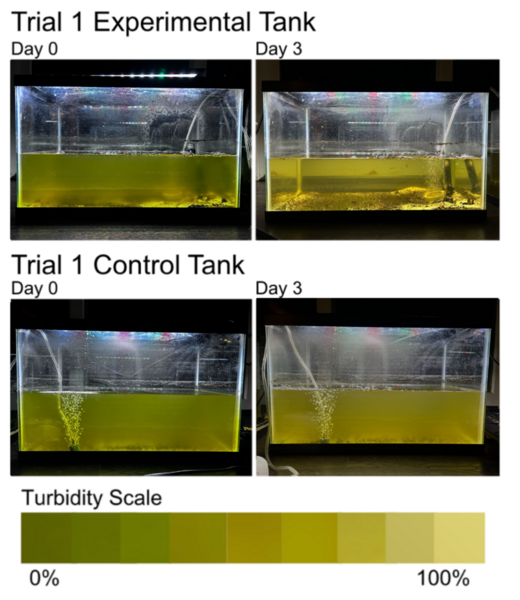
Algal blooms pose a threat to ecosystems, but the methods used to combat these blooms might harm more than just the algae. Halepete, Graham, and Lowe-Schmahl demonstrate negative effects of anti-algae treatments on a cyanobacterium (Spirulina major), and the water fleas (Daphnia magna) that live alongside these cyanobacteria.
Read More...Developing novel plant waste-based hydrogels for skin regeneration and infection detection in diabetic wounds
The purpose of this investigation is to develop a hydrogel to aid skin regeneration by creating an extracellular matrix for fibroblast growth with antibacterial and infection-detection properties. Authors developed two natural hydrogels based on pectin and potato peels and characterized the gels for fibroblast compatibility through rheology, scanning electron microscopy, swelling, degradation, and cell cytotoxicity assays. Overall, this experiment fabricated various hydrogels capable of acting as skin substitutes and counteracting infections to facilitate wound healing. Following further testing and validation, these hydrogels could help alleviate the 13-billion-dollar financial burden of foot ulcer treatment.
Read More...Suppress that algae: Mitigating the effects of harmful algal blooms through preemptive detection & suppression
A bottleneck in deleting algal blooms is that current data section is manual and is reactionary to an existing algal bloom. These authors made a custom-designed Seek and Destroy Algal Mitigation System (SDAMS) that detects harmful algal blooms at earlier time points with astonishing accuracy, and can instantaneously suppress the pre-bloom algal population.
Read More...Spectrophotometric comparison of 4-Nitrophenyl carbonates & carbamates as base-labile protecting groups
In organic synthesis, protecting groups are derivatives of reactive functionalities that play a key role in ensuring chemoselectivity of chemical transformations. To protect alcohols and amines, acid-labile tert-butyloxycarbonyl protecting groups are often employed but are avoided when the substrate is acid-sensitive. Thus, orthogonal base-labile protecting groups have been in demand to enable selective deprotection and to preserve the reactivity of acid-sensitive substrates. To meet this demand, we present 4-nitrophenyl carbonates and carbamates as orthogonal base-labile protecting group strategies.
Read More...Managing CO2 levels through precipitation-based capture from seawater and electrochemical conversion
The authors set out to develop an electrochemical device that would have efficient and sustained carbon dioxide capture.
Read More...A novel bioreactor system to purify contaminated runoff water
In this study, the authors engineer a cost-effective and bio-friendly water purification system using limestone, denitrifying bacteria, and sulfate-reducing bacteria. They evaluated its efficacy with samples from Eastern PA industrial sites.
Read More...The Protective Effects of Panax notoginseng Saponin on the Blood-Brain Barrier via the Nrf2/ARE Pathway in bEnd3 Cells
Disruption of the blood-brain barrier (BBB) is related to many neurological disorders, and can be caused by oxidative stress to cerebral microvascular endothelial cells (CMECs) composing the BBB. The authors of the paper investigated the protective effects of the total saponins in the leaves of Panax notoginseng (LPNS) on oxidative-stress-induced damage in a mouse cerebral microvascular endothelial cell line.
Read More...