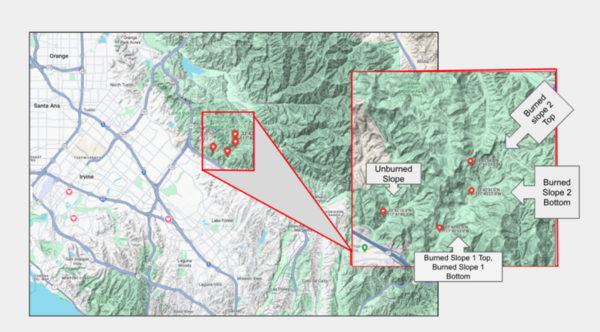
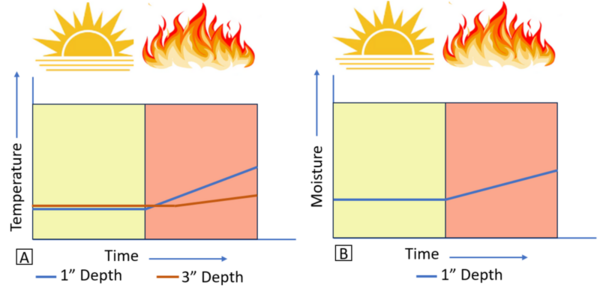
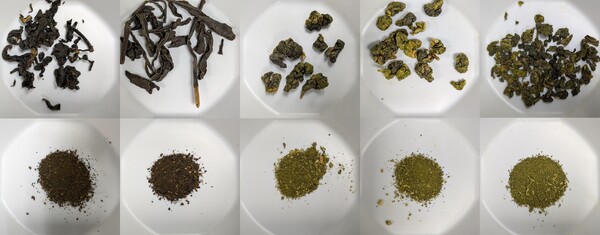
Soil stores three times more carbon than the atmosphere, making small changes in its storage and release crucial for carbon cycling and climate models. This study examined the impact of the 2020 California Silverado Fire on pyrogenic carbon (PyC) deposits using nitrogen and carbon isotopes as proxies. While the results showed significant variability in δ¹⁵N, δ¹³C, total carbon, and total nitrogen across sites, they did not support the hypothesis that wildfire increases δ¹⁵N while keeping δ¹³C constant, emphasizing the need for location-based controls when using δ¹⁵N to track PyC.
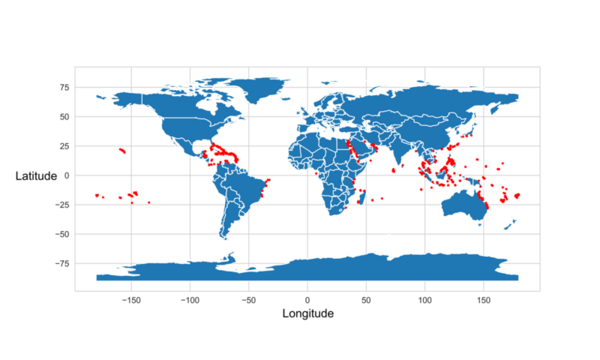
Coral bleaching is a fatal process that reduces coral diversity, leads to habitat loss for marine organisms, and is a symptom of climate change. This process occurs when corals expel their symbiotic dinoflagellates, algae that photosynthesize within coral tissue providing corals with glucose. Restoration efforts have attempted to repair damaged reefs; however, there are over 360,000 square miles of coral reefs worldwide, making it challenging to target conservation efforts. Thus, predicting the likelihood of bleaching in a certain region would make it easier to allocate resources for conservation efforts. We developed a machine learning model to predict global locations at risk for coral bleaching. Data obtained from the Biological and Chemical Oceanography Data Management Office consisted of various coral bleaching events and the parameters under which the bleaching occurred. Sea surface temperature, sea surface temperature anomalies, longitude, latitude, and coral depth below the surface were the features found to be most correlated to coral bleaching. Thirty-nine machine learning models were tested to determine which one most accurately used the parameters of interest to predict the percentage of corals that would be bleached. A random forest regressor model with an R-squared value of 0.25 and a root mean squared error value of 7.91 was determined to be the best model for predicting coral bleaching. In the end, the random model had a 96% accuracy in predicting the percentage of corals that would be bleached. This prediction system can make it easier for researchers and conservationists to identify coral bleaching hotspots and properly allocate resources to prevent or mitigate bleaching events.
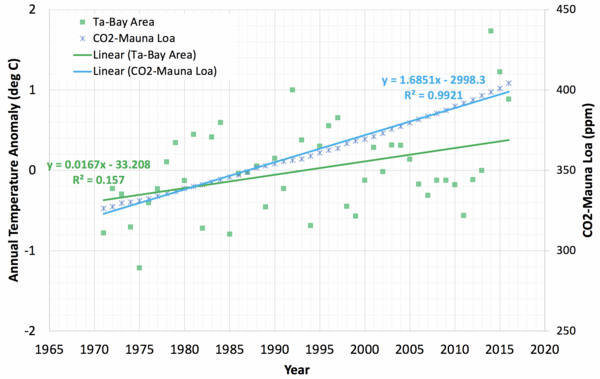
Understanding the relationships between temperature, MEI, SPI, and CO2 concentration is important as they measure the major influencers of California’s regional climate: temperature, ENSO, precipitation, and atmospheric CO2. In this article, the authors analyzed temperature, Multivariate El Niño-Southern Oscillation Index (MEI), and Standard Precipitation Index (SPI) data from the San Francisco Bay Area from 1971 to 2016. They also analyzed CO2 records from Mauna Loa, HI for the same time period, along with the annual temperature anomalies for the Bay Area.
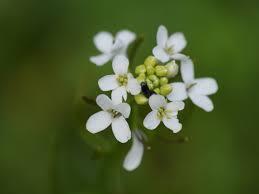
In a world where water shortage is becoming an increasing concern, and where population increase seems inevitable, food shortage is an overwhelming concern for many. In this paper, the authors aim to characterize a drought-resistant strain of A. thaliana, investigating the cause for its water resistance. These and similar studies help us learn how plants could be engineered to improve their ability to flourish in a changing climate.
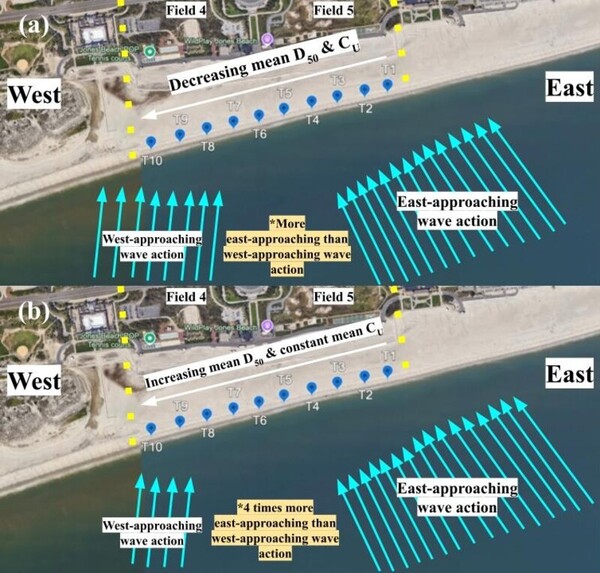
The authors looked at beach nourishment (a way to combat erosion on coasts) and resulting grain size distribution. Their work is important to understand the dynamics of erosion and it's relation to wave action and the implications this has for efforts to mitigate coastal erosion.
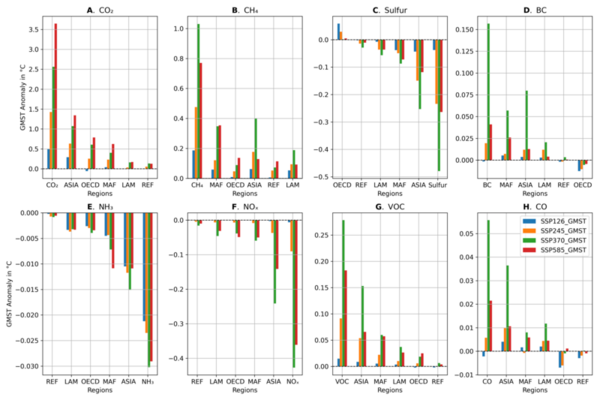
This study explores how different economic sectors, geographic regions, and greenhouse gas types might affect future global mean surface temperature (GMST) anomalies differently from historical patterns. Using the Finite Amplitude Impulse Response (FaIR) model and four Shared Socioeconomic Pathways (SSPs) — SSP126, SSP245, SSP370, and SSP585 — the research reveals that future contributions to GMST anomalies.
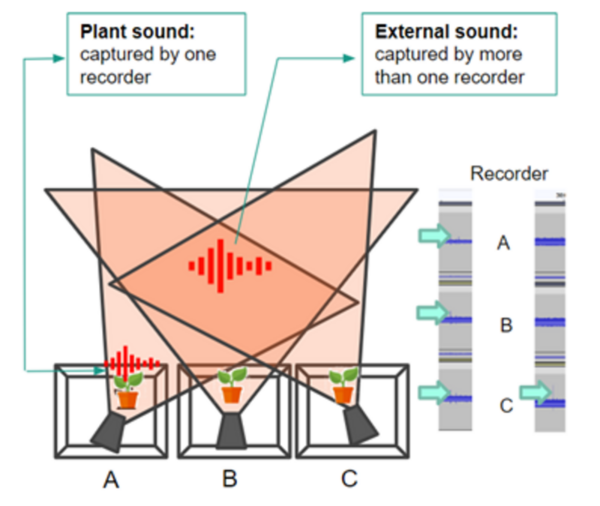
Current horticulture practices often rely on pesticides, causing environmental harm. To address this, authors explore the use of ultrasonic sound emissions to detect plant stress at an individual level.
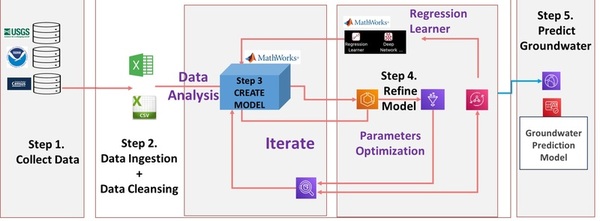
Here, in an effort to develop a model to predict future groundwater levels, the authors tested a tree-based automated artificial intelligence (AI) model against other methods. Through their analysis they found that groundwater levels in Texas aquifers are down significantly, and found that tree-based AI models most accurately predicted future levels.