Arsenic contamination in rice, caused by the use of arsenic-laden groundwater for irrigation, is a growing global concern, affecting over 150 million people. To address this, researchers hypothesized that genetically modifying rice plants with arsenic-resistant genes could reduce arsenic uptake and allow the plants to detoxify arsenic, making them safer to consume.
Read More...Browse Articles
Rhizosphere metagenome analysis and wet-lab approach to derive optimal strategy for lead remediation in situ
The Environmental Protection Agency (EPA) reports a significant number of heavy metal-contaminated sites across the United States. To address this public health concern, rhizoremediation using microbes has emerged as a promising solution. Here, a combination of soil microbes were inoculated in the rhizosphere in soil contaminated with 500 parts per million (ppm) of lead. Results showed rhizoremediation is an effective bioremediation strategy and may increase crop productivity by converting nonarable lands into arable lands.
Read More...A Crossover Study Comparing the Effect of a Processed vs. Unprocessed Diet on the Spatial Learning Ability of Zebrafish
The authors compared the short-term effects of processed versus unprocessed food on spatial learning and survival in zebrafish, given the large public concern regarding processed foods. By randomly assigning zebrafish to a diet of brine shrimp flakes (processed) or live brine shrimp (unprocessed), the authors show while there is no immediate effect on a fish's decision process between the two diets, there are significant correlations between improved learning and stress response with the unprocessed diet.
Read More...Glyphosate Levels in American Food Products Meet Government Safety Levels Yet Exceed Concentrations Associated with Negative Effects
Glyphosate is the active ingredient in the herbicide Roundup, frequently used in the agricultural industry worldwide. Current literature reveals contradictory findings regarding the effects of glyphosate on vertebrates, leading to concerns about human consumption and differing views on safety levels. Here, authors sought to measure glyphosate levels in common commercially available food products. While some product levels exceed the thresholds at which negative effects have been observed, none exceed government limits.
Read More...A meta-analysis on NIST post-quantum cryptographic primitive finalists
The advent of quantum computing will pose a substantial threat to the security of classical cryptographic methods, which could become vulnerable to quantum-based attacks. In response to this impending challenge, the field of post-quantum cryptography has emerged, aiming to develop algorithms that can withstand the computational power of quantum computers. This study addressed the pressing concern of classical cryptographic methods becoming vulnerable to quantum-based attacks due to the rise of quantum computing. The emergence of post-quantum cryptography has led to the development of new resistant algorithms. Our research focused on four quantum-resistant algorithms endorsed by America’s National Institute of Standards and Technology (NIST) in 2022: CRYSTALS-Kyber, CRYSTALS-Dilithium, FALCON, and SPHINCS+. This study evaluated the security, performance, and comparative attributes of the four algorithms, considering factors such as key size, encryption/decryption speed, and complexity. Comparative analyses against each other and existing quantum-resistant algorithms provided insights into the strengths and weaknesses of each program. This research explored potential applications and future directions in the realm of quantum-resistant cryptography. Our findings concluded that the NIST algorithms were substantially more effective and efficient compared to classical cryptographic algorithms. Ultimately, this work underscored the need to adapt cryptographic techniques in the face of advancing quantum computing capabilities, offering valuable insights for researchers and practitioners in the field. Implementing NIST-endorsed quantum-resistant algorithms substantially reduced the vulnerability of cryptographic systems to quantum-based attacks compared to classical cryptographic methods.
Read More...Evaluation of Microplastics in Japanese Fish Using Visual and Chemical Dissections
Does the overuse of plastic in Japan poses an ecological risk to marine species and their consumers? Using visual and chemical dissection, all fish in this study were found to have microplastics present in their gastrointestinal tract, including two species that are typically eaten whole in Japan. Overall, these results are concerning as previous studies have found that microplastics can carry persistent organic pollutants. It is presumed that the increasing consumption of microplastics will have negative implications on organ systems such as the liver, gut, and hormones.
Read More...Investigation of Everyday Locations for Antibiotic-Resistant Bacteria in Cambridge, Massachusetts
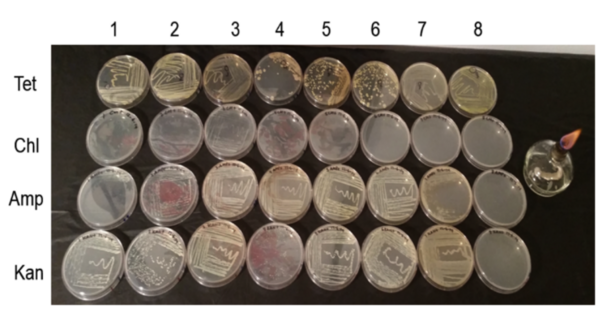
In this study, the authors investigate whether antibiotic-resistant bacteria can be found in everyday locations. To do this, they collected samples from multiple high-trafficked areas in Cambridge, MA and grew them in the presence and absence of antibiotics. Interestingly, they grew bacterial colonies from many locations' samples, but not all could grow in the presence of ampicillin. These findings are intriguing and relevant given the rising concern about antibiotic-resistant bacteria.
Read More...Exploring the possibilities for reactions between SiW and alkaline solutions to be renewable energy sources
The authors looked at hydrogen gas production and how reaction temperature, concentration and alkaline solution used impacted the overall reaction with silicon. They found that all alkaline solutions tested would be viable options for using silicon waste to produce hydrogen gas to be used a renewable energy source.
Read More...A Quantitative Analysis of the Proliferation of Microplastics in Williamston’s Waterways
Plastic debris can disrupt marine ecosystems, spread contaminants, and take years to naturally degrade. In this study, Wu et al aim to establish an understanding of the scope of Williamston, Michigan’s microplastics problem, as well as to attempt to find the source of these plastics. Initially, the authors hypothesize that the Williamston Wastewater Treatment Plant was the primary contributor to Williamston’s microplastics pollution. Although they find a general trend of increasing concentrations of microplastics from upstream to downstream, they do not pinpoint the source of Williamston’s microplastics pollution in the present research.
Read More...A five-year retrospective analysis of Tuberculosis risk factors and their variability in the United States
The main goal of this study is to determine what demographics are related to tuberculosis incidence in the United States populations, particularly if changing demographics are related to differences in tuberculosis risk over two discrete time periods. The major finding is that in the two studied time periods, tuberculosis risk factors were somewhat consistent and may be influenced by things such as immigration, healthcare access, and race or ethnicity, although the top predictor did change.
Read More...