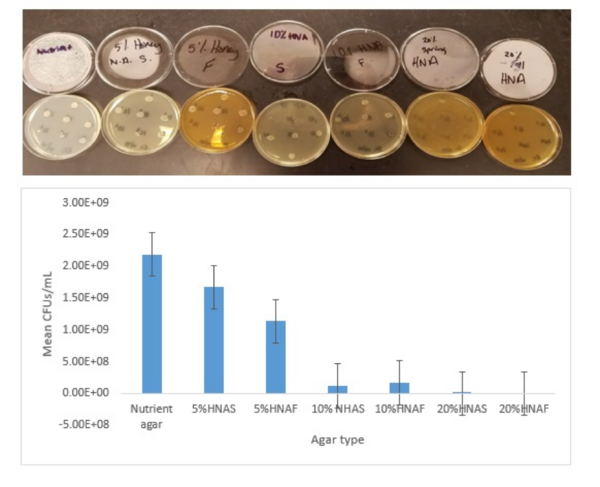
In this study, locally produced fall and spring honeys were tested to determine whether there was a significant difference in their abilities to limit or prevent bacterial growth of E. coli, S. aureus, P. aeruginosa, and S. epidermidis.
Read More...Fall and Spring Honeys Are Equally Effective at Reducing Growth Numbers of E. coli, S. aureus, P. aeruginosa, and S. epidermidis
In this study, locally produced fall and spring honeys were tested to determine whether there was a significant difference in their abilities to limit or prevent bacterial growth of E. coli, S. aureus, P. aeruginosa, and S. epidermidis.
Read More...The Effect of Cobalt Biomineralization on Power Density in a Microbial Fuel Cell
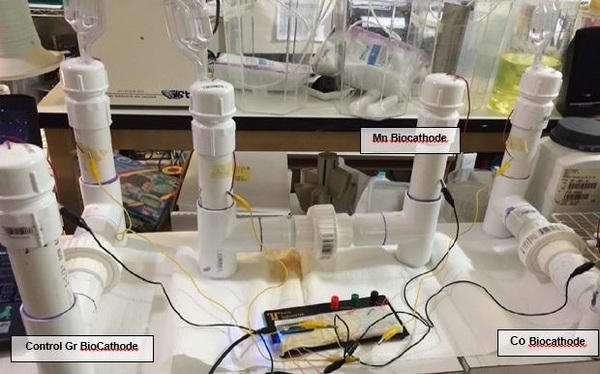
A microbial fuel cell is a system to produce electric current using biochemical products from bacteria. In this project authors operated a microbial fuel cell in which glucose was oxidized by Shewanella oneidensis in the anodic compartment. We compared the power output from biomineralized manganese or cobalt oxides, reduced by Leptothrix cholodnii in the cathodic compartment.
Read More...Yeast catalysis of hydrogen peroxide as an enhanced chemical treatment method for harvested rainwater
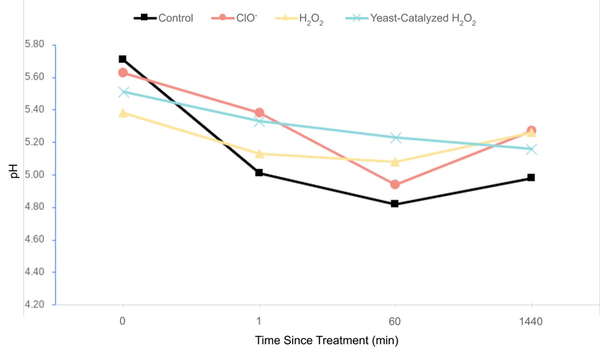
The authors looked at different treatments to clean up rainwater collected at home. They found that chlorine treatment and treatment with hydrogen peroxide catalyzed by yeast showed similar potential for cleaning up contaminated rainwater, but that further studies are needed to better assess impact on specific contaminant levels still present.
Read More...A comparison of the water quality between Chinatown and Bayside: two demographically different regions
The authors looked at differences in water quality between Chinatown and Bayside. They wanted to look at the racial and economic demographics of each region and how that correlated to access to clean drinking water. Ultimately they did not find any significant differences in water quality, but identified important future directions for this work.
Read More...Tap water quality analysis in Ulaanbaatar City
There have been several issues concerning the water quality in Ulaanbaatar, Mongolia in the past few years. This study, we collected 28 samples from 6 districts of Ulaanbaatar to check if the water supply quality met the standards of the World Health Organization, the Environmental Protection Agency, and a Mongolian National Standard. Only three samples fully met all the requirements of the global standards. Samples in Zaisan showed higher hardness (>120 ppm) and alkalinity levels (20–200 ppm) over the other districts in the city. Overall, the results show that it is important to ensure a safe and accessible water supply in Ulaanbaatar to prevent future water quality issues.
Read More...Effect of Fertilizer on Water Quality of Creeks over Time
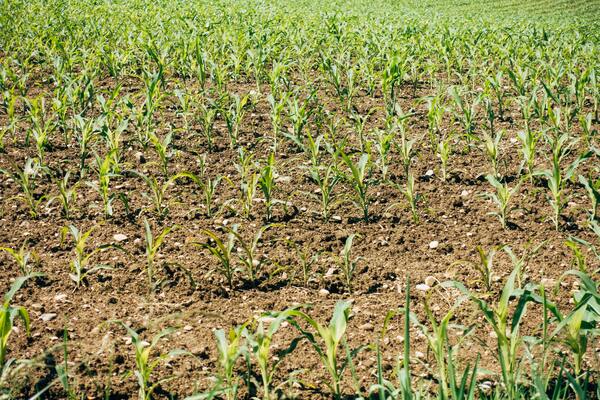
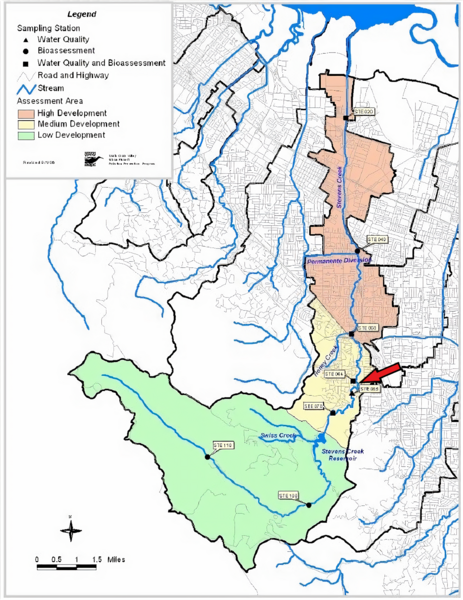
Fertilizers are commonly used to improve agricultural yield. Unfortunately, chemical fertilizers can seep into drinking water, potentially harming humans and other forms of life. Here, the authors investigate the effect of fertilizer on the water quality of Saratoga Creek over time. They find that fertilizers can alter the acidity of the creek's water, which can be harmful to aquatic species, as well as increase the levels of nitrates temporarily.
Read More...Impact of Soil Productivity on the Growth of Two Meyer Lemon Trees
Here, the authors aimed to apply home soil testing to identify the cause of the growth differences between two lemon trees. They hypothesized that differences in physical and chemical soil characteristics were influencing differences in soil productivity and plant growth. Overall, the study demonstrated the effectiveness of home soil testing to characterize soils and help homeowners solve common gardening problems.
Read More...The effect of floating plant on water purification: Comparison of the water purification capability of Water Hyacinth, Duckweed, and Azolla
Clean water is a necessity for every household, yet water pollution is a serious problem in many parts of the world and plays a major role in compromising water security in the 21st century. In this paper, the authors address the utility of several plants as natural water purifiers. They estimate the effectiveness of duckweed, hyacinth, and azolla in improving the quality of water from the Mithi river in India by measuring several metrics. They conclude that all three plants are effective in improving water quality, suggesting that these plants as eco-friendly options for water treatment.
Read More...Temperatures of 20°C Produce Increased Net Primary Production in Chlorella sp.
Chlorella sp. are unicellular green algae that use photosynthesis to reduce carbon dioxide into glucose. In this study, authors sought to determine the temperature that Chlorella sp. is maximally efficient at photosynthesis, and therefore removing the most carbon dioxide from the system. This activity could be harnessed to naturally remove carbon dioxide from the environment, fighting the effects of climate change.
Read More...The Effects of Various Plastic Pollutants on the Growth of the Wisconsin Fast Plant
Here the authors investigate the effects of plastic pollutants on terrestrial life. Specifically they look at the growth of Brassica rapa and determine that phosphate levels have the most negative impact on growth.
Read More...