Browse Articles

Effects of Wi-Fi EMF on Drosophila melanogaster

Anand et al. | Jan 29, 2020

Effects of Wi-Fi EMF on <em>Drosophila melanogaster</em>

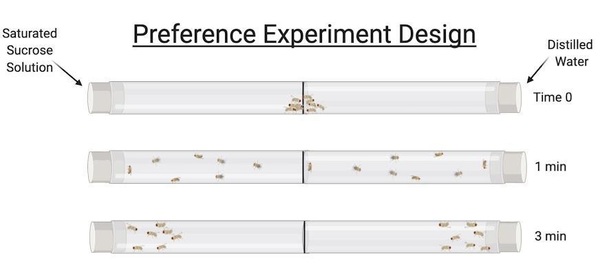
While increased access to Wi-Fi has been a great advancement, we have a limited understanding if there are any health effects on animals. In this study, Anand and Anand exposed fruit flies (Drosophila melanogaster) to different concentrations of Wi-Fi electromagnetic fields, and observed effects on their reproduction and survivability.

Read More...

Comparative Analysis of Vital Capacities of Athletes, Singers and Other Students of Age 13-14 Years: A Cross-Sectional Observational Study

Taneja et al. | Sep 30, 2019

Comparative Analysis of Vital Capacities of Athletes, Singers and Other Students of Age 13-14 Years: A Cross-Sectional Observational Study

Physical activity when performed regularly has beneficial effects on all systems of the body, including pulmonary functions. This study, conducted at Springdales School in Dhaula Kuan, New Delhi, aimed to determine the effect of sports and singing on the vital capacity (the maximum amount of air a person can expel from the lungs after a maximum inhalation), an important measure of pulmonary health.

Read More...

Specific Transcription Factors Distinguish Umbilical Cord Mesenchymal Stem Cells From Fibroblasts

Park et al. | Aug 16, 2019

Specific Transcription Factors Distinguish Umbilical Cord Mesenchymal Stem Cells From Fibroblasts

Stem cells are at the forefront of research in regenerative medicine and cell therapy. Two essential properties of stem cells are self-renewal and potency, having the ability to specialize into different types of cells. Here, Park and Jeong took advantage of previously identified stem cell transcription factors associated with potency to differentiate umbilical cord mesenchymal stem cells (US-MSCs) from morphologically similar fibroblasts. Western blot analysis of the transcription factors Klf4, Nanog, and Sox2 revealed their expression was unique to US-MSCs providing insight for future methods of differentiating between these cell lines.

Read More...

The Effects of Altered Microbiome on Caenorhabditis elegans Egg Laying Behavior

Gohari et al. | Aug 12, 2019

The Effects of Altered Microbiome on <em>Caenorhabditis elegans</em> Egg Laying Behavior

Since the discovery that thousands of different bacteria colonize our gut, many of which are important for human wellbeing, understanding the significance of balancing the different species on the human body has been intensely researched. Untangling the complexity of the gut microbiome and establishing the effect of the various strains on human health is a challenge in many circumstances, and the need for simpler systems to improve our basic understanding of microbe-host interactions seems necessary. C. elegans are a well-established laboratory animal that feed on bacteria and can thus serve as a less complex system for studying microbe-host interactions. Here the authors investigate how the choice of bacterial diet affects worm fertility. The same approach could be applied to many different outcomes, and facilitate our understanding of how the microbes colonizing our guts affect various bodily functions.

Read More...

Performance of Panicum virgatum Cultivars in Competition With Bromus inermis and Differing Amounts of N Fertilizer

Ferris et al. | Mar 04, 2019

Performance of <em>Panicum virgatum</em> Cultivars in Competition With <em>Bromus inermis</em> and Differing Amounts of N Fertilizer

With growing demands for ethanol, many researchers are turning to Panicum virgatum (switchgrass) as a feedstock of cellulosic ethanol. In this study, Ferris and Gillan examine the germination, biomass, nitrogen, survival, and chlorophyll absorbance of two switchgrass cultivars of grown in competition with Bromus inermis (smooth brome) with two varying levels of nitrogen fertilizer. Results presented indicate that during establishment, competition from other species has a greater effect than nitrogen fertilizer.

Read More...

Phages Can Be More Effective and Specific Than Antibiotics in Combating Bacteria

Wu et al. | Feb 17, 2019

Phages Can Be More Effective and Specific Than Antibiotics in Combating Bacteria

Phage therapy has been suggested as an alternative to antibiotics because bacteria resistant to antibiotics may still be susceptible to phages. However, phages may have limited effectiveness in combating bacteria since bacteria possess several antiviral defense mechanisms and can quickly develop resistance to phages. In this study, Wu and Pinta compare the effectiveness and specificity of antibiotics and phages in combating bacteria. They found that T4 phages are more specific and effective in fighting or inhibiting both antibiotic-resistant and sensitive bacteria than antibiotics, suggesting that phage therapy can be developed as an efficient tool to combat antibiotic-resistant bacteria.

Read More...