Browse Articles

Reading recall: A comparison of reading comprehension

Rudins et al. | Nov 16, 2022

Reading recall: A comparison of reading comprehension

Researchers query whether reading comprehension is the same, worse, or better when using e-books as compared with standard paper texts. This study evaluated this question in the elementary school population. Our hypothesis was that information would be retained equally whether read from paper or from an electronic device. Each participant read four stories, alternating between electronic and paper media types. After each reading, the participants completed a five-question test covering the information read. The study participants correctly answered 167 out of 200 comprehension questions when reading from an electronic device. These same participants correctly answered 145 out of 200 comprehension questions when reading from paper. At a significance level of p < 0.05, the results showed that there was a statistically significant difference in reading comprehension between the two media, demonstrating better comprehension when using electronic media. The unexpected results of this study demonstrate a shift in children’s performance and desirability of using electronic media as a reading source.

Read More...

Tap water quality analysis in Ulaanbaatar City

Munkhbat et al. | Sep 25, 2022

Tap water quality analysis in Ulaanbaatar City

There have been several issues concerning the water quality in Ulaanbaatar, Mongolia in the past few years. This study, we collected 28 samples from 6 districts of Ulaanbaatar to check if the water supply quality met the standards of the World Health Organization, the Environmental Protection Agency, and a Mongolian National Standard. Only three samples fully met all the requirements of the global standards. Samples in Zaisan showed higher hardness (>120 ppm) and alkalinity levels (20–200 ppm) over the other districts in the city. Overall, the results show that it is important to ensure a safe and accessible water supply in Ulaanbaatar to prevent future water quality issues.

Read More...

Modulation of VEGF and TGF beta in 5-FU induced inflammation in MCF-7 using an herbal formulation

Vinay Nair et al. | Jun 03, 2022

Modulation of VEGF and TGF beta in 5-FU induced inflammation in MCF-7 using an herbal formulation

Acquired drug resistance is an increasing challenge in treating cancer with chemotherapy. One mechanism
behind this resistance is the increased inflammation that supports the progression and development of
cancer that arises because of the drug’s presence. Integrative oncology is the field that focuses on including natural products alongside traditional therapy to create a treatment that focuses on holistic patient well-being.
In this study, the authors demonstrate that the use of an herbal formulation, consisting of turmeric and green tea, alongside a traditional chemotherapeutic drug, 5-fluorouracil (FU) significantly decreases the level of cytokines produced in breast cancer cells when compared to the levels produced when exposed solely to the chemo drug. The authors conclude that this combination of treatment, based on the principle of integrative oncology, shows potential for reducing the resistance against treatment conferred through increased inflammation. Consequently, this suggests a prospective way forward in improving the efficacy of cancer treatment.

Read More...

Down-regulation of CD44 inhibits Wnt/β-catenin mediated cancer cell migration and invasion in gastric cancer

Baek et al. | May 10, 2021

Down-regulation of CD44 inhibits Wnt/β-catenin mediated cancer cell migration and invasion  in gastric cancer

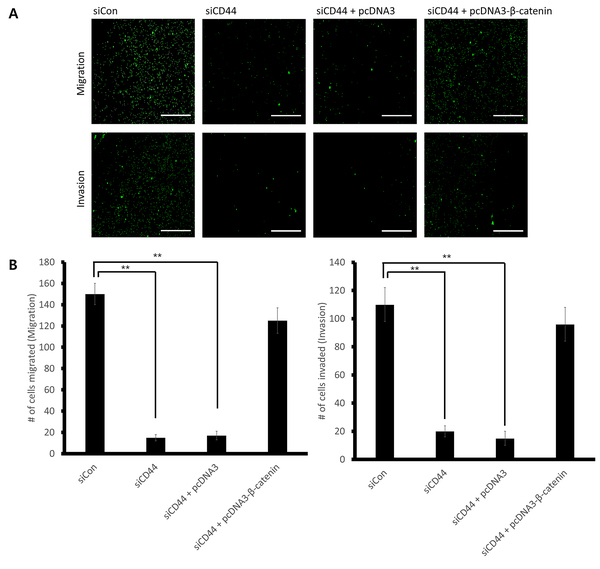
In this study, we aimed to characterize CD44-mediated regulation of the Wnt/β-catenin signaling pathway, which promotes cancer invasion and metastasis. We hypothesized that CD44 down-regulation will inhibit gastric cancer cell migration and invasion by leading to down-regulation of Wnt/β-catenin signaling. We found that CD44 up-regulation was significantly related to poor prognosis in gastric cancer patients. We demonstrated the CD44 down-regulation decreased β-catenin protein expression level. Our results suggest that CD44 down-regulation inhibits cell migration and invasion by down-regulating β-catenin expression level.

Read More...

Effect of Fertilizer on Water Quality of Creeks over Time

Chen et al. | May 02, 2021

Effect of Fertilizer on Water Quality of Creeks over Time

Fertilizers are commonly used to improve agricultural yield. Unfortunately, chemical fertilizers can seep into drinking water, potentially harming humans and other forms of life. Here, the authors investigate the effect of fertilizer on the water quality of Saratoga Creek over time. They find that fertilizers can alter the acidity of the creek's water, which can be harmful to aquatic species, as well as increase the levels of nitrates temporarily.

Read More...

How has California’s Shelter-in-Place Order due to COVID-19 and the Resulting Reduction in Human Activity Affected Air and Water Quality?

Everitt et al. | Feb 15, 2021

How has California’s Shelter-in-Place Order due to COVID-19 and the Resulting Reduction in Human Activity Affected Air and Water Quality?

As the world struggled to grapple with the emerging COVID-19 pandemic in 2020, many countries instated policies to help minimize the spread of the virus among residents. This inadvertently led to a decrease in travel, and in some cases, industrial output, two major sources of pollutants in today's world. Here, the authors investigate whether California's shelter-in-place policy was associated with a measurable decrease in water and air pollution in that state between June and July of 2020, compared to the preceeding five years. Their findings suggest that, by some metrics, air quality improved within certain areas while water quality was relatively unchanged. Overall, these findings suggest that changing human behavior can, indeed, help reduce the level of air pollutants that compromise air quality.

Read More...

The Effects of Ezetimibe on Triglyceride and Alanine Transaminase Reduction in Drosophila Melanogaster Model of Nonalcoholic Fatty Liver Disease (NAFLD)

Dania et al. | Apr 30, 2020

The Effects of Ezetimibe on Triglyceride and Alanine Transaminase Reduction in <i>Drosophila Melanogaster</i> Model of Nonalcoholic Fatty Liver Disease (NAFLD)

Nonalcoholic Fatty Liver Disease (NAFLD) is a condition where a surplus of triglycerides or fat are present in the liver. In this study, ezetimibe, a cholesterol lowering drug, was used to treat flies modeling NAFLD. Compared to the coconut oil fed flies that were transferred to the control medium, the flies transferred to the control medium treated with ezetimibe showed a decrease in their triglyceride and alanine transaminase level.

Read More...

Giving Teens a Voice: Sources of Stress for High School Students

Corson et al. | Sep 09, 2019

Giving Teens a Voice: Sources of Stress for High School Students

The authors investigate the negative effects stress has on teen mental and physical health. Through a survey, they give Virginia teens a voice in revising the Health and Physical Education curriculum to include a standards of learning (SOL). Notably they identify factors contributing to stress levels including homework level, amount of free and sleep time, parental pressure and family encouragement.

Read More...

FRUGGIE – A Board Game to Combat Obesity by Promoting Healthy Eating Habits in Young Children

Huprikar et al. | Jun 13, 2018

FRUGGIE – A Board Game to Combat Obesity by Promoting Healthy Eating Habits in Young Children

The authors created a board game to teach young children about healthy eating habits to see whether an interactive and family-oriented method would be effective at introducing and maintaining a love for fruits and veggies. Results showed that children developed a liking for fruits and vegetables, and none regressed. Half maintained their level of enjoyment for fruits and vegetables during the research period, while the other half had a positive increase. The results show that a simple interactive game can shape how young children relate to food and encourage them to maintain healthy habits.

Read More...

Young People Drinking: The Effect of Group Size on Drinking Habits

Palermo et al. | May 10, 2018

Young People Drinking: The Effect of Group Size on Drinking Habits

Palermo et al. examined the effect of group size on drinking habits of college and high school students. The authors found that both high school and college students tended to consume the most alcohol in group sizes of 4 or more, independent of how frequently they drink. They also found that the proportion of college students that drink is nearly twice the proportion of high school students that drink. This study supports previous findings that underage drinking happens in large groups and suggests that effective intervention in underage drinking would be at the group level.

Read More...