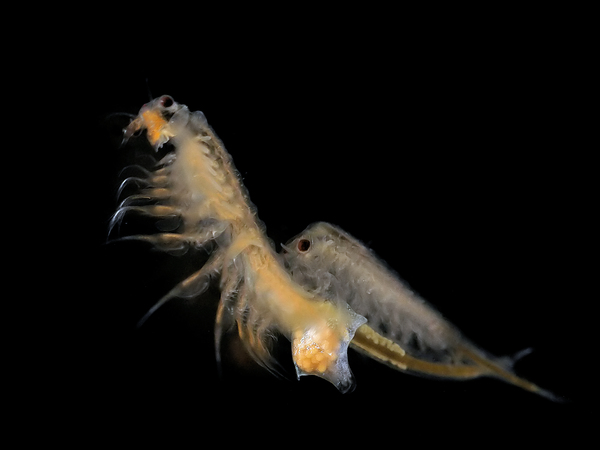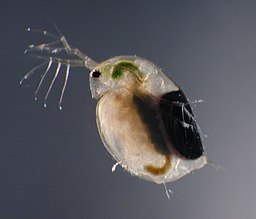
In this study a student uses Daphnia magna, or water fleas, to assay the purity of local soil samples. Daphnia magna are a helpful organism to detect potentially harmful levels of toxins in water.
Read More...Monitoring Local Soil Toxicity by Daphnia magna Viability
In this study a student uses Daphnia magna, or water fleas, to assay the purity of local soil samples. Daphnia magna are a helpful organism to detect potentially harmful levels of toxins in water.
Read More...Investigating Teen Audism: The Development and Use of a Survey Scale to Measure Misconceptions of the Deaf Community in a Hearing High School
The authors explore hearing students' misconceptions about the Deaf and Hard of Hearing (HoH) community. Results indicate that some misconceptions are more common than others, and that personal experience with individuals in the Deaf and HoH community reduces the frequency of such misconceptions.
Read More...Effect of pH Change on Exoskeletons of Selected Saltwater Organisms Which Rely on Calcium Fixation
Rising atmospheric carbon dioxide levels are projected to lead to a 0.3- 0.4 unit decrease in ocean surface pH levels over the next century. In this study, the authors investigate the effect of pH change on the mass of calcified exoskeletons of common aquatic organisms found in South Florida coastal waters.
Read More...Revisiting the Belmont Report: an analysis of the bioethical values of Generation Z
The authors studied the bioethical values of Generation Z.
Read More...Where to invest: Stock market indices versus mutual funds
Population demographic patterns in PFAS-neurological health research
The authors analyzed racial and ethnic representation in studies on PFAS and neurological health outcomes.
Read More...Correlation between trihalomethane concentrations and various cancers in Massachusetts counties
The authors assess incidence and mortality rates of two cancer types in relation to trihalomethane pollutant concentrations in drinking water.
Read More...Environmental contributors of asthma via explainable AI: Green spaces, climate, traffic & air quality
This study explored how green spaces, climate, traffic, and air quality (GCTA) collectively influence asthma-related emergency department visits in the U.S using machine learning models and explainable AI.
Read More...Mitigating open-set misclassification in a colorectal cancer detecting neural network
The authors develop a machine learning method to reduce misclassification of objects in safety-critical applications such as medical diagnosis.
Read More...Quantifying coliform bacteria in ground beef to evaluate food safety guidelines
The authors looked at the presence of coliform bacteria present in ground beef after cooking it various CDC standards. They found that no coliform bacteria was present when CDC guidelines for cooking ground beef were properly followed.
Read More...