Browse Articles

Bacteriophage TLS sensitizes Escherichia coli to antibiotics

Emann et al. | Mar 04, 2026

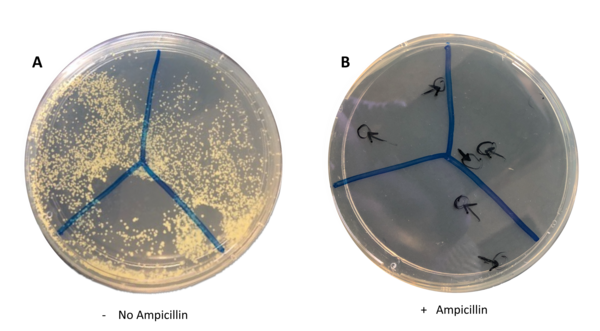
Bacteriophage TLS sensitizes <i>Escherichia coli</i> to antibiotics

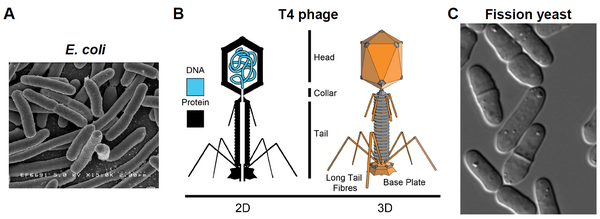
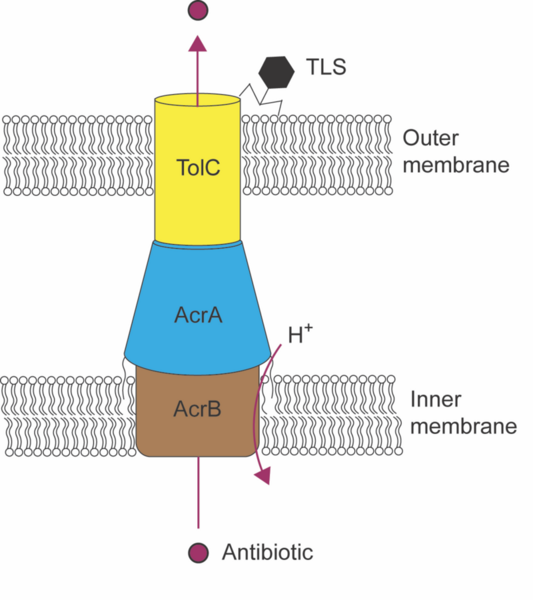
Antibiotic resistance is a growing global health threat, and one strategy to combat it is using bacteriophages to enhance the effectiveness of existing antibiotics. This study tested whether targeting the TolC protein in E. coli with the TLS bacteriophage would increase bacterial sensitivity to antibiotics.

Read More...

Modeling and optimization of epidemiological control policies through reinforcement learning

Rao et al. | May 23, 2023

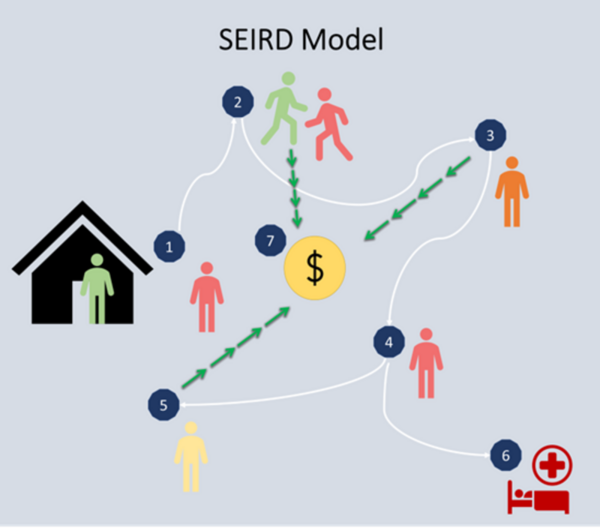
Modeling and optimization of epidemiological control policies through reinforcement learning

Pandemics involve the high transmission of a disease that impacts global and local health and economic patterns. Epidemiological models help propose pandemic control strategies based on non-pharmaceutical interventions such as social distancing, curfews, and lockdowns, reducing the economic impact of these restrictions. In this research, we utilized an epidemiological Susceptible, Exposed, Infected, Recovered, Deceased (SEIRD) model – a compartmental model for virtually simulating a pandemic day by day.

Read More...

Investigating facilitated biofilm formation in Escherichia coli exposed to sublethal levels of ampicillin

Yang et al. | Jan 20, 2023

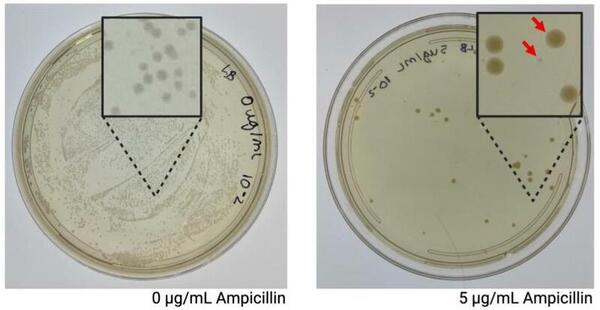
Investigating facilitated biofilm formation in <em>Escherichia coli</em> exposed to sublethal levels of ampicillin

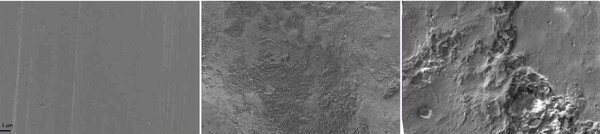
Here, the authors recognized the tendency of bacteria to form biofilms, where this behavior offers protection against threats such as antibiotics. To investigate this, they observed the effects of sublethal exposure of the antibiotic ampicillin on E. coli biofilm formation with an optical density crystal violet assay. They found that exposure to ampicillin resulted in the favored formation of biofilms over time, as free-floating bacteria were eradicated.

Read More...

Analysis of ultraviolet light as a bactericide of gram-negative bacteria in Cladophora macroalgae extracts

Newell et al. | Nov 07, 2022

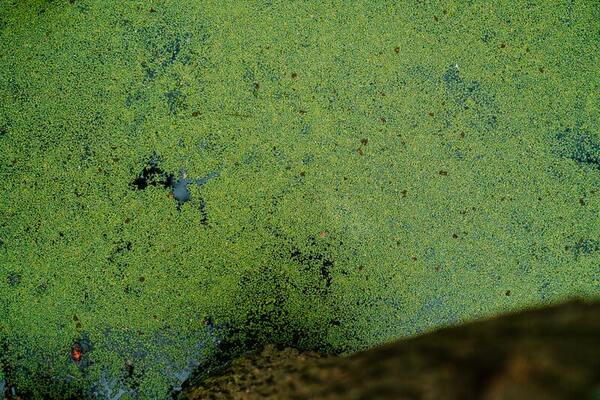
Analysis of ultraviolet light as a bactericide of gram-negative bacteria in <em>Cladophora</em> macroalgae extracts

Here, the authors sought to use Cladophora macroalgae as a possible antibiotic to address the growing threat of antibiotic resistance in pathogenic bacteria. However, when they observed algae extracts to be greatly contaminated with gram-negative bacteria, they adapted to explore the ability to use ultraviolet light as a bactericide. They found that treatment with ultraviolet light had a significant effect.

Read More...

How has California’s Shelter-in-Place Order due to COVID-19 and the Resulting Reduction in Human Activity Affected Air and Water Quality?

Everitt et al. | Feb 15, 2021

How has California’s Shelter-in-Place Order due to COVID-19 and the Resulting Reduction in Human Activity Affected Air and Water Quality?

As the world struggled to grapple with the emerging COVID-19 pandemic in 2020, many countries instated policies to help minimize the spread of the virus among residents. This inadvertently led to a decrease in travel, and in some cases, industrial output, two major sources of pollutants in today's world. Here, the authors investigate whether California's shelter-in-place policy was associated with a measurable decrease in water and air pollution in that state between June and July of 2020, compared to the preceeding five years. Their findings suggest that, by some metrics, air quality improved within certain areas while water quality was relatively unchanged. Overall, these findings suggest that changing human behavior can, indeed, help reduce the level of air pollutants that compromise air quality.

Read More...

The Effects of Ultraviolet Light on Escherichia coli

Kodoth et al. | Sep 07, 2015

The Effects of Ultraviolet Light on <em>Escherichia coli</em>

In this study E. coli bacteria was exposed to small UV lights currently used in school laboratories to see the effect on colony growth. This project explores how UV radiation methods could be applied in common households to inhibit bacterial growth.

Read More...