Browse Articles

Effects of Ocean Acidification on the Photosynthetic Ability of Chaetoceros gracilis in the Monterey Bay

Harvell et al. | Jan 16, 2020

Effects of Ocean Acidification on the Photosynthetic Ability of <i>Chaetoceros gracilis</i> in the Monterey Bay

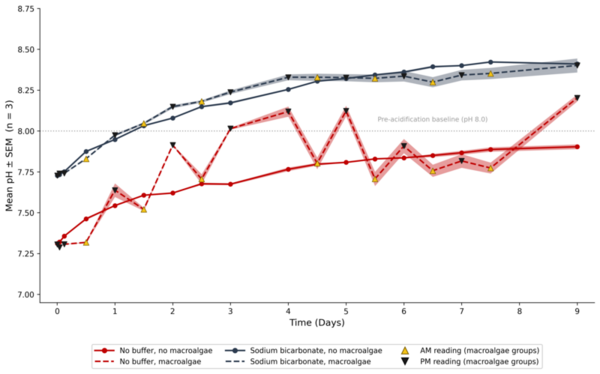
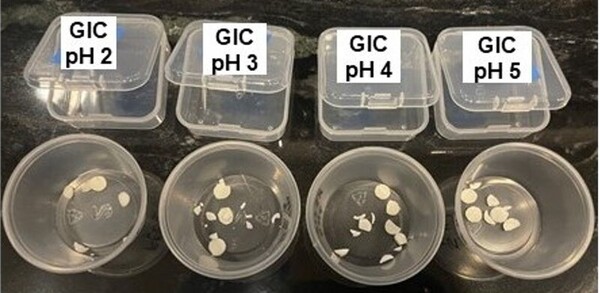
In this article, Harvell and Nicholson hypothesized that increased ocean acidity would decrease the photosynthetic ability of Chaetoceros gracilis, a diatom prolific in Monterey Bay, because of the usually corrosive effects of carbonic acid on both seashells and cells’ internal structures. They altered pH of algae environments and measured the photosynthetic ability of diatoms over four days by spectrophotometer. Overall, their findings indicate that C. gracilis may become more abundant in Monterey Bay as the pH of the ocean continues to drop, potentially contributing to harmful algal blooms.

Read More...

Reduce the harm of acid rain to plants by producing nitrogen fertilizer through neutralization

Xu et al. | Apr 25, 2023

Reduce the harm of acid rain to plants by producing nitrogen fertilizer through neutralization
Image credit: Ave Calvar Martinez, pexels.com

The phenomenon of dying trees and plants in areas affected by acid rain has become increasingly problematic in recent times. Is there any method to efficiently utilize the rainwater and reduce the harmfulness of acid rain or make it beneficial to plants? This study aimed to investigate the potential of neutralizing acid rainwater infiltrating the soil to increase soil pH, produce beneficial salts for plants, and support better plant growth. To test this hypothesis, precipitation samples were collected from six states in the U.S. in 2022, and the pH of the acid rain was measured to obtain a representative pH value for the country. Experiments were then conducted to simulate the neutralization of acid rain and the subsequent change in soil pH levels. To evaluate the effectiveness and feasibility of this method, cat grass was planted in pots of soil soaked with solutions mimicking acid rain, with control and experimental groups receiving neutralizing agents (ammonium hydroxide) or not. Plant growth was measured by analyzing the height of the plants. Results demonstrated that neutralizing agents were effective in improving soil pH levels and that the resulting salts produced were beneficial to the growth of the grass. The findings suggest that this method could be applied on a larger agricultural scale to reduce the harmful effects of acid rain and increase agricultural efficiency.

Read More...

Bacterial Richness of Soil Samples from Southern New Hampshire

Chalasani et al. | Sep 21, 2016

Bacterial Richness of Soil Samples from Southern New Hampshire

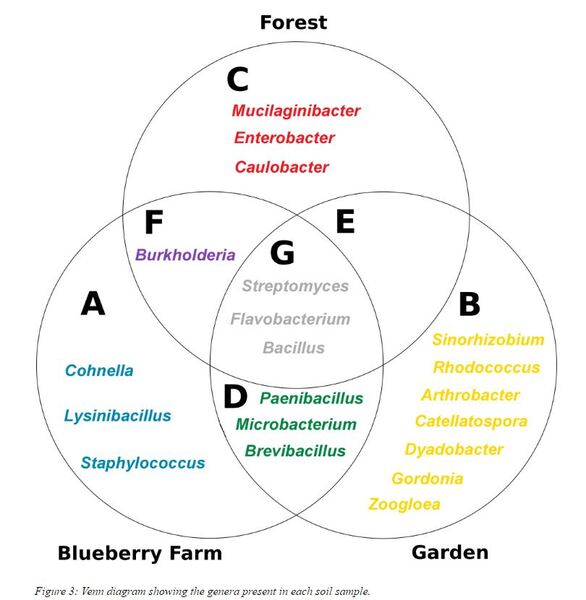
Advancement in DNA sequencing technology has greatly increased our understanding about the role of bacteria in soil. The authors of this study examine the microbial content of soil samples taken from three locations in southern New Hampshire with varying pH and plant composition.

Read More...

Fluorescein or Green Fluorescent Protein: Is It Possible to Create a Sensor for Dehydration?

Joshi et al. | Dec 09, 2019

Fluorescein or Green Fluorescent Protein: Is It Possible to Create a Sensor for Dehydration?

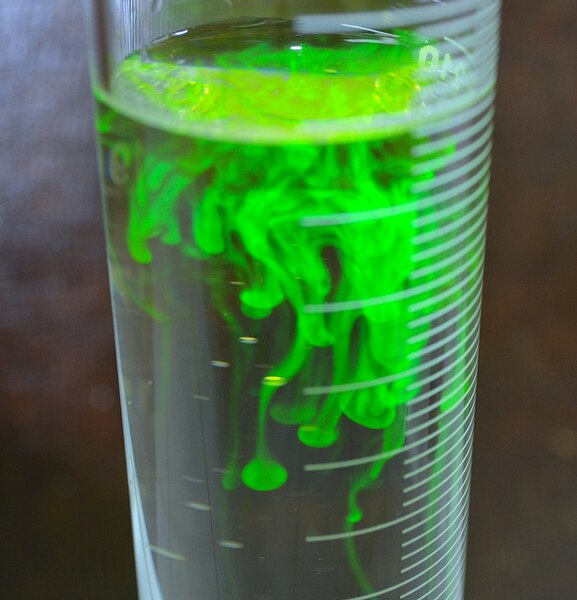
Currently there is no early dehydration detection system using temperature and pH as indicators. A sensor could alert the wearer and others of low hydration levels, which would normally be difficult to catch prior to more serious complications resulting from dehydration. In this study, a protein fluorophore, green fluorescent protein (GFP), and a chemical fluorophore, fluorescein, were tested for a change in fluorescence in response to increased temperature or decreased pH. Reversing the pH change did not restore GFP fluorescence, but that of fluorescein was re-established. This finding suggests that fluorescein could be used as a reusable sensor for a dehydration-related pH change.

Read More...

Impacts of the gut microbiota on arginine synthesis

Lane et al. | Aug 15, 2024

Impacts of the gut microbiota on arginine synthesis

In this article the authors looked at arginine synthesis across different bacteria commonly found in different regional diets. They found that B. megaterium and C. sporogenes both caused a higher pH to occur on their agar plates compared to other bacteria tested indicating a greater amount of arginine synthesis.

Read More...

Investigating ecosystem resiliency in different flood zones of south Brooklyn, New York

Ng et al. | Mar 23, 2024

Investigating ecosystem resiliency in different flood zones of south Brooklyn, New York
Image credit: Ng and Zheng et al 2024

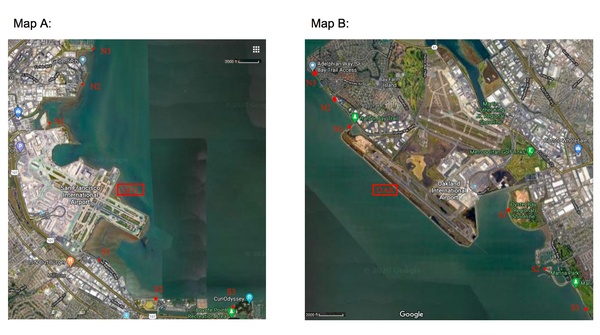
With climate change and rising sea levels, south Brooklyn is exposed to massive flooding and intense precipitation. Previous research discovered that flooding shifts plant species distribution, decreases soil pH, and increases salt concentration, nitrogen, phosphorus, and potassium levels. The authors predicted a decreasing trend from Zone 1 to 6: high-pH, high-salt, and high-nutrients in more flood-prone areas to low-pH, low-salt, and low-nutrient in less flood-prone regions. They performed DNA barcoding to identify plant species inhabiting flood zones with expectations of decreasing salt tolerance and moisture uptake by plants' soil from Zones 1-6. Furthermore, they predicted an increase in invasive species, ultimately resulting in a decrease in biodiversity. After barcoding, they researched existing information regarding invasiveness, ideal soil, pH tolerance, and salt tolerance. They performed soil analyses to identify pH, nitrogen (N), phosphorus (P), and potassium (K) levels. For N and P levels, we discovered a general decreasing trend from Zone 1 to 6 with low and moderate statistical significance respectively. Previous studies found that soil moisture can increase N and P uptake, helping plants adopt efficient resource-use strategies and reduce water stress from flooding. Although characteristics of plants were distributed throughout all zones, demonstrating overall diversity, the soil analyses hinted at the possibility of a rising trend of plants adapting to the increase in flooding. Future expansive research is needed to comprehensively map these trends. Ultimately, investigating trends between flood zones and the prevalence of different species will assist in guiding solutions to weathering climate change and protecting biodiversity in Brooklyn.

Read More...

Impact of hog farming on water quality of aquatic environments in North Carolina

Kancharla et al. | Aug 08, 2023

Impact of hog farming on water quality of aquatic environments in North Carolina

This study collected samples from water bodies near hog farms and an aquatic environment not near a hog farm. It was hypothesized that water bodies near the hog farms would have lower water quality with higher turbidity, total dissolved solids (TDS), and pH than the water body not in proximity to a hog farm because of water contamination with hog waste. Results showed that the turbidity was 4–6 times higher, TDS was 1.5–2 times higher, and pH was 3 units higher in the 2 experimental locations compared to the control location. This study and its findings are important for understanding the impact of hog farming on the proximal water bodies.

Read More...