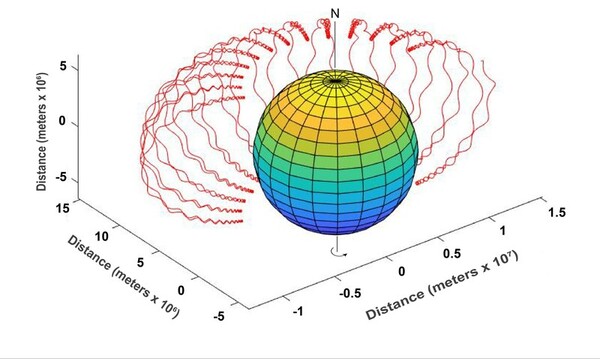
In this study the authors looked the trajectories of cosmic rays moving through a dipole field. They found that the trajectories of cosmic rays are determined by a particle's energy and interaction with Earth's B field.
Read More...Simulation of cosmic rays in the presence of a magnetic field
In this study the authors looked the trajectories of cosmic rays moving through a dipole field. They found that the trajectories of cosmic rays are determined by a particle's energy and interaction with Earth's B field.
Read More...Investigating toxicity and antimicrobial properties of silver nanoparticles in Escherichia coli and Drosophila melanogaster
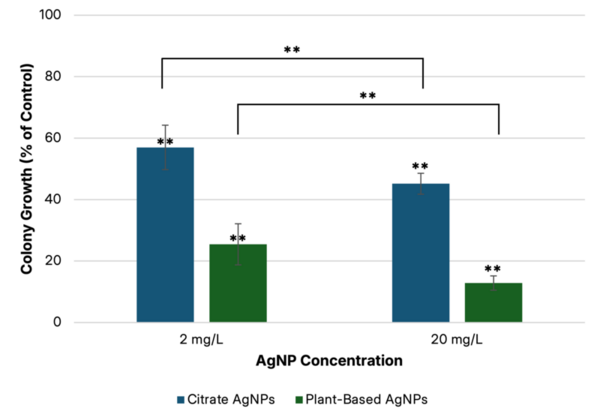
This paper looks at the antibacterial and toxic effects of silver nanoparticles (AgNPs) on Escherichia coli bacteria and Drosophila melanogaster fruit flies. They modified the AgNPs size, concentration, and surface coating to determine the effects on each of the organisms. For both organisms, increased AgNP concentration demonstrated increased toxicity but particle size and surface coating had opposing effects.
Read More...The effect of circumference on the segregation of objects in a mixture
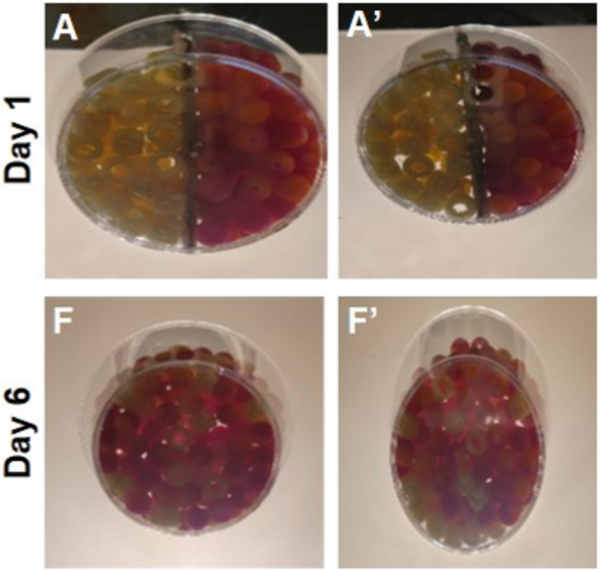
The authors test how the size-segregation theory applies to the behavior of hollow and irregular-shaped objects.
Read More...Solving the Schrödinger equation computationally using the Lanczos algorithm
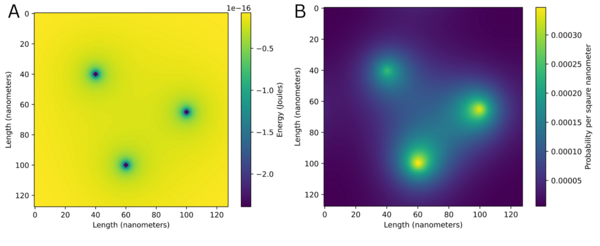
The authors use the Lanczos algorithm to computationally solve the Schrodinger equation for 2D potentials with a Python program
Read More...The relationship between meteorological factors and air quality in Washington D.C. metropolitan area

The authors studied the relationship between air quality and weather conditions (wind speed, precipitation, and temperature) in the Washington D.C. area.
Read More...Linear relationship between nanostructural features and coloring of biomimetic photonic material

Iridescent materials reflect different colored depending on viewing angle. This specific effect can be achieved by biomimetic photonic materials. This project models the quantitative relationship between these material’s coloring and its nanostructure to facilitate personalized design of art materials.
Read More...The effect of nanosilver particles on the lifespan of Daphnia magna in pond water
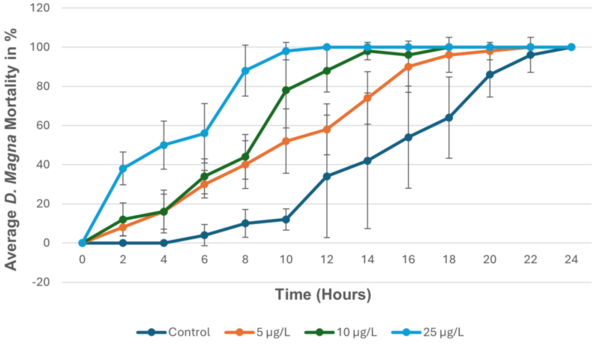
The authors looked at how nanosilver particles may negatively impact the pond water environment. They used D. magna as an indicator species to look at the impact of different concentrations of nanosilver particles.
Read More...Lettuce seed germination in the presence of microplastic contamination
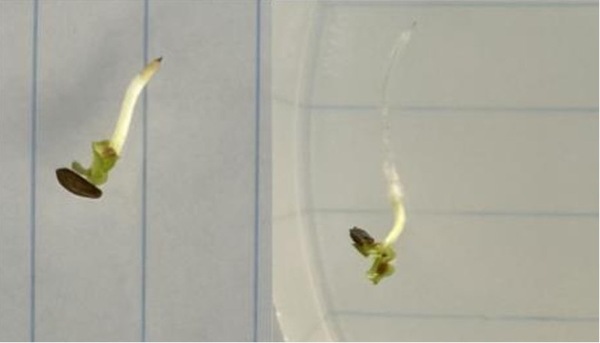
Microplastic pollution is a pressing environmental issue, particularly in the context of its potential impacts on ecosystems and human health. In this study, we explored the ability of plants, specifically those cultivated for human consumption, to absorb microplastics from their growing medium. We found no evidence of microplastic absorption in both intact and mechanically damaged roots. This outcome suggests that microplastics larger than 10 μm may not be readily absorbed by the root systems of leafy crops such as lettuce (L. sativa).
Read More...Modelling effects of alkylamines on sea salt aerosols using the Extended Aerosols and Inorganics Model

With monitoring of climate change and the evolving properties of the atmosphere more critical than ever, the authors of this study take sea salt aerosols into consideration. These sea salt aerosols, sourced from the bubbles found at the surface of the sea, serve as cloud condensation nuclei (CCN) and are effective for the formation of clouds, light scattering in the atmosphere, and cooling of the climate. With amines being involved in the process of CCN formation, the authors explore the effects of alkylamines on the properties of sea salt aerosols and their potential relevance to climate change.
Read More...Investigating the Role of the Novel ESCRT-III Recruitment Factor CCDC11 in HIV Budding: A Potential Target for Antiviral Therapy
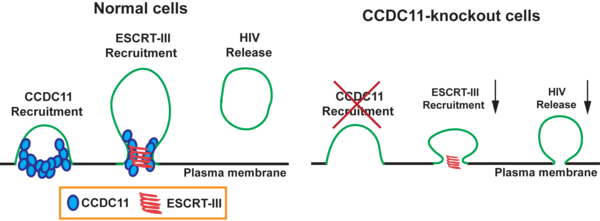
Acquired immunodeficiency syndrome (AIDS) is a life-threatening condition caused by the human immunodeficiency virus (HIV). In this work, Takemaru et al explored the role of Coiled-Coil Domain-Containing 11 (CCDC11) in HIV-1 budding. Their results suggest that CCDC11 is critical for efficient HIV-1 budding, potentially indicating CCDC11 a viable target for antiviral therapeutics without major side effects.
Read More...