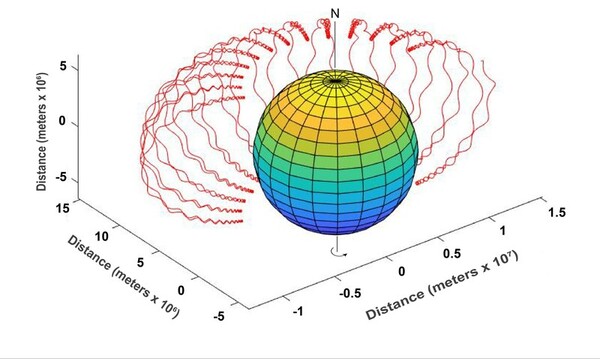
In this study the authors looked the trajectories of cosmic rays moving through a dipole field. They found that the trajectories of cosmic rays are determined by a particle's energy and interaction with Earth's B field.
Read More...Simulation of cosmic rays in the presence of a magnetic field
In this study the authors looked the trajectories of cosmic rays moving through a dipole field. They found that the trajectories of cosmic rays are determined by a particle's energy and interaction with Earth's B field.
Read More...Failure of colony growth in probiotic Lactobacillus casei Shirota as result of preservative sorbic acid
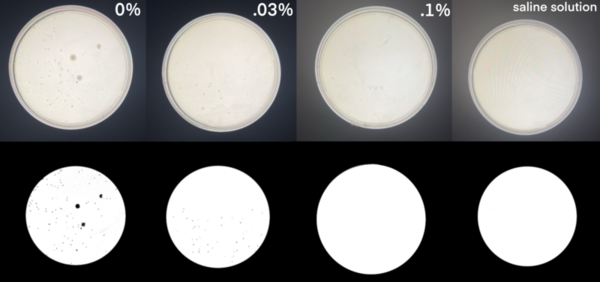
This study tested the proficiency of different concentrations of the antimicrobial sorbic acid to inhibit the probiotic Lactobacillus casei Shirota. It was hypothesized that sorbic acid’s use as a bacterial deterrent would also target this bacterial strain of Lactobacillus. The results supported the hypothesis, with the colony count of L. casei Shirota having significant decreases at all concentrations of sorbic acid. These results additionally suggest that even under the FDA sorbic acid restrictions of 0.03% concentration, damaging effects could be seen in L. casei Shirota.
Read More...Comparing model-centric and data-centric approaches to determine the efficiency of data-centric AI
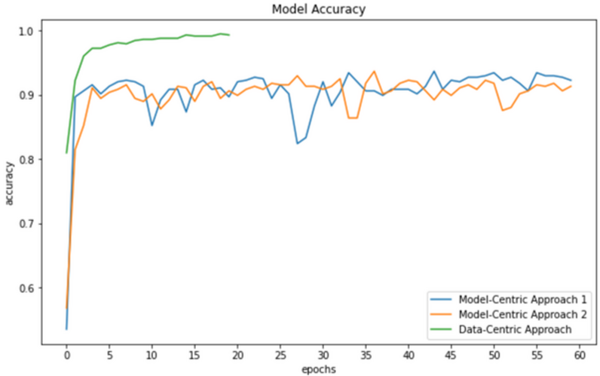
In this study, three models are used to test the hypothesis that data-centric artificial intelligence (AI) will improve the performance of machine learning.
Read More...Machine learning-based enzyme engineering of PETase for improved efficiency in plastic degradation
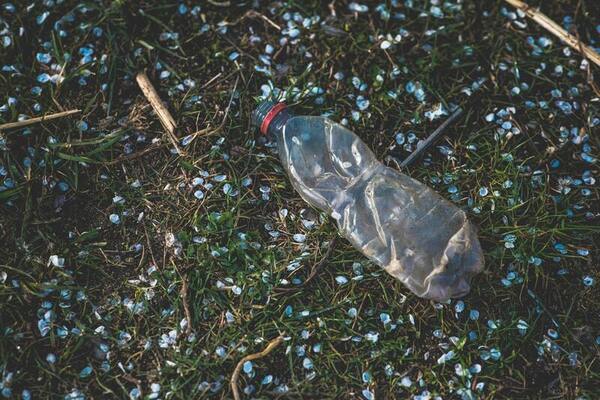
Here, recognizing the recognizing the growing threat of non-biodegradable plastic waste, the authors investigated the ability to use a modified enzyme identified in bacteria to decompose polyethylene terephthalate (PET). They used simulations to screen and identify an optimized enzyme based on machine learning models. Ultimately, they identified a potential mutant PETases capable of decomposing PET with improved thermal stability.
Read More...Increased carmine red exposure periods yields a higher number of vacuoles formed in Tetrahymena pyriformis
.jpeg)
T. pyriformis can use phagocytosis to create vacuoles of carmine red, a dye which is made using crushed insects and is full of nutrients. Establishing a relationship between vacuole formation and duration of exposure to food can demonstrate how phagocytosis occurs in T. pyriformis. We hypothesized that if T. pyriformis was incubated in a carmine red solution, then more vacuoles would form over time in each cell.
Read More...Contrasting role of ASCC3 and ALKBH3 in determining genomic alterations in Glioblastoma Multiforme
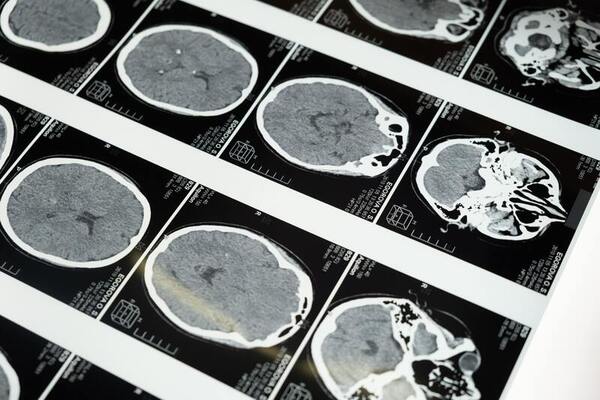
Glioblastoma Multiforme (GBM) is the most malignant brain tumor with the highest fraction of genome alterations (FGA), manifesting poor disease-free status (DFS) and overall survival (OS). We explored The Cancer Genome Atlas (TCGA) and cBioportal public dataset- Firehose legacy GBM to study DNA repair genes Activating Signal Cointegrator 1 Complex Subunit 3 (ASCC3) and Alpha-Ketoglutarate-Dependent Dioxygenase AlkB Homolog 3 (ALKBH3). To test our hypothesis that these genes have correlations with FGA and can better determine prognosis and survival, we sorted the dataset to arrive at 254 patients. Analyzing using RStudio, both ASCC3 and ALKBH3 demonstrated hypomethylation in 82.3% and 61.8% of patients, respectively. Interestingly, low mRNA expression was observed in both these genes. We further conducted correlation tests between both methylation and mRNA expression of these genes with FGA. ASCC3 was found to be negatively correlated, while ALKBH3 was found to be positively correlated, potentially indicating contrasting dysregulation of these two genes. Prognostic analysis showed the following: ASCC3 hypomethylation is significant with DFS and high ASCC3 mRNA expression to be significant with OS, demonstrating ASCC3’s potential as disease prediction marker.
Read More...A comparative study on the suitability of virtual labs for school chemistry experiments
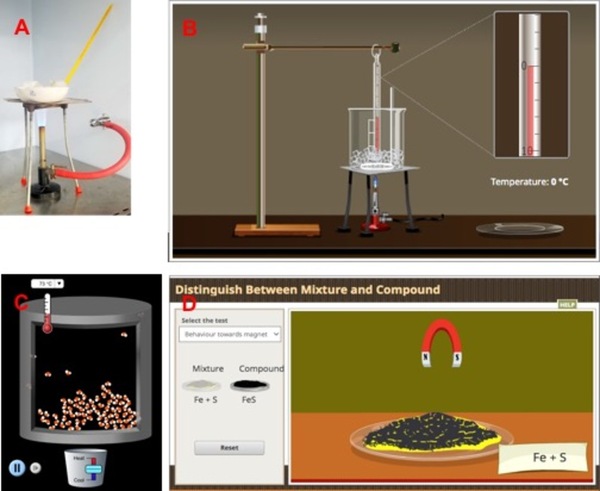
Virtual labs have been gaining popularity over the last few years, especially during the worldwide lockdown due to the COVID-19 pandemic. In this study, the suitability of virtual labs for school chemistry experiments is addressed and their effectiveness is compared to traditional physical lab experiments by focusing on physical and human resources, convenience, cost, safety, and time involved as well as topic "matter".
Read More...Utilizing the Magnus effect to produce more downforce than a standard wing
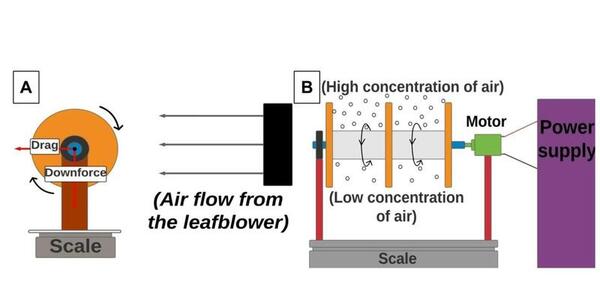
Here, seeking a better solution to produce downforce that keeps a vehicle grounded at high speeds than wings which tend to result in degraded car performance due to increased air resistance, the authors considered using the Magnus effect as a replacement. The authors found that a spinning cylinder generated significantly more downforce through the Magnus effect than a standard wing at all wind speeds as simulated through the use of a leaf blower. They suggest that a cylinder could be a potential replacement for a wing when downforce is a priority.
Read More...Role of bacterial flagella in bacterial adhesion of Escherichia coli to glass surface
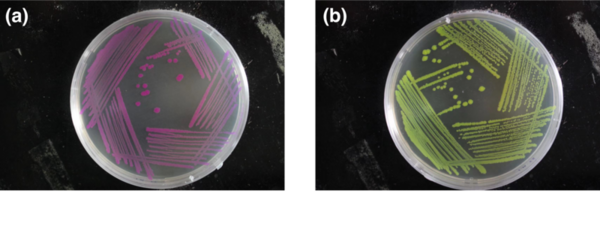
In this study, the authors investigate the effects that flagella have on E. coli's ability to adhere to glass surfaces.
Read More...Comparing Measurements of Sun-Earth Distance: Shadow Method and Two Pinhole Method Variations
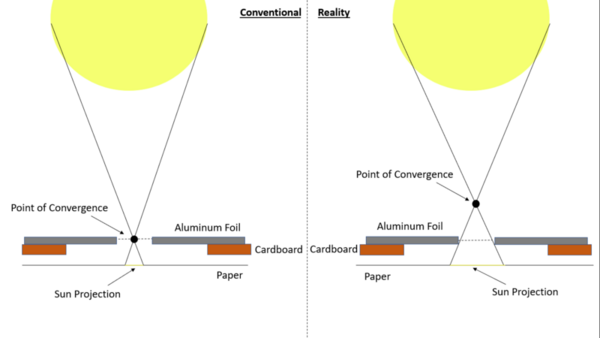
This study compares three methods regarding their accuracy in calculating the distance between the Earth and the Sun. The hypothesis presented was that the shadow method would have the greatest mean accuracy, followed by the tube pinhole method, and finally the plate pinhole method. The results validate the hypothesis; however, further investigation would be helpful in determining effective mitigation of each method’s limitations and the effectiveness of each method in determining the distance of other light-emitting objects distant from the Earth.
Read More...